







⏱️ 8 min read
Baseball has captivated fans for over a century, becoming America's beloved pastime and spreading its influence across the globe. Beyond the crack of the bat and the roar of the crowd, this sport is filled with fascinating historical tidbits, quirky traditions, and surprising statistics that even die-hard fans might not know. From its mysterious origins to record-breaking achievements, baseball's rich tapestry includes stories that illuminate why this game continues to hold a special place in sports culture.
Fascinating Baseball Facts That Will Change How You See the Game
1. The Mysterious Origins of Baseball's Invention
Contrary to popular belief, Abner Doubleday did not invent baseball in Cooperstown, New York, in 1839. This myth was created by a commission in 1907 seeking to establish baseball as a purely American sport. In reality, baseball evolved from various bat-and-ball games played in England, including rounders and cricket. The modern version of baseball gradually developed in the northeastern United States during the early 19th century, with the New York Knickerbockers establishing the first formal set of rules in 1845.
2. The Shortest Professional Baseball Player in History
Eddie Gaedel holds the unique distinction of being the shortest player to ever appear in a Major League Baseball game. Standing at just 3 feet 7 inches tall, Gaedel was sent to bat by St. Louis Browns owner Bill Veeck in 1951 as a publicity stunt. Wearing number 1/8, Gaedel walked on four pitches due to his impossibly small strike zone. Major League Baseball immediately banned the stunt, but Gaedel's single plate appearance remains one of baseball's most memorable moments.
3. The Perfect Game Rarity
A perfect game occurs when a pitcher retires all 27 batters without allowing anyone to reach base through any means. This incredibly rare feat has only been accomplished 23 times in Major League Baseball history since 1900. To put this in perspective, more people have walked on the moon than have pitched a perfect game in the major leagues. The combination of skill, luck, and defensive excellence required makes this achievement one of sports' most elusive accomplishments.
4. Baseball's Connection to Hot Dogs
Americans consume approximately 20 million hot dogs at baseball stadiums each year. This culinary tradition began in the 1890s when German immigrant vendors started selling frankfurters at ballparks. The term "hot dog" itself may have originated at a baseball game, when sports cartoonist Tad Dorgan couldn't spell "dachshund sausage" and simply wrote "hot dog" instead. Today, the hot dog remains synonymous with the baseball experience, with some stadiums offering exotic variations that have become attractions in themselves.
5. The Seven-Inning Stretch Tradition
The seventh-inning stretch has become an integral part of baseball culture, but its origins are debated. One popular story credits President William Howard Taft, who allegedly stood up to stretch during the seventh inning of a 1910 game, prompting the crowd to respectfully rise as well. Another tale attributes it to Brother Jasper of Manhattan College in the 1880s, who let his students stand and stretch during games. Regardless of its true origin, this tradition now includes singing "Take Me Out to the Ball Game" at stadiums across the country.
6. Baseball's Impact on American Vocabulary
Baseball has contributed more phrases to American English than perhaps any other sport. Common expressions like "touch base," "cover all the bases," "throw someone a curve," "out of left field," "ballpark figure," and "batting a thousand" all originated from baseball terminology. These phrases have become so embedded in everyday language that many people use them without realizing their baseball origins, demonstrating the sport's profound cultural influence beyond the diamond.
7. The Longest Professional Baseball Game Ever Played
The longest game in professional baseball history lasted 33 innings and took place between the Pawtucket Red Sox and Rochester Red Wings in 1981. The game began on April 18 and was suspended at 4:07 AM after eight hours and seven minutes with the score tied 2-2. When play resumed on June 23, it took just 18 minutes to complete the 33rd inning, with Pawtucket winning 3-2. Future Hall of Famer Cal Ripken Jr. played all 33 innings for Rochester.
8. The Unique Design of Baseball Stitching
Every official Major League Baseball contains exactly 108 stitches of waxed red thread. These stitches are hand-sewn in a specific pattern that creates the ball's distinctive figure-eight design. The precise stitching isn't just for aesthetics—it affects how pitchers grip the ball and influences pitch movement. A single ball takes approximately 15 minutes to stitch by hand, and Major League Baseball uses roughly 900,000 balls per season.
9. Babe Ruth's Called Shot Mystery
One of baseball's most legendary moments occurred during the 1932 World Series when Babe Ruth allegedly pointed to center field before hitting a home run to that exact location. While witnesses disagree about whether Ruth actually called his shot, the story has become part of baseball mythology. Some spectators claimed he was pointing at the pitcher or gesturing at hecklers in the dugout, while others swear he predicted the home run. The truth remains one of baseball's greatest unsolved mysteries.
10. The Unusual Dimensions of Baseball Fields
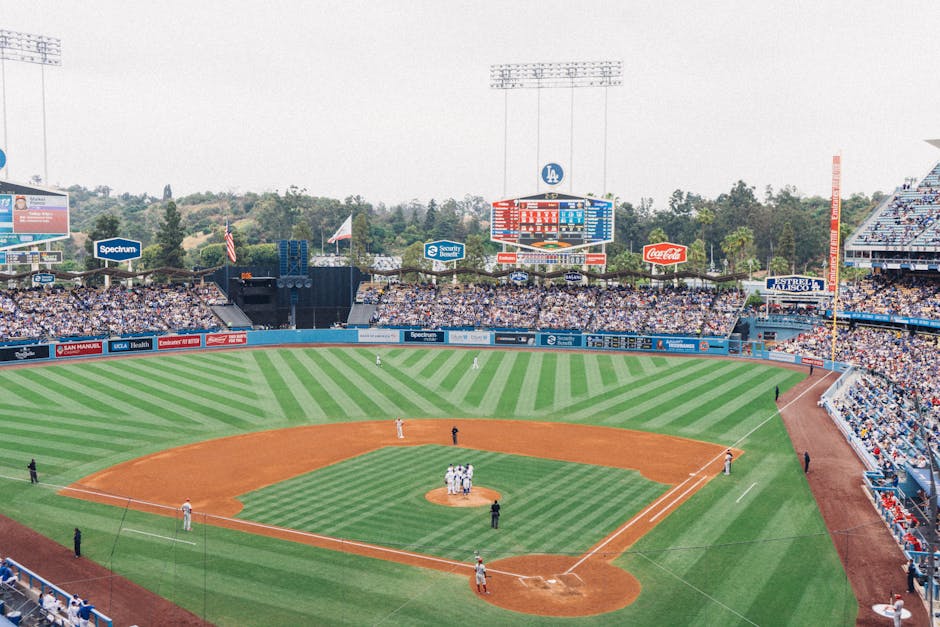
Unlike most sports, baseball fields don't have standardized outfield dimensions. While the distance between bases and the pitcher's mound are regulated, outfield fence distances and heights vary dramatically between stadiums. Boston's Fenway Park features the 37-foot Green Monster in left field just 310 feet from home plate, while some stadiums have center field fences over 420 feet away. This variation means that a home run in one park might be a routine fly out in another, adding strategic complexity to the game.
11. The Fastest Pitch Ever Recorded
Cincinnati Reds pitcher Aroldis Chapman holds the record for the fastest pitch ever recorded in Major League Baseball, throwing a 105.1 mph fastball in 2010. At this speed, the ball reaches home plate in approximately 0.4 seconds, giving batters an incredibly small window to react. Modern radar technology has made it possible to accurately measure pitch speeds, revealing that today's pitchers throw harder than ever before, though some historians believe legendary pitchers like Nolan Ryan may have thrown equally hard during an era with less precise measurement tools.
12. Baseball's Influence on World War II
During World War II, over 500 Major League Baseball players served in the military, including stars like Ted Williams, Joe DiMaggio, and Bob Feller. President Franklin D. Roosevelt insisted that baseball continue during the war to maintain national morale, writing his famous "Green Light Letter" encouraging Commissioner Kenesaw Mountain Landis to keep the game going. This decision helped preserve the sport's continuity and provided Americans with a comforting connection to normalcy during turbulent times. Many players who served made significant sacrifices, with some losing prime years of their careers.
13. The Curse of the Bambino
After the Boston Red Sox sold Babe Ruth to the New York Yankees in 1919, the team failed to win a World Series for 86 years, spawning the legendary "Curse of the Bambino." During this drought, the Yankees won 26 championships while the Red Sox experienced heartbreaking defeats, including the infamous 1986 World Series when Bill Buckner's error contributed to their loss. The curse was finally broken in 2004 when the Red Sox won their first championship since 1918, completing an unprecedented comeback from a 3-0 deficit against the Yankees in the American League Championship Series.
14. The Baseball Hall of Fame's Strict Standards
Election to the Baseball Hall of Fame in Cooperstown requires approval from 75% of voting members of the Baseball Writers' Association of America. Players become eligible five years after retirement and remain on the ballot for up to ten years. This stringent requirement means that many excellent players never gain induction, making Hall of Fame membership one of sports' most exclusive honors. Only about 1% of players who have appeared in Major League Baseball have been inducted, with approximately 330 players enshrined since the Hall opened in 1939.
The Enduring Legacy of Baseball's Rich History
These fourteen facts merely scratch the surface of baseball's fascinating history and cultural significance. From its evolution as a sport to the quirky traditions that define the game day experience, baseball continues to generate stories that captivate fans across generations. Whether it's the statistical improbability of a perfect game, the linguistic legacy embedded in everyday speech, or the human drama of curses and legendary moments, baseball proves itself to be much more than just a game. Understanding these facts enriches the experience of watching baseball, connecting modern fans to the sport's storied past while appreciating the ongoing evolution of America's pastime. As baseball continues into its third century, new facts and stories will undoubtedly emerge, adding to the rich tapestry that makes this sport endlessly compelling.