
⏱️ 10 min read
When Neo first sees the cascading green symbols in the 1999 film The Matrix, audiences worldwide were mesmerized by what seemed like an alien digital language from a dystopian future. What most viewers didn’t realize was that production designer Simon Whiteley created this iconic visual effect using something far more familiar: Japanese sushi recipes scanned from his wife’s cookbooks, flipped upside down and backwards.
Quick Facts
- The Matrix code consists primarily of reversed and mirrored Japanese katakana characters, numbers, and Latin letters.
- Production designer Simon Whiteley created the code by scanning Japanese symbols from his wife’s sushi cookbooks in 1999.
- The green color scheme was chosen to reference early monochrome computer monitors and evoke a technological aesthetic.
- The cascading effect was inspired by the opening credits of the anime Ghost in the Shell (1995).
- Whiteley designed the code in just a few weeks using limited digital tools available in the late 1990s.
The Origin Story Behind the Falling Code
Simon Whiteley faced a significant challenge when tasked with creating a visual language that would represent the underlying programming of the Matrix’s simulated reality. With a tight production schedule and limited budget for visual effects in pre-production, he needed a solution that was both aesthetically striking and practically achievable. His wife, a Japanese cuisine enthusiast, had several Japanese cookbooks in their home, filled with katakana and kanji characters that appeared completely foreign to Western audiences unfamiliar with the writing system.
Whiteley scanned these characters into his computer, inverted them, mirrored them, and mixed them with Arabic numerals and reversed Latin alphabet letters. The result was a symbol set that looked genuinely alien and computational to most viewers, particularly those in Western markets where Japanese characters weren’t part of everyday visual culture. He specifically chose katakana—one of Japan’s three writing systems used primarily for foreign words and technical terms—because the angular, geometric shapes resembled computer code more than the flowing curves of hiragana or the complexity of kanji.
The production team then programmed these symbols to cascade down the screen in vertical columns at varying speeds. This falling rain effect required custom software that could randomize which characters appeared, how fast they fell, and how they faded from bright white to deep green against the black background. The entire visual system was designed to run in real-time, allowing directors the Wachowskis to adjust the intensity and speed during filming.
The Technical Construction of the Digital Rain
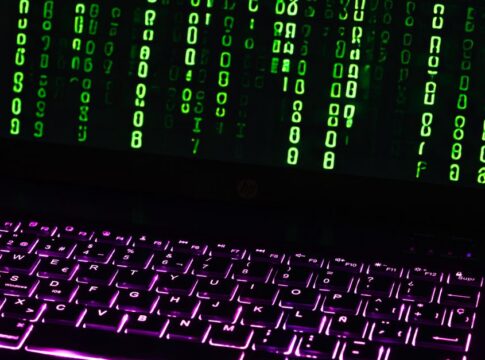
The code display seen throughout the trilogy wasn’t simply random characters dropping at constant speeds. Whiteley and the visual effects team at Manex Visual Effects developed specific rules for how the Matrix code would behave. Characters at the leading edge of each column glow bright white or light green, while those trailing behind fade through darker shades of green before disappearing entirely. This creates the illusion of depth and movement through three-dimensional space, even though the characters themselves are two-dimensional symbols.
Each vertical column operates independently, with randomized start times, fall speeds, and character substitution rates. Within a single column, characters continuously cycle and change, creating the impression of active data streams rather than static text. The spacing between columns and the width of each character stream were carefully calibrated to ensure readability of the effect without overwhelming the viewer or obscuring important action in the foreground.
The color palette was equally deliberate. The phosphor-green hue directly referenced the monochrome CRT monitors common in the 1970s and early 1980s, particularly the Data General Dasher series and IBM 3270 terminals that displayed green text on black screens. This color choice connected the futuristic Matrix to the actual history of computing, creating a visual bridge between past technology and imagined future systems. The green also provided strong contrast against the often dark, blue-tinted cinematography of scenes set in the “real world” outside the Matrix.
Japanese Katakana and Its Cultural Significance
Katakana, the writing system Whiteley primarily used, consists of 46 basic characters representing distinct syllable sounds in Japanese. Unlike the Latin alphabet’s 26 letters, katakana characters represent complete syllables like “ka,” “shi,” or “no.” This syllabic system originated in the 9th century when Buddhist monks simplified certain kanji characters to create a phonetic notation system for reading Chinese texts.
Modern Japanese uses katakana for several specific purposes: transcribing foreign words, writing onomatopoeia, emphasizing text (similar to italics in English), and representing technical or scientific terms. The angular, constructed appearance of katakana makes it visually distinct from the more curved hiragana characters or the complex kanji ideographs. For a film about artificial reality and computer systems, katakana’s association with foreign concepts and technical language made it thematically appropriate, even if most viewers couldn’t consciously identify the characters.
Japanese audiences watching The Matrix had a unique viewing experience—they could potentially recognize familiar shapes in the code, even if the inversion made direct reading impossible. Some Japanese viewers reported experiencing a moment of cognitive dissonance when they realized the “alien” computer language contained fragments of their own writing system. This added an unintended layer of meaning: if you could decode the Matrix code, you’d find mundane recipes for sushi rather than profound programming secrets.
The Anime Influence on the Matrix’s Visual Style
The Wachowskis explicitly cited Japanese animation as a primary influence on The Matrix‘s visual design. Ghost in the Shell, Mamoru Oshii’s 1995 cyberpunk anime, featured opening credits with green cascading code that directly inspired the Matrix’s digital rain. That film explored themes of consciousness, identity, and the boundaries between human and machine—concepts that became central to the Matrix trilogy.
Other anime influences included Akira (1988), which demonstrated how animation could depict complex philosophical ideas through stunning visual imagery, and the Appleseed manga series by Masamune Shirow. The Wachowskis required the entire cast and crew to watch Ghost in the Shell before production began to establish a shared visual and thematic vocabulary. This Japanese aesthetic influence extended beyond the code to include the film’s action choreography, costume design, and even the philosophical concepts underlying the plot.
The fusion of Japanese visual elements with Western cyberpunk literature (William Gibson’s Neuromancer and the works of Philip K. Dick) created a hybrid aesthetic that felt both familiar and foreign to global audiences. The use of Japanese characters in the code was part of this larger cultural synthesis, blending Eastern and Western artistic traditions into something that transcended either tradition individually.
Evolution of the Code Across the Trilogy
While the basic design remained consistent across all three Matrix films, the visual effects team refined and expanded the code’s appearance. In The Matrix Reloaded (2003), sequences showing the code required more sophisticated rendering as cameras moved through three-dimensional space composed entirely of the falling characters. The “Burly Brawl” scene, where Neo fights hundreds of Agent Smith copies, included shots where the code itself deforms and ripples in response to superhuman impacts.
By The Matrix Revolutions (2003), the code displays became more complex, incorporating color variations to represent different types of data or corrupted programs. The Trainman’s subway station, existing between the Matrix and the Machine City, featured code with irregular patterns and color aberrations suggesting a liminal space between systems. These visual evolution reflected both advancing CGI capabilities and the narrative’s deepening exploration of the Matrix’s underlying architecture.
The code also appeared in The Animatrix (2003), a collection of nine animated short films expanding the Matrix universe. Different animation studios interpreted the iconic code through various artistic styles, from traditional anime to computer-generated sequences. Each version maintained the core elements—vertical columns, green color, Japanese-inspired characters—while adapting them to different visual approaches.
Legacy and Cultural Impact of the Matrix Code
The Matrix code became one of cinema’s most recognizable visual motifs, transcending the films to become a cultural shorthand for digital reality, hacking, and computer systems. Within months of the 1999 release, screen savers mimicking the falling code proliferated across the internet. One program, “Matrix GL,” became particularly popular, offering customizable versions that could adjust character sets, colors, and animation speeds.
The code influenced visual design across multiple media. Video games incorporated similar falling-character effects to represent hacking or data streams. Television shows depicting computer systems frequently borrowed the vertical-cascade aesthetic. Music videos, particularly in electronic and industrial genres, adopted the green-on-black color scheme and cascading text to evoke technological themes. Even legitimate software interfaces occasionally incorporated Matrix-inspired visual elements as Easter eggs or thematic flourishes.
In 2021, The Matrix Resurrections updated the code for contemporary audiences while maintaining its essential character. The new film acknowledged the original code’s iconic status by featuring it prominently in marketing materials and using it as a visual bridge connecting the new story to the original trilogy. The persistence of this design element across more than two decades demonstrates its effectiveness as both functional film design and memorable cultural symbol.
Whiteley’s quick solution to a production design problem—scanning Japanese cookbooks and flipping the characters—became an indelible part of cinema history. The Matrix code demonstrates how practical creativity under constraint can produce results that resonate far beyond their original context. What began as inverted sushi recipes became the visual language of an entire fictional universe, proving that inspiration can come from the most unexpected sources.
Frequently Asked Questions
What do the Japanese characters in the Matrix code actually say?
The characters don’t form coherent sentences. Simon Whiteley scanned Japanese characters from sushi recipes, then inverted and mirrored them along with numbers and Latin letters, creating a visually interesting but meaningless sequence.
Can you download a screen saver that replicates the Matrix code effect?
Yes, numerous free screen savers and applications replicate the Matrix code, with “CMatrix” for terminals and “Matrix GL” being among the most popular. Many allow customization of character sets, colors, and animation speeds.
Did the Wachowskis specifically request Japanese characters for the code?
The Wachowskis requested a code that looked authentically digital and alien, but the specific use of Japanese characters was Simon Whiteley’s creative solution. They approved his design because it achieved the aesthetic they wanted for the film.
Why was green chosen as the color for the Matrix code?
The green color references early monochrome computer monitors from the 1970s and 1980s, which displayed phosphor-green text on black screens. This created a visual connection to actual computing history while providing strong contrast for the film’s dark cinematography.
Key Takeaways
- The iconic Matrix code was created by production designer Simon Whiteley using inverted and mirrored Japanese katakana characters scanned from sushi recipes, combined with numbers and Latin letters.
- The cascading green code was directly inspired by the opening credits of the 1995 anime Ghost in the Shell, part of the broader Japanese cultural influence on the Matrix trilogy’s visual style.
- The code’s design evolved across the trilogy, becoming more sophisticated with each film as visual effects technology advanced and narrative complexity increased.
- What began as a practical production solution became one of cinema’s most recognizable visual elements, influencing digital design across films, games, and software for over two decades.