
⏱️ 5 min read
Foraging for wild mushrooms can be a rewarding outdoor activity, providing nutritious food and connecting people with nature. However, the stakes are incredibly high when it comes to mushroom identification. Consuming the wrong species can lead to severe illness, organ failure, or death. Understanding the characteristics that distinguish poisonous mushrooms from edible varieties is an essential survival skill for anyone venturing into wilderness areas or facing emergency situations.
The Golden Rule of Mushroom Foraging
The most important principle in mushroom identification is absolute certainty. If there is any doubt whatsoever about a mushroom’s identity, it should never be consumed. Unlike plants, where many poisonous species cause minor discomfort, toxic mushrooms can be lethal even in small quantities. Some of the deadliest mushrooms closely resemble edible species, making positive identification critical for survival.
There is no universal test or simple trick to determine if a mushroom is poisonous. Common myths such as “poisonous mushrooms tarnish silver” or “if animals eat it, it’s safe for humans” are completely false and have led to numerous fatalities. The only reliable method is learning to identify specific species through their distinct morphological characteristics.
Understanding Mushroom Anatomy
Before attempting identification, understanding mushroom anatomy is essential. The cap or pileus is the top portion and varies widely in shape, color, and texture. The underside of the cap may contain gills, pores, or teeth, which are crucial identifying features. The stem or stipe supports the cap and may have a ring (annulus) or a cup-like structure at the base called a volva. The presence or absence of these features helps narrow down identification significantly.
Deadly Mushroom Families to Recognize
Amanita Species
The Amanita genus contains some of the world’s most poisonous mushrooms, responsible for the majority of mushroom-related deaths globally. The Death Cap (Amanita phalloides) and Destroying Angel (Amanita virosa) are particularly dangerous because they taste pleasant, symptoms appear hours after consumption when treatment is difficult, and they cause irreversible liver and kidney damage.
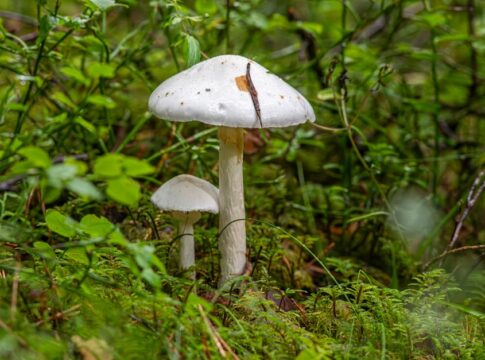
Key identifying features of deadly Amanitas include white gills that remain white as the mushroom matures, a white spore print, a ring around the stem, and most importantly, a cup-like volva at the base of the stem that may be hidden underground. These mushrooms often grow near trees, particularly oaks and pines, as they form mycorrhizal relationships with roots.
Galerina Species
Galerina marginata, known as the Deadly Galerina or Autumn Skullcap, contains the same deadly amatoxins as Amanitas. These small brown mushrooms grow on wood and are particularly dangerous because they resemble several edible species. They have brown gills, a rusty brown spore print, and often display a slight ring on the stem. Their inconspicuous appearance makes them especially hazardous for inexperienced foragers.
False Morels
Gyromitra esculenta and related species are called False Morels because they superficially resemble the highly prized True Morels. However, they contain gyromitrin, which metabolizes into monomethylhydrazine, a component of rocket fuel. False Morels have irregular, brain-like caps that are attached to the stem at multiple points, whereas True Morels have caps with a honeycomb appearance and are completely hollow inside when cut lengthwise.
Warning Signs and High-Risk Characteristics
Certain features should immediately raise red flags when examining wild mushrooms. White gills combined with a white spore print warrant extreme caution, as this combination appears in deadly Amanitas. Any mushroom with both a ring on the stem and a volva at the base should be avoided unless one has expert-level identification skills.
Small brown mushrooms growing on wood, often called “Little Brown Mushrooms” or LBMs by mycologists, are notoriously difficult to identify and include deadly species. Red-capped mushrooms with white spots, while resembling storybook illustrations, often belong to the Amanita family and may be toxic. Any mushroom that bruises red or has red pores under the cap should be treated with suspicion.
Essential Identification Techniques
Proper identification requires examining multiple characteristics systematically. Begin by noting the habitat where the mushroom grows, including nearby trees, substrate type, and whether it appears on wood, soil, or other material. Document the season and weather conditions, as many species fruit only during specific times.
Examine the cap’s color, shape, texture, and whether it’s dry, sticky, or slimy. Look underneath to determine if it has gills, pores, or teeth, and note their color and how they attach to the stem. Break the stem to check if it’s hollow or solid, and observe if the mushroom bruises or changes color when handled.
Creating a spore print is crucial for accurate identification. Place the cap gill-side down on white paper for dark spores or dark paper for light spores, cover it, and wait several hours. The spore color revealed is a key diagnostic feature that cannot be determined by looking at the mushroom alone.
Safety Protocols for Foraging
Never consume wild mushrooms without consulting multiple authoritative field guides specific to the region. Photography and online identification, while helpful, should never be the sole basis for determining edibility. Many identification apps provide inaccurate results that could prove fatal.
When learning mushroom identification, work with experienced foragers or mycologists who can provide hands-on instruction. Local mycological societies often offer forays and workshops that teach safe identification practices. Keep different mushroom species separated during collection to prevent cross-contamination of spores and fragments.
When Poisoning Occurs
If poisonous mushroom consumption is suspected, seek immediate medical attention. Save any remaining mushroom material for identification, as this information helps medical professionals determine appropriate treatment. Do not wait for symptoms to appear, as some toxins cause delayed reactions when treatment becomes less effective. Contact poison control centers immediately and provide as much information as possible about the consumed species.
Understanding poisonous mushroom identification is not about memorizing one or two dangerous species but developing comprehensive knowledge of mushroom morphology, habitat preferences, and distinctive characteristics. In survival situations, the safest approach remains avoiding wild mushrooms entirely unless identification skills have been thoroughly developed through extensive study and practical experience under expert guidance.