

1 / 10 Questions
0 Points

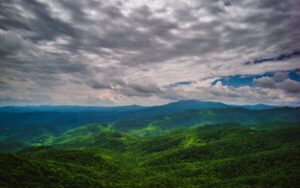
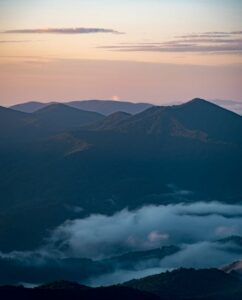
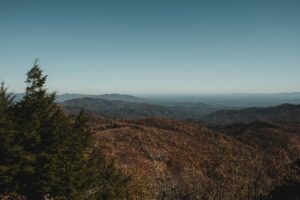
In which continent are the Appalachian Mountains located?

South America

Asia

North America

Europe

Points won
0
Correct score
0%

More Quizzes

More Articles

Places on Earth That Look Unreal

Places on Earth That Look Unreal

⏱️ 5 min read

Our planet harbors landscapes so extraordinary they challenge the boundaries of imagination. From rainbow-colored mountains to underground crystal caves, these natural wonders demonstrate Earth's remarkable capacity to create scenes that appear digitally manipulated or lifted from science fiction. These geological marvels, formed over millions of years through complex natural processes, stand as testament to the dynamic forces that continue to shape our world.

The Rainbow Mountains of Zhangye Danxia, China

Located in Gansu Province, the Zhangye Danxia Landform Geological Park presents visitors with mountains painted in vivid stripes of red, yellow, orange, and turquoise. These psychedelic formations resulted from the layering of different colored sandstone and mineral deposits over 24 million years. Subsequent tectonic plate movements tilted and folded these layers, while wind and rain erosion exposed the colorful cross-sections visible today.

The iron oxide and trace minerals within the sandstone create the distinctive color palette. Red hues come from iron and rust deposits, while yellow and green tones result from copper and other oxidized minerals. The dramatic appearance intensifies after rainfall, when water saturates the minerals and makes the colors more vibrant. This geological phenomenon spans approximately 510 square kilometers and represents one of China's most photographed natural landmarks.

Salar de Uyuni: Bolivia's Mirror in the Sky

The world's largest salt flat extends across 10,582 square kilometers in southwest Bolivia, creating an otherworldly white expanse at 3,656 meters above sea level. Salar de Uyuni formed from prehistoric lakes that evaporated, leaving behind a thick crust of salt and lithium-rich brine. The flat surface varies by less than one meter across its entire span, making it exceptionally level and useful for calibrating satellite instruments.

During the rainy season from November to March, a thin layer of water transforms the salt flat into Earth's largest natural mirror. This phenomenon creates breathtaking reflections where sky and ground merge seamlessly, eliminating the horizon and producing disorienting visual effects. The salt crust, varying from a few centimeters to several meters thick, contains an estimated 10 billion tons of salt. Beneath this surface lies approximately 50-70% of the world's lithium reserves.

The Giant's Causeway: Northern Ireland's Geometric Wonder

Along the coast of County Antrim stands an assemblage of approximately 40,000 interlocking basalt columns, most of which are perfectly hexagonal. This UNESCO World Heritage Site formed around 60 million years ago when molten basalt erupted through chalk beds during intense volcanic activity. As the lava cooled rapidly, it contracted and fractured into the distinctive polygonal columns visible today.

The columns rise from the sea in perfectly ordered arrangements, with some reaching up to 12 meters in height. The precision of the geometric patterns appears almost artificial, as if carved by human hands. Local legend attributes the causeway's creation to the Irish giant Finn MacCool, who supposedly built it to reach Scotland and fight his rival. The site's unique geological characteristics have made it a subject of scientific study and popular fascination for centuries.

Antarctica's Blood Falls: A Crimson Mystery

In the McMurdo Dry Valleys of Antarctica, a five-story waterfall pours forth water the color of blood. This striking phenomenon occurs where iron-rich hypersaline water escapes from beneath Taylor Glacier. The water originates from a subglacial lake trapped beneath 400 meters of ice for approximately two million years, creating one of Earth's most extreme and isolated ecosystems.

When the iron-rich water contacts oxygen in the air, it rapidly oxidizes, producing the distinctive red coloration. Scientists have discovered that this ancient water contains viable microbial communities that survive without light or oxygen, metabolizing sulfur and iron compounds. The discovery has profound implications for astrobiology, suggesting that life might exist in similarly extreme conditions on other planets or moons.

Fly Geyser: Nevada's Accidental Rainbow Fountain

Rising from the Black Rock Desert, Fly Geyser represents an accidental creation resulting from human intervention. In 1964, a geothermal energy company drilled a test well that was either left unplugged or improperly sealed. Over subsequent decades, dissolved minerals in the continuously spouting water accumulated, building colorful terraced mounds reaching up to 1.5 meters high with water shooting an additional 1.5 meters into the air.

Thermophilic algae thriving in the hot, mineral-rich water create the geyser's vibrant red and green coloration. The ongoing geothermal activity continuously reshapes the formations, and multiple spouts now send water streaming in various directions. Though located on private property, this inadvertent monument demonstrates how quickly geological features can form under the right conditions, contrasting sharply with the millions of years required for most natural landmarks.

The Wave: Arizona's Petrified Sand Dunes

Hidden within the Paria Canyon-Vermilion Cliffs Wilderness, The Wave comprises undulating formations of cross-bedded Navajo Sandstone. These swirling patterns formed from ancient sand dunes that solidified approximately 190 million years ago during the Jurassic Period. Subsequent erosion sculpted the hardened sandstone into flowing, wavelike troughs and ridges.

The formation's distinctive appearance results from alternating layers of light and dark minerals, with iron oxide creating red and orange bands while manganese and other minerals produce darker streaks. Rainwater dissolution and wind erosion continue to slowly modify the formations. Access to this fragile geological wonder is strictly limited to 20 permits per day to prevent degradation from human traffic, making it one of Earth's most exclusive natural attractions.

Preservation and Appreciation

These extraordinary locations face ongoing challenges from climate change, increased tourism, and environmental degradation. Conservation efforts require balancing public access with protection of these irreplaceable natural treasures. Understanding the geological processes that created these wonders enhances appreciation for Earth's dynamic nature and the vast timescales over which these landscapes evolved.

Did You Know The Amazon Rainforest Produces 20% of Our Oxygen?

Did You Know The Amazon Rainforest Produces 20% of Our Oxygen?

⏱️ 5 min read

The Amazon rainforest has long been celebrated as the "lungs of the Earth," with many believing it produces a significant portion of our planet's oxygen. However, recent scientific research has revealed surprising truths about this massive ecosystem and its actual role in global oxygen production. Let's explore twenty fascinating facts about the Amazon rainforest, its oxygen cycle, and its true environmental significance.

Understanding the Amazon's Role in Our Atmosphere

The 20% Oxygen Myth Debunked

Contrary to popular belief, the Amazon rainforest does not produce 20% of Earth's oxygen. Scientists have determined that the Amazon actually consumes nearly all the oxygen it produces through decomposition and respiration processes. The vast majority of Earth's oxygen—approximately 70%—comes from ocean phytoplankton, not terrestrial forests.

The Ocean's Dominant Oxygen Production

Marine phytoplankton, microscopic plant-like organisms floating in the ocean, are responsible for producing most of Earth's breathable oxygen. These tiny organisms perform photosynthesis on a massive scale, making the oceans our planet's true lungs rather than the Amazon rainforest.

The Amazon's Net Zero Oxygen Contribution

While the Amazon produces enormous amounts of oxygen through photosynthesis during daylight hours, it consumes nearly equivalent amounts through cellular respiration at night and decomposition of organic matter. This makes the forest essentially oxygen-neutral in terms of net atmospheric contribution.

Covering 2.1 Million Square Miles

The Amazon rainforest spans approximately 2.1 million square miles across nine South American countries, making it the world's largest tropical rainforest. This massive area represents about 40% of South America's total landmass and contains extraordinary biodiversity.

Home to 390 Billion Individual Trees

Scientists estimate that the Amazon contains approximately 390 billion individual trees representing about 16,000 different species. This staggering number highlights the forest's incredible biological diversity and complexity.

The True Carbon Storage Champion

While the oxygen production claim may be exaggerated, the Amazon's role in carbon storage is genuinely critical. The forest stores between 150-200 billion tons of carbon in its vegetation and soil, helping to regulate global climate patterns and mitigate climate change.

Producing 20% of Earth's Freshwater Flow

The Amazon River system, fed by the rainforest, discharges approximately 20% of all freshwater that flows into the world's oceans. This massive water cycle is perhaps more accurately representative of the "20%" figure than oxygen production.

Releasing 20 Billion Tons of Water Daily

Through transpiration, the Amazon rainforest releases approximately 20 billion tons of water into the atmosphere every day. This process creates "flying rivers" of moisture that influence weather patterns across South America and beyond.

Housing One in Ten Known Species

The Amazon rainforest contains approximately 10% of all known species on Earth, including countless plants, animals, insects, and microorganisms. Many of these species exist nowhere else on the planet, making the Amazon irreplaceable for biodiversity conservation.

Generating Its Own Rainfall

The Amazon creates approximately 50% of its own rainfall through the water cycle of evaporation and transpiration. This self-sustaining system means that deforestation can trigger cascading effects that reduce rainfall and potentially transform forest into savanna.

Environmental and Scientific Significance

Regulating Regional and Global Climate

The Amazon plays a crucial role in regulating both regional and global climate patterns. Its influence on atmospheric circulation, rainfall distribution, and temperature regulation extends far beyond South America, affecting weather patterns worldwide.

Losing Football-Field-Sized Areas Every Minute

Deforestation in the Amazon has accelerated alarmingly, with some estimates suggesting that forest areas equivalent to a football field disappear every minute. This rapid loss threatens the forest's ecological functions and carbon storage capacity.

Containing 80,000 Plant Species

Botanists have identified approximately 80,000 plant species in the Amazon rainforest, with new species continually being discovered. This botanical diversity provides invaluable genetic resources for medicine, agriculture, and scientific research.

Supporting 2.5 Million Insect Species

The Amazon hosts an estimated 2.5 million insect species, representing an enormous portion of Earth's arthropod diversity. These insects play critical roles in pollination, decomposition, and food web dynamics throughout the ecosystem.

Approaching a Dangerous Tipping Point

Scientists warn that if deforestation reaches 20-25% of the Amazon's original area, the forest may reach a tipping point where it can no longer sustain its rainfall cycle, potentially transforming large areas into degraded savanna ecosystems.

Providing 25% of Modern Pharmaceuticals

Approximately 25% of modern pharmaceutical compounds are derived from rainforest plants, yet less than 1% of tropical forest species have been thoroughly examined for medicinal properties. The Amazon represents a vast, largely untapped pharmacy for future medical discoveries.

Influencing Agricultural Productivity Continentally

The moisture transported by the Amazon's atmospheric rivers supports agricultural production across South America, particularly in Brazil's agricultural heartland. Loss of forest cover threatens food security for millions of people who depend on these rainfall patterns.

Storing More Carbon Than a Decade of Global Emissions

The carbon stored in Amazon vegetation and soils exceeds the total amount released by human activities over more than a decade. Protecting this carbon reservoir is crucial for maintaining atmospheric stability and preventing accelerated climate change.

Housing 400-500 Indigenous Tribes

The Amazon is home to approximately 400-500 indigenous tribes, including some 50 groups that have never contacted the outside world. These communities possess invaluable traditional knowledge about sustainable forest management and medicinal plants.

Experiencing Increased Fire Frequency

Climate change and deforestation have increased fire frequency in the Amazon, with devastating fires in recent years releasing massive amounts of stored carbon into the atmosphere. These fires threaten to accelerate the forest's transformation and reduce its climate-regulating capacity.

Conclusion

While the Amazon rainforest may not produce 20% of Earth's oxygen as commonly believed, its environmental importance cannot be overstated. From storing massive amounts of carbon and generating continental rainfall patterns to harboring extraordinary biodiversity and supporting indigenous cultures, the Amazon performs irreplaceable ecological functions. Understanding the truth about the Amazon—including correcting misconceptions about oxygen production—helps us appreciate its actual critical roles in Earth's climate system, water cycle, and biological heritage. Protecting this magnificent ecosystem requires both accurate scientific understanding and urgent conservation action to prevent the loss of one of our planet's most vital natural treasures.