



















⏱️ 7 min read
Throughout human civilization, certain empires have risen to extraordinary heights of power, influencing vast territories, millions of people, and the course of world history. These colossal political entities shaped culture, technology, trade, and governance in ways that continue to resonate today. The measure of an empire's power encompasses military might, territorial expansion, economic prosperity, cultural influence, and administrative sophistication. Here are the most formidable empires that left indelible marks on human history.
The Greatest Empires That Shaped Civilization
1. The Mongol Empire: Largest Contiguous Land Empire
The Mongol Empire, established by Genghis Khan in the early 13th century, became the largest contiguous land empire in history, stretching from Eastern Europe to the Sea of Japan. At its peak, it controlled approximately 24 million square kilometers and governed over 100 million people—roughly a quarter of the world's population at the time. The Mongols revolutionized warfare with their superior cavalry tactics, composite bows, and psychological warfare strategies. Beyond military conquest, they facilitated the Silk Road trade routes, enabling unprecedented exchange of goods, ideas, and technologies between East and West. Their postal system, the Yam, was one of the most efficient communication networks of the medieval world, and their religious tolerance allowed diverse cultures to coexist within their vast territories.
2. The British Empire: The Empire Where the Sun Never Set
The British Empire reached its zenith in the early 20th century, controlling roughly a quarter of the world's land surface and population. Spanning across every continent, it encompassed approximately 35.5 million square kilometers and governed over 400 million people by 1920. British naval supremacy enabled this unprecedented global reach, while the Industrial Revolution provided technological and economic advantages. The empire's legacy includes the widespread adoption of the English language, parliamentary democracy models, common law systems, and global trade networks. British influence shaped modern nations across North America, Africa, Asia, and Oceania, establishing infrastructure, educational systems, and administrative frameworks that persist today.
3. The Roman Empire: Foundation of Western Civilization
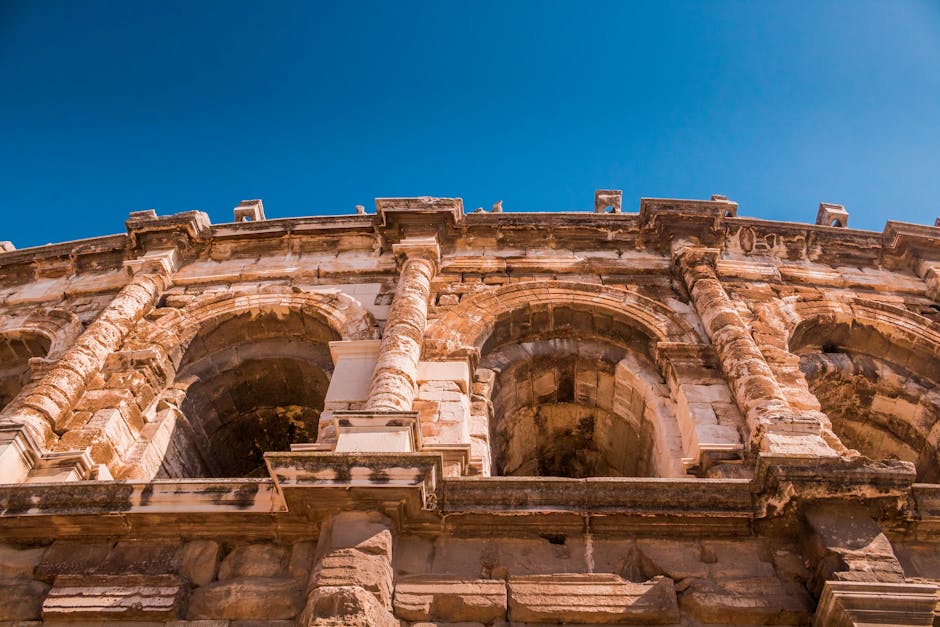
The Roman Empire dominated the Mediterranean world and beyond for over five centuries, from 27 BCE to 476 CE in the West, and continuing until 1453 CE in the East as the Byzantine Empire. At its greatest extent under Emperor Trajan in 117 CE, Rome controlled approximately 5 million square kilometers, encompassing the entire Mediterranean basin, much of Europe, and parts of the Middle East and North Africa. Roman innovations in engineering, law, military organization, and governance became foundational to Western civilization. Their construction of roads, aqueducts, and monumental architecture demonstrated unprecedented engineering prowess. Roman law influenced legal systems worldwide, while Latin became the foundation for Romance languages and remained the language of scholarship for centuries.
4. The Qing Dynasty: China's Final Imperial Dynasty
The Qing Dynasty (1644-1912) represented the territorial peak of Chinese imperial power, ruling over approximately 13.1 million square kilometers at its maximum extent in the late 18th century. Under the reign of the Kangxi, Yongzheng, and Qianlong emperors, the Qing achieved remarkable prosperity and territorial expansion, incorporating Mongolia, Tibet, Xinjiang, and Taiwan into the empire. The dynasty governed over 400 million people by the 19th century, making it the most populous empire of its time. The Qing maintained sophisticated bureaucracy through the civil service examination system, promoted arts and culture, and managed complex multi-ethnic populations. Despite eventual decline, the dynasty's territorial acquisitions largely define modern China's borders.
5. The Spanish Empire: First Global Superpower
The Spanish Empire became the first truly global empire, pioneering transoceanic colonization following Christopher Columbus's 1492 voyage. By the late 18th century, it controlled approximately 13.7 million square kilometers, spanning territories in the Americas, Asia, Africa, and Oceania. The phrase "the empire on which the sun never sets" originally described Spanish holdings. Spanish conquistadors toppled powerful civilizations like the Aztecs and Incas, extracting vast quantities of gold and silver that financed European development. The Spanish introduced European culture, language, and Catholicism across the Americas, creating a lasting legacy evident in the predominance of Spanish language and culture throughout Latin America. The Manila Galleons established the first global trade route, connecting Asia, the Americas, and Europe.
6. The Russian Empire: The Largest Empire by Land Area
The Russian Empire, lasting from 1721 to 1917, expanded to become the third-largest empire in history by land area, covering approximately 22.8 million square kilometers at its peak. Stretching from Poland in the west to Alaska in the east (until 1867), and from the Arctic Ocean to Central Asia, it governed over 125 million people by the early 20th century. Russian expansion combined military conquest with colonization, absorbing diverse ethnic groups and territories. The empire played crucial roles in European balance of power, defeating Napoleon's invasion and influencing continental politics. Russia's vast natural resources, including timber, minerals, and agricultural land, provided immense economic potential, while cultural achievements in literature, music, and arts gained worldwide recognition.
7. The Islamic Caliphate: Rapid Expansion and Golden Age
The early Islamic Caliphates, particularly the Umayyad Caliphate (661-750 CE) and Abbasid Caliphate (750-1258 CE), created one of history's most influential empires. Within a century of Prophet Muhammad's death in 632 CE, Islamic armies had conquered territories spanning from Spain and North Africa to Central Asia and the Indian subcontinent—approximately 11.1 million square kilometers under the Umayyads. The Islamic Golden Age brought remarkable advances in mathematics, astronomy, medicine, philosophy, and literature. Scholars preserved and expanded upon Greek and Roman knowledge, developing algebra, revolutionizing optics, and making astronomical observations. The caliphates established prosperous trade networks, promoted arts and architecture, and created administrative systems that managed diverse populations while spreading Arabic language and Islamic culture.
8. The Ottoman Empire: Bridge Between Continents
The Ottoman Empire (1299-1922) controlled strategic territories spanning three continents—Europe, Asia, and Africa—for over six centuries. At its zenith under Suleiman the Magnificent in the 16th century, it encompassed approximately 5.2 million square kilometers, controlling crucial trade routes between East and West. The Ottomans conquered Constantinople in 1453, ending the Byzantine Empire and establishing one of history's most magnificent capitals in Istanbul. Their military innovations, particularly the elite Janissary corps and effective use of gunpowder weapons, made them formidable opponents. The empire's millet system allowed religious minorities considerable autonomy, managing a multi-ethnic, multi-religious population effectively. Ottoman influence shaped Southeastern Europe, the Middle East, and North Africa, with architectural, cultural, and administrative legacies persisting today.
9. The Persian Empire: Ancient Superpower of the Near East
The Achaemenid Persian Empire (550-330 BCE), founded by Cyrus the Great, became antiquity's largest empire, controlling approximately 5.5 million square kilometers at its peak under Darius I. It stretched from the Balkans and Egypt in the west to the Indus Valley in the east, governing an estimated 44% of the world's population at the time. The Persians demonstrated remarkable administrative sophistication through the satrapy system, standardized coinage, and the Royal Road—an extensive network facilitating communication and trade. Cyrus's Cylinder, considered an early declaration of human rights, exemplified Persian tolerance toward conquered peoples' religions and customs. Persian cultural achievements influenced art, architecture, and governance throughout the ancient world, while Zoroastrianism shaped later religious developments.
10. The Macedonian Empire: Alexander's Legacy of Hellenization
Though relatively brief, Alexander the Great's Macedonian Empire (336-323 BCE) profoundly impacted world history. In just thirteen years, Alexander conquered territories stretching from Greece to Egypt and northwest India, encompassing approximately 5.2 million square kilometers. His military genius revolutionized warfare through combined-arms tactics and innovative siege techniques. More significantly, Alexander's conquests spread Hellenistic culture throughout the Near East and Central Asia, creating a cultural synthesis that influenced art, philosophy, science, and governance for centuries. The successor kingdoms established after his death—the Ptolemaic, Seleucid, and Antigonid dynasties—continued Hellenistic traditions, making Greek the lingua franca of the eastern Mediterranean and establishing Alexandria as a center of learning that preserved classical knowledge.
Enduring Influences on Modern Civilization
These ten empires represent the pinnacle of political, military, and cultural power throughout human history. Each dominated their era through combinations of military prowess, administrative innovation, economic strength, and cultural influence. Their legacies persist in modern languages, legal systems, architectural styles, religious practices, and political boundaries. The Roman legal tradition influences contemporary law; British colonialism shaped global English usage; Islamic scholarship preserved classical knowledge; Chinese bureaucratic systems inspired modern civil services; and Spanish conquest transformed entire continents culturally and demographically. Studying these empires reveals patterns of rise and decline, the costs and benefits of imperial expansion, and the complex relationships between conquerors and conquered peoples. Understanding their achievements and failures provides valuable perspectives on contemporary global dynamics and the nature of power itself.