








1 / 10 Questions
0 Points

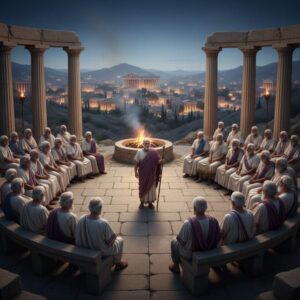
Which ancient Greek city-state turned boys into legendary warriors through brutal military training?

Sparta

Corinth

Athens

Thebes

Points won
0
Correct score
0%

More Quizzes

More Articles

When Small Events Had Massive Consequences

When Small Events Had Massive Consequences

⏱️ 5 min read

Throughout history, seemingly insignificant moments have triggered chain reactions that fundamentally altered the course of human civilization. A wrong turn, a delayed telegram, or a chance encounter has often proved more consequential than the grandest military campaigns or political machinations. These pivotal incidents demonstrate how fragile the trajectory of history can be, where minor decisions create ripples that eventually become tsunamis of change.

The Assassination That Sparked a World War

On June 28, 1914, Archduke Franz Ferdinand of Austria made a fateful decision that would cost millions of lives. After surviving an initial assassination attempt in Sarajevo, the Archduke's driver took a wrong turn while attempting to visit wounded officers at a hospital. The vehicle stalled on Franz Josef Street, directly in front of Gavrilo Princip, one of the failed assassins from earlier that day. Princip seized the unexpected opportunity and fired two shots, killing both the Archduke and his wife Sophie.

This chance encounter set off a domino effect of alliances and declarations of war that engulfed Europe and eventually the world. Within weeks, Austria-Hungary declared war on Serbia, pulling in Russia, Germany, France, and Britain through a complex web of treaties. The resulting conflict claimed over 17 million lives and redrew the map of Europe. A simple wrong turn had catalyzed the First World War.

A Rejected Art Student and the Course of the Twentieth Century

In October 1907, the Academy of Fine Arts Vienna rejected a young applicant's portfolio, deeming his work "unsatisfactory." The aspiring artist, Adolf Hitler, was told he lacked talent and should consider architecture instead. He applied again the following year and was rejected once more. Had the academy accepted Hitler, he might have pursued a quiet life as a mediocre artist in Vienna, painting watercolors of buildings and landscapes.

Instead, rejection and subsequent poverty in Vienna hardened Hitler's worldview and political ideology. He eventually turned to politics, where his oratorical skills proved more effective than his artistic abilities. The consequences of this academic rejection would ultimately contribute to World War II, the Holocaust, and the deaths of over 70 million people worldwide.

The Storm That Saved Japan

In 1274 and again in 1281, Kublai Khan's Mongol Empire attempted to invade Japan with massive fleets carrying tens of thousands of warriors. The Mongols had already conquered China, Korea, and much of Asia, and Japan appeared to be their next conquest. Japanese forces were outnumbered and outmatched by the technologically superior Mongol navy.

However, on both occasions, typhoons struck the invasion fleets, destroying thousands of ships and drowning tens of thousands of Mongol warriors. These storms, which the Japanese called "kamikaze" or "divine wind," saved Japan from invasion and preserved its independence. Had the weather been calm, Japanese culture, language, and society would likely have been absorbed into the Mongol Empire, fundamentally altering East Asian history.

A Delayed Telegram and Russian Revolution

In March 1917, Czar Nicholas II of Russia was at military headquarters in Mogilev when revolution erupted in Petrograd (St. Petersburg). Due to poor communication and delayed telegrams that downplayed the severity of the situation, Nicholas did not grasp the crisis unfolding in the capital. By the time accurate information reached him, it was too late to respond effectively.

Had Nicholas received timely, accurate reports, he might have rushed back to the capital with loyal troops and potentially suppressed the revolution. Instead, the delay allowed revolutionary forces to consolidate power. Within days, the 300-year-old Romanov dynasty collapsed, eventually leading to the Bolshevik takeover, the creation of the Soviet Union, and the Cold War that would define global politics for nearly a century.

The Mosquito Bite That Changed Colonial Americas

In the late 18th century, yellow fever devastated French forces attempting to suppress a slave rebellion in Saint-Domingue (modern-day Haiti). The disease, transmitted by mosquitoes, killed thousands of French soldiers, including many experienced officers. General Charles Leclerc, Napoleon's brother-in-law and commander of the expedition, also died from the disease in 1802.

The catastrophic losses convinced Napoleon that maintaining French colonies in the Americas was unsustainable. This directly led to his decision to sell the Louisiana Territory to the United States in 1803, doubling the size of the young nation overnight. Microscopic mosquitoes carrying a virus had effectively determined the future territorial composition of North America and established the United States as a continental power.

The Cloud Cover That Saved Kokura

On August 9, 1945, the American B-29 bomber "Bockscar" carried the second atomic bomb intended for the Japanese city of Kokura. The crew made three passes over the city but found it obscured by clouds and smoke from nearby industrial fires. With fuel running low and under orders requiring visual confirmation of the target, the crew diverted to their secondary target: Nagasaki.

This accident of weather spared Kokura from atomic destruction while condemning Nagasaki. The decision made in those moments affected tens of thousands of lives and determined which cities would carry the physical and psychological scars of nuclear warfare.

Understanding Historical Contingency

These examples illustrate a crucial historical principle: contingency matters. History is not predetermined or inevitable but rather shaped by countless small decisions, accidents, and chance occurrences. While broader social, economic, and political forces create conditions for change, specific events often serve as the spark that ignites transformation. Recognizing this contingency helps us appreciate both the fragility of our present circumstances and the profound responsibility carried by decision-makers whose seemingly small choices may echo through centuries.

Top 10 First Aid Skills Everyone Should Know

Top 10 First Aid Skills Everyone Should Know

⏱️ 7 min read

In emergency situations, the ability to provide immediate medical assistance can mean the difference between life and death. Whether at home, work, or in the wilderness, medical emergencies can occur without warning. Having a solid foundation in essential first aid techniques empowers individuals to respond effectively when professional medical help is minutes or hours away. These fundamental skills form the backbone of emergency preparedness and can significantly improve outcomes for injured or ill individuals.

Essential Life-Saving Techniques for Emergency Situations

1. Cardiopulmonary Resuscitation (CPR)

CPR stands as the most critical first aid skill anyone can learn. When someone's heart stops beating or they stop breathing, immediate CPR can double or triple their chances of survival. The technique involves chest compressions at a rate of 100-120 per minute, pushing down approximately two inches on the center of the chest. For adults, the current guidelines recommend hands-only CPR for untrained bystanders, focusing solely on continuous chest compressions until emergency services arrive. Understanding when and how to perform CPR, including recognizing cardiac arrest signs such as unresponsiveness and absence of normal breathing, makes this skill invaluable in saving lives during heart attacks, drowning incidents, or electrocution accidents.

2. Controlling Severe Bleeding

Hemorrhage control is a fundamental skill that addresses one of the most common life-threatening emergencies. Severe bleeding can lead to shock and death within minutes if not properly managed. The primary technique involves applying direct pressure to the wound using a clean cloth or bandage, maintaining firm, steady pressure for at least ten minutes without lifting to check if bleeding has stopped. For limb injuries, elevating the wounded area above heart level helps reduce blood flow. In cases of extreme bleeding where direct pressure fails, knowing how to properly apply a tourniquet—placed between the wound and the heart, tightened until bleeding stops—can prevent fatal blood loss in situations involving severed arteries or traumatic amputations.

3. Treating Burns Appropriately

Burn injuries require specific care protocols that differ significantly based on severity. First-degree burns affecting only the outer skin layer should be cooled with running water for at least ten minutes, never ice, which can cause further tissue damage. Second-degree burns involving blistering require the same cooling treatment, but blisters should never be popped as they provide natural protection against infection. Third-degree burns, which appear white or charred, require immediate professional medical attention. Understanding to remove jewelry and tight clothing before swelling occurs, covering burns with sterile, non-stick bandages, and recognizing when burns cover large body areas or involve the face, hands, feet, or genitals helps determine appropriate response levels.

4. Managing Choking Incidents

Airway obstruction from choking can quickly become fatal if not addressed immediately. The Heimlich maneuver, or abdominal thrusts, serves as the primary intervention for conscious choking victims. This technique involves standing behind the person, placing a fist above their navel, grasping it with the other hand, and delivering quick upward thrusts until the object dislodges. For unconscious choking victims, CPR becomes necessary. Recognizing the universal choking sign—hands clutched to the throat—and distinguishing between partial obstruction, where the person can still cough or speak, and complete obstruction requiring immediate intervention, ensures appropriate response timing.

5. Recognizing and Responding to Shock

Shock occurs when the body's organs and tissues don't receive adequate blood flow and oxygen, potentially leading to organ failure and death. Recognizing shock symptoms including pale or bluish skin, rapid shallow breathing, rapid weak pulse, confusion, and decreased consciousness allows for timely intervention. Treatment involves laying the person flat, elevating legs about 12 inches unless spinal injury is suspected, maintaining body temperature with blankets, and avoiding giving anything by mouth. Understanding that shock can accompany various injuries including severe bleeding, burns, heart attacks, and allergic reactions emphasizes the importance of monitoring for these signs in any emergency situation.

6. Handling Fractures and Sprains

Musculoskeletal injuries are among the most common emergencies requiring first aid knowledge. The primary goal involves immobilizing the injured area to prevent further damage. For suspected fractures, splinting the injury in the position found, supporting joints above and below the break, and applying ice wrapped in cloth helps manage pain and swelling. Never attempt to realign bones or push protruding bones back in. For sprains, the RICE method—Rest, Ice, Compression, and Elevation—provides effective initial treatment. Recognizing red flags such as deformity, severe pain, numbness, or coldness below the injury site indicates the need for immediate professional medical evaluation.

7. Treating Poisoning and Overdoses

Poisoning emergencies require rapid assessment and appropriate response based on the substance involved and exposure route. For ingested poisons, calling poison control immediately and following their specific instructions takes priority over inducing vomiting, which can sometimes cause more harm. For skin contact with chemicals, removing contaminated clothing and flushing the area with water for at least 20 minutes proves essential. In cases of inhaled poisons, moving the person to fresh air becomes the first priority. Collecting information about the substance, amount, and timing of exposure, along with preserving containers or remnants, helps medical professionals provide targeted treatment. Understanding that activated charcoal or other interventions should only be given under professional guidance prevents potentially harmful actions.

8. Performing Wound Care and Preventing Infection

Proper wound management prevents infection and promotes healing. The process begins with washing hands thoroughly and wearing gloves if available. Cleaning wounds with clean water, applying antibiotic ointment, and covering with sterile bandages creates optimal healing conditions. For deeper wounds, applying pressure to stop bleeding before cleaning becomes necessary. Recognizing signs of infection—increased pain, redness, swelling, warmth, pus, or red streaks extending from the wound—indicates when professional medical attention becomes necessary. Understanding which wounds require stitches, typically those longer than half an inch, deeper than a quarter inch, or with separated edges, helps determine when emergency care is needed beyond basic first aid.

9. Responding to Heat-Related Emergencies

Heat exhaustion and heat stroke represent serious conditions requiring different intervention levels. Heat exhaustion symptoms include heavy sweating, weakness, dizziness, nausea, and headache. Treatment involves moving the person to a cool environment, providing cool water to drink, and applying cool cloths. Heat stroke, however, constitutes a medical emergency with symptoms including hot dry skin, confusion, seizures, and loss of consciousness. This requires immediately calling emergency services, moving the person to shade, and cooling them rapidly with whatever means available including water immersion or ice packs applied to neck, armpits, and groin. Understanding that heat stroke can be fatal within minutes without treatment emphasizes the critical nature of rapid recognition and response.

10. Managing Allergic Reactions and Anaphylaxis

Severe allergic reactions can progress rapidly from mild symptoms to life-threatening anaphylaxis. Recognizing early signs including hives, itching, swelling of lips or tongue, difficulty breathing, stomach cramps, and dizziness allows for timely intervention. For known severe allergies, administering an epinephrine auto-injector at the first signs of anaphylaxis can be life-saving. The injection should be given into the outer thigh muscle, held for ten seconds, and emergency services called immediately even if symptoms improve. Understanding that a second wave of symptoms can occur 30 minutes to hours after the initial reaction emphasizes the necessity of professional medical evaluation even when initial symptoms resolve.

Building a Foundation for Emergency Preparedness

Mastering these ten essential first aid skills creates a foundation for effective emergency response in countless situations. While reading about these techniques provides valuable knowledge, hands-on training through certified first aid courses offers practical experience that builds confidence and competence. Regular practice and refresher courses ensure these skills remain sharp and readily accessible when emergencies arise. Beyond individual preparedness, sharing this knowledge with family members, coworkers, and community members multiplies the potential for positive outcomes during critical moments. In survival situations where professional medical help may be delayed or unavailable, these fundamental skills become even more crucial, potentially making the difference between tragedy and successful recovery.