
⏱️ 9 min read
When Marilyn Monroe’s iconic white dress from “The Seven Year Itch” sold for $4.6 million in 2011, it shattered expectations and proved that Hollywood memorabilia could command prices rivaling fine art. The world of movie prop auctions has become a billion-dollar industry where fans, investors, and museums compete for tangible pieces of cinema history. Some of these artifacts have fetched astronomical sums that few would have imagined when they were first created on studio lots.
Quick Facts
- The Aston Martin DB5 from “Goldfinger” sold for $6.4 million in 2010, making it one of the most valuable movie cars ever auctioned.
- Marilyn Monroe’s subway grate dress brought $4.6 million at auction in 2011, over 15 times its pre-sale estimate.
- The Maltese Falcon statuette from the 1941 film sold for $4.1 million in 2013, setting a record for movie prop sales at the time.
- Robby the Robot from “Forbidden Planet” fetched $5.375 million in 2017, the highest price ever paid for a science fiction prop.
- The original Ruby Slippers from “The Wizard of Oz” sold for $666,000 in 2000, though authenticated pairs have since commanded higher private sale prices.
The Reign of James Bond’s Automobiles
Few movie props have captured collector imagination quite like James Bond’s vehicles. The 1964 Aston Martin DB5 driven by Sean Connery in “Goldfinger” and “Thunderball” achieved $6.4 million at a 2010 RM Auctions sale in London. This particular car featured working gadgets including a rear bulletproof shield, revolving number plates, and simulated machine guns that emerged from the front indicators. The buyer remained anonymous, but the sale established vehicles as among the most valuable categories in Hollywood memorabilia.
Another Bond vehicle, the Lotus Esprit submarine car from “The Spy Who Loved Me,” sold for $997,000 in 2013. Tesla CEO Elon Musk purchased this prop, expressing disappointment when he discovered it couldn’t actually transform into a submarine. The vehicle had been found in a storage unit in Long Island, purchased blind by a couple who paid $100 for the contents without knowing what treasures lay inside.
Golden Age Hollywood Costumes and Accessories
Marilyn Monroe’s white “subway dress” designed by William Travilla stands as the most expensive costume ever sold at auction. The pleated ivory cocktail dress, immortalized in the scene where Monroe stands over a subway grate, sold for $4.6 million in 2011 to Debbie Reynolds’ Hollywood memorabilia collection. The price was particularly remarkable given its pre-auction estimate of $1-2 million. The dress had previously sold for $73,800 in 1999, demonstrating the exponential growth in Hollywood memorabilia values.
Audrey Hepburn’s black Givenchy dress from “Breakfast at Tiffany’s” commanded $923,187 at a 2006 Christie’s auction. The little black dress became synonymous with Hepburn’s elegance and influenced fashion for decades. Proceeds benefited the City of Joy Aid charity in India, adding philanthropic appeal to the lot. The winning bidder was an anonymous telephone participant who outbid several fashion museums seeking to preserve this iconic piece of costume design.
Judy Garland’s test pair of Ruby Slippers from “The Wizard of Oz” sold for $666,000 in 2000 to collector David Elkouby, who later donated them to the Academy Museum of Motion Pictures. Multiple pairs of the slippers were created for the 1939 production, with different pairs surfacing over the decades. One pair was stolen from the Judy Garland Museum in Grand Rapids, Minnesota in 2005 and recovered by the FBI in 2018, though the theft case generated controversy about authentication and insurance valuations.
Science Fiction Props Command Premium Prices
Robby the Robot from the 1956 film “Forbidden Planet” achieved $5.375 million at a 2017 Bonhams auction in New York, establishing a benchmark for science fiction memorabilia. The seven-foot-tall mechanical marvel was designed by Robert Kinoshita and built by the MGM prop department at a cost of approximately $125,000—an enormous sum in 1956. Robby appeared in numerous productions following “Forbidden Planet,” including episodes of “The Twilight Zone” and “Lost in Space,” increasing his cultural footprint.
The miniature model of the Nostromo spaceship from Ridley Scott’s “Alien” sold for $500,000 in 2020. This wasn’t the hero model used for principal photography, but a secondary filming miniature that still represented the craftsmanship of pre-CGI special effects. The sale reflected growing appreciation for practical effects work from the late 1970s and early 1980s, before computer-generated imagery dominated blockbuster filmmaking.
Luke Skywalker’s lightsaber from “Star Wars: A New Hope” brought $450,000 at a 2008 auction. The prop was constructed from a Graflex camera flash handle, a detail that sparked decades of replica-making by devoted fans. This particular lightsaber was used by Mark Hamill in crucial scenes aboard the Millennium Falcon, establishing provenance through production photographs and frame-by-frame analysis.
The Maltese Falcon and Classic Film Noir Artifacts
The lead statuette of the Maltese Falcon from John Huston’s 1941 masterpiece sold for $4.1 million in 2013, purchased by Steve Wynn’s art collection. Two falcon props were created for the production—a lightweight resin version for actors to handle easily, and this heavier lead version for close-ups that conveyed authentic weight. The prop’s journey through private hands included ownership by William Conrad, who played a detective in radio’s “The Adventures of Sam Spade,” creating a connection between the film and its radio adaptation.
The auction house Bonhams had estimated the falcon would sell for $1-1.5 million, making the final price nearly three times expectations. The statuette measured approximately 12 inches tall and weighed about 50 pounds, with its heft proving its authenticity as the lead version rather than the resin duplicate. This sale demonstrated that props from classic film noir could compete financially with items from more commercially successful modern franchises.
Modern Blockbuster Memorabilia Breaks Records
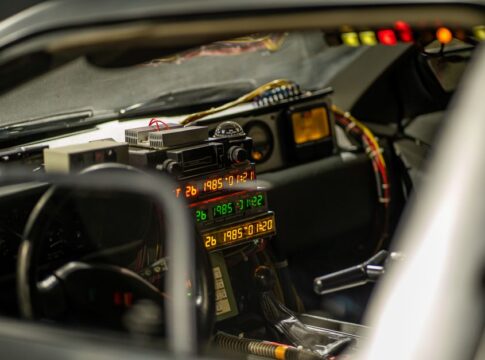
The DeLorean time machine from “Back to the Future Part III” sold for $541,200 in 2011, though several DeLoreans were modified for the trilogy’s production. This particular vehicle was built on a fiberglass mold rather than an actual DeLorean chassis, used primarily for wide shots and publicity appearances. The distinction between hero props (used in close-ups with actors) and stunt or background props significantly affects auction values, with hero props commanding substantial premiums.
Russell Crowe’s personal collection auction in 2018 included the gladiator armor he wore in “Gladiator,” which sold for $125,000. While not the highest-priced item ever sold, the auction generated over $3.7 million total, demonstrating the market breadth for contemporary movie props. Crowe titled the auction “The Art of Divorce,” using proceeds to settle his separation from Danielle Spencer, adding a biographical narrative that increased media attention and potentially bidding activity.
Harrison Ford’s fedora and leather jacket from “Indiana Jones and the Temple of Doom” achieved $630,000 at a 2018 auction. Costume pieces worn by actors in career-defining roles command premiums because they represent both the character and the performer. The provenance included a letter of authenticity from costume designer Anthony Powell and photographic evidence matching the items to specific scenes in the 1984 sequel.
Factors Driving Auction Values Sky-High
Screen-used verification represents the paramount factor in determining prop values. Items must be authenticated through studio records, production photographs, or expert analysis matching wear patterns, manufacturing details, and materials to what appears on screen. The Profiles in History auction house employs specialists who examine props under magnification and compare them frame-by-frame to film footage, creating detailed provenance reports that justify six-figure and seven-figure prices.
Cultural significance amplifies values beyond mere scarcity. The Maltese Falcon statuette and Dorothy’s Ruby Slippers transcend their films to become symbols recognized even by those who haven’t seen the movies. This broader cultural penetration creates demand from museums, corporate collections, and ultra-wealthy individuals seeking trophy pieces that communicate sophistication and nostalgia. The 2014 sale of Captain America’s shield and Thor’s hammer as a lot for $110,000 demonstrated that even reproductions from recent films appreciate rapidly when associated with billion-dollar franchises.
Investment potential has attracted buyers beyond traditional collectors. Some purchasers view premiere Hollywood props as alternative assets comparable to rare automobiles or vintage wines. An analysis of repeat sales shows appreciation rates for authenticated major props averaging 8-12% annually over the past two decades, though the market remains illiquid and vulnerable to authentication disputes. The rise of cryptocurrency wealth has introduced new buyer demographics with capital seeking tangible assets connected to beloved entertainment properties.
Frequently Asked Questions
What is the single most expensive movie prop ever sold at public auction?
The Aston Martin DB5 from “Goldfinger” holds the record at $6.4 million, sold in 2010. However, if costumes are included in the prop category, Marilyn Monroe’s white dress would rank among the highest at $4.6 million.
How do auction houses authenticate movie props before sale?
Authentication involves examining studio documentation, production photographs, chain of custody records, and physical comparison to screen-used items through frame-by-frame film analysis. Material testing, construction methods, and wear patterns are evaluated by specialists who create detailed provenance reports for high-value lots.
Can regular collectors afford any props from famous movies?
Yes—background props, crew gifts, and items from less iconic scenes regularly sell for hundreds or low thousands of dollars. Production-used but non-hero props from major films often auction for $500-$5,000, making entry-level collecting accessible to dedicated fans with moderate budgets.
Do movie studios receive any proceeds from prop auction sales?
Generally no—most props sold at auction passed into private hands through studio liquidations, crew members, or official studio auctions decades ago. Current sales represent secondary market transactions between private parties, though studios occasionally consign items directly to benefit charities or anniversary promotions.
Key Takeaways
- Vehicles and large mechanical props like the Aston Martin DB5 ($6.4 million) and Robby the Robot ($5.375 million) command the highest prices at Hollywood auctions due to their visual impact and engineering complexity.
- Provenance and screen verification are essential—hero props used in close-ups with lead actors sell for exponentially more than background or stunt versions, making authentication documentation critical to value.
- Cultural iconography transcends film quality, with instantly recognizable items like Monroe’s subway dress and the Maltese Falcon statuette achieving premium prices because they’ve become symbols beyond their original films.
- The Hollywood memorabilia market has matured into a legitimate alternative investment category, with authenticated major props appreciating 8-12% annually over the past two decades, though liquidity remains limited compared to traditional assets.