









Why Guitars Have Frets But Violins Do Not
By Trivia Daily, Staff Writer — Published October 22, 2026
Table of Contents
- Key Takeaways
- The Practical Purpose of Guitar Frets and Violins Without Them
- Historical Development and Musical Traditions
- Comparing Playing Techniques and Learning Curves
- Why Some Instruments Bridge the Gap
- The Sound Quality Implications
- Frequently Asked Questions
Pick up a guitar and you'll immediately notice those metal strips running across the neck—frets that divide the fingerboard into precise intervals. Now look at a violin, and you'll find a completely smooth fingerboard without a single guide. This fascinating difference between guitars, frets, and violins isn't just a design quirk. It reveals something deeper about how these instruments evolved, how musicians play them, and what kinds of sounds they're meant to produce. The answer might surprise you: it's all about pitch precision, musical flexibility, and centuries of tradition.
Both instruments rely on pressing strings against a fingerboard to change pitch, yet they take completely opposite approaches. One provides physical markers for every note. The other demands that players find pitches entirely by ear and muscle memory. Understanding why opens a window into the amazing world of stringed instrument design.
Key Takeaways
- Frets guarantee precise pitch on guitars by providing fixed positions for semitones, making them easier for beginners to learn and ideal for chordal playing.
- Violins lack frets to allow continuous pitch adjustment, enabling vibrato, microtonal expression, and the smooth gliding between notes that defines their expressive sound.
- The difference traces back to how these instruments are played—guitars are primarily plucked or strummed for rhythmic accompaniment, while violins are bowed for melodic lines requiring nuanced intonation.
- Fretless instruments demand years of training to develop accurate muscle memory for finger placement, while fretted instruments allow faster initial progress.
- Some fretted instruments like sitars have moveable frets, and some violinists use finger tapes as temporary learning guides, showing that the fretted-versus-fretless divide isn't absolute.
- The choice between frets and smooth fingerboards fundamentally shapes the musical genres and playing techniques each instrument can best serve.
The Practical Purpose of Guitar Frets and Violins Without Them
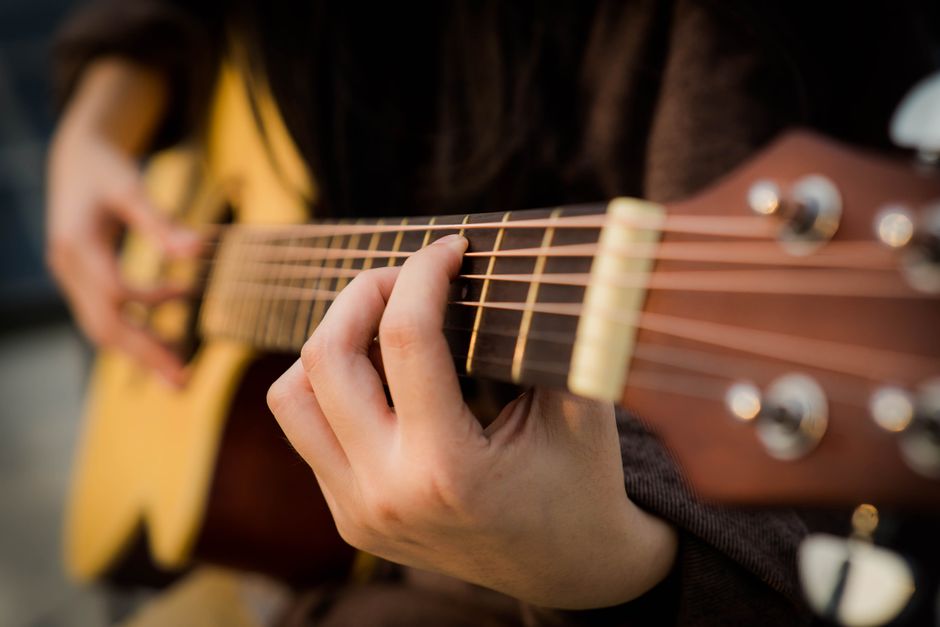
Frets serve as physical guides that guarantee accurate pitch. When you press a guitar string down behind a fret, the string contacts that metal bar, creating a precise vibrating length. This mechanical system eliminates guesswork. Each fret represents one semitone—the smallest interval in Western music—so pressing at the first fret gives you one note, the second fret another, and so on. The math is built into the instrument.
This design makes guitars remarkably accessible. A complete beginner can produce a perfectly in-tune note on their first try simply by pressing in the right fret space. The instrument forgives imprecise finger placement within each fret space. Whether you press near the front or back of the space, the pitch remains identical because the string always stops at the fret itself.
Violins take the opposite approach for good reason. The smooth fingerboard allows infinite pitch possibilities between any two notes. A violinist can play not just the standard semitones, but any microtonal interval imaginable. This enables vibrato—that expressive wavering of pitch that gives violin music its emotional depth. Try producing vibrato on a guitar by rocking your finger back and forth, and the fret limits how much the pitch can change. On a violin, the player controls the exact amount and speed of pitch variation.
The fretless design also allows violinists to adjust intonation on the fly. Playing in tune with other instruments requires tiny pitch adjustments that frets would prevent. When an orchestra tunes, string players can match pitch with microscopic precision that fretted instruments simply cannot achieve.
Historical Development and Musical Traditions
The guitar family developed primarily in Spain and other parts of Europe as an accompaniment instrument. Players strummed chords to support singers or other melodic instruments. This role demanded clear, consistent harmony. Frets guaranteed that every chord would sound in tune, even when played quickly or by less experienced musicians. The vihuela and early guitars of the Renaissance period already featured tied gut frets, showing that this design principle emerged early.
Violins evolved from earlier bowed instruments like the medieval fiddle and Renaissance viol. The violin family—including viola, cello, and double bass—crystallized in 16th-century Italy. These instruments were designed for melodic playing, carrying the tune rather than providing harmonic accompaniment. The great violin makers of Cremona, including the Amati, Stradivari, and Guarneri families, perfected designs that prioritized tonal beauty and expressive range. Frets would have constrained the very qualities that made these instruments valuable.
Cultural musical traditions reinforced these design choices. Western classical music demands precise intonation and expressive techniques like portamento—sliding smoothly from one note to another. A fretless fingerboard makes this possible. Meanwhile, folk and popular music traditions that embraced guitars often featured rhythmic strumming patterns and chord progressions where consistent pitch mattered more than microtonal expression.
Comparing Playing Techniques and Learning Curves
| Aspect | Guitar (Fretted) | Violin (Fretless) |
|---|---|---|
| Initial learning curve | Gentler—visual and tactile fret markers guide finger placement | Steeper—requires developing pitch memory and precise muscle control |
| Pitch accuracy | Guaranteed by fret positions | Entirely dependent on player skill |
| Vibrato technique | Limited by fret spacing | Fully controllable in speed and width |
| Chord playing | Easy to produce multiple in-tune notes simultaneously | Challenging to maintain accurate intonation across multiple strings |
| Expressive pitch bending | Possible by pushing strings between frets, but limited | Unlimited continuous pitch control |
The physical act of playing each instrument reflects these design differences. Guitarists develop calluses and learn chord shapes—specific finger patterns across multiple frets. They can read tablature that tells them exactly which fret to press on which string. Violinists must train their ears to recognize when they're in tune, developing what musicians call "intonation." Many violinists practice for years before their pitch becomes consistently accurate.
Why Some Instruments Bridge the Gap
Not all stringed instruments fit neatly into the fretted or fretless categories. The sitar, a classical Indian instrument, features moveable frets that players adjust to match the specific scale of each raga they perform. This allows both the precision of frets and the flexibility to customize tuning systems beyond Western equal temperament.
Bass guitars exist in both fretted and fretless versions. Fretless bass became popular in jazz and fusion music, where players wanted the smooth, singing quality of an upright bass but in electric form. Players like Jaco Pastorius demonstrated that fretless electric bass could produce uniquely expressive sounds impossible on fretted instruments.
Some violin teachers use removable finger tapes—thin strips placed on the fingerboard to mark common note positions. These temporary guides help beginners develop initial muscle memory, but teachers remove them once students develop reliable pitch sense. This training-wheels approach acknowledges that fretless playing is learnable but requires patient development.
The lute family includes instruments with gut frets tied around the neck, which players could adjust or remove. This represented a middle ground, offering some guidance while allowing flexibility that fixed metal frets would prevent.
The Sound Quality Implications
Frets subtly affect tone in ways many listeners never notice. When a string vibrates against a metal fret, it produces a brighter, slightly more percussive attack than a string pressed against wood. This contributes to the guitar's characteristic clarity and note separation—ideal for rhythmic strumming and fingerpicking patterns.
Fretless instruments produce a warmer, more vocal quality. The string contacts the player's fingertip directly to the wooden fingerboard, allowing more complex vibrations and harmonics. This contributes to the violin's singing, human-like voice that has made it central to orchestral music for centuries. The ability to create seamless legato passages—notes flowing into each other without audible breaks—gives violins their lyrical character.
Sustain differs too. Guitar frets provide a hard contact point that can enhance sustain on electric guitars, where magnetic pickups amplify the string's vibration. On violins, the bow continuously energizes the string, so sustain depends more on bowing technique than fingerboard design.
Frequently Asked Questions
Can you add frets to a violin or remove them from a guitar?
While technically possible, adding frets to a violin would fundamentally change its playing technique and sound character, eliminating the expressive pitch control that defines the instrument. Some experimental instruments exist, but they're not considered true violins. Conversely, fretless guitars are made and played, particularly bass guitars in jazz and fusion genres.
How long does it take to learn accurate intonation on a fretless instrument?
Most violin students require several years of regular practice to develop consistently accurate intonation across the instrument's range. Progress varies based on practice frequency, ear training, and instruction quality. Some basic tunes can be played in tune within months, but advanced repertoire demands refined pitch control that takes years to master.
Do frets limit the musical styles you can play on guitar?
Frets don't prevent any particular style, but they do limit microtonal music and the kind of smooth pitch bending common in violin playing. However, guitarists can bend strings by pushing them perpendicular to the frets, achieving expressive pitch changes crucial to blues, rock, and many other styles. Some contemporary composers write microtonal guitar music using special techniques between frets.
Why don't cellos and double basses have frets either?
Cellos and double basses belong to the violin family and share the same design philosophy—prioritizing expressive intonation and tonal flexibility over the ease of fixed pitch positions. These larger instruments serve melodic and harmonic roles in orchestras and ensembles where precise, adjustable intonation matters more than beginner accessibility. Some early viols, related but distinct instruments, did have frets.
The next time you see a guitarist's fingers dancing across frets or a violinist's hand gliding along a smooth fingerboard, you're witnessing centuries of instrument evolution shaped by musical needs. Each design choice represents a trade-off between accessibility and expression, precision and flexibility. Neither approach is superior—they're simply optimized for different musical goals, different traditions, and different sounds that continue to move audiences worldwide.