






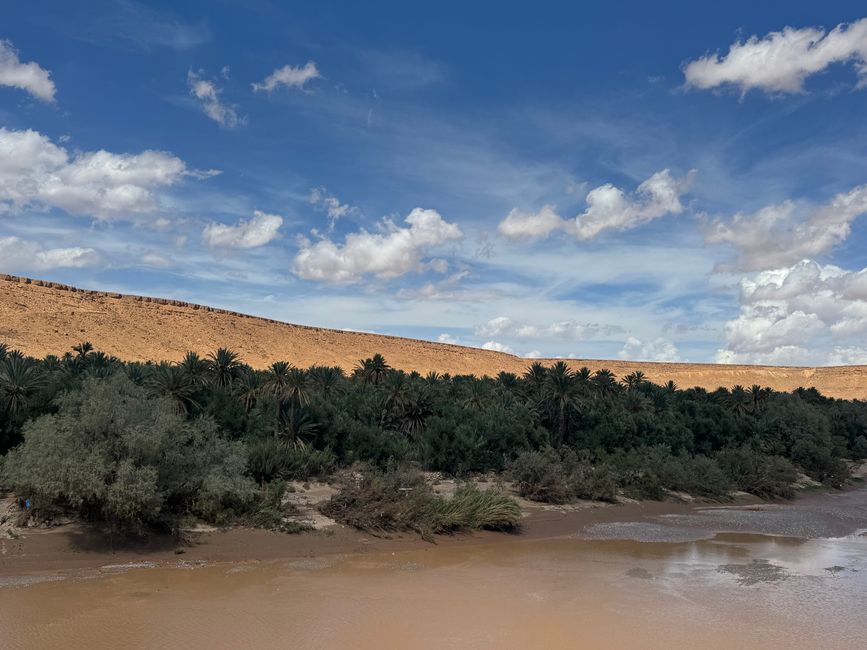
Why the Sahara Desert Was Once a Lush Green Savanna
By Trivia Daily, Geography Desk — Published August 29, 2026
Table of Contents
- Key Takeaways
- The African Humid Period and the Sahara Desert's Lush Past
- What Caused the Sahara Desert to Turn Lush Green?
- The Rapid Return to Desert Conditions
- Evidence Across North African Countries and Geography
- Comparing the Green Sahara to Modern Landscapes
- Frequently Asked Questions
The Sahara Desert, stretching across much of North Africa and covering parts of eleven countries, is today the world's largest hot desert—a seemingly endless expanse of sand dunes, rocky plateaus, and scorching temperatures. Yet this iconic landmark wasn't always the barren wilderness we know. Roughly 10,000 years ago, the Sahara Desert was lush with vegetation, dotted with lakes and rivers, and teeming with wildlife including hippos, crocodiles, and early human civilizations. The transformation from green paradise to arid wasteland is one of geography's most dramatic climate shifts, revealing how profoundly our planet's landscapes can change.
Understanding why the Sahara transformed helps us grasp the dynamic nature of Earth's climate systems and the delicate balance that sustains habitable places across continents. This wasn't a gradual fade—it was a relatively rapid shift driven by wobbles in our planet's orbit that altered monsoon patterns across this vast region of the world.
Key Takeaways
- The Sahara Desert was a green savanna with lakes, rivers, and abundant wildlife approximately 5,000 to 11,000 years ago during the African Humid Period.
- Changes in Earth's orbital tilt and precession shifted the African monsoon belt, dramatically reducing rainfall across North Africa.
- Rock art and archaeological evidence throughout the Sahara document ancient human settlements, fishing communities, and cattle herding in areas that are now completely arid.
- The transformation from savanna to desert happened relatively quickly in geological terms—over just a few thousand years.
- Scientists believe the Sahara oscillates between wet and dry phases roughly every 20,000 years, linked to predictable changes in Earth's orbital cycles.
- Lake Mega-Chad, once one of the largest lakes in the world, covered an area larger than the Caspian Sea during the green Sahara period.
The African Humid Period and the Sahara Desert's Lush Past
Between approximately 11,000 and 5,000 years ago, North Africa experienced what scientists call the African Humid Period. During this time, the region received significantly more rainfall than today—enough to support grasslands, scattered trees, permanent water bodies, and diverse animal populations. The monsoon rains that currently drench regions farther south extended much farther north, bringing life-giving moisture to areas that now receive virtually no precipitation.
Evidence of this green Sahara appears throughout the desert. Ancient lake beds, fossilized pollen, and sediment cores reveal landscapes that would be unrecognizable today. Rivers flowed where sand now dominates. Hippos wallowed in lakes across what is now Libya. Crocodiles thrived in water systems that have long since vanished. This wasn't a tropical rainforest, but rather a mosaic of grasslands and savannas similar to modern East Africa, punctuated by wetlands and woodlands along watercourses.
Human populations flourished during this period, leaving behind remarkable archaeological records. Rock art found in remote Saharan mountains depicts giraffes, elephants, and cattle—animals that require substantial water and vegetation. These paintings and engravings weren't created by nomadic desert dwellers but by settled communities who fished, hunted, and eventually herded livestock across a hospitable landscape.
What Caused the Sahara Desert to Turn Lush Green?
The greening of the Sahara wasn't random—it resulted from predictable changes in Earth's orbital parameters. Our planet's tilt and the shape of its orbit around the Sun vary in regular cycles over thousands of years, phenomena known as Milankovitch cycles. These subtle shifts alter how much solar radiation different parts of Earth receive during different seasons.
Around 11,000 years ago, Earth's axial tilt was slightly greater than today, and the planet was closest to the Sun during Northern Hemisphere summer rather than winter. This configuration intensified the African monsoon, pulling moisture-laden winds much farther north than they reach in the modern climate. The enhanced rainfall transformed the Sahara from desert to savanna, demonstrating how relatively small changes in solar heating can trigger massive regional climate shifts.
The transformation worked through a feedback loop. As vegetation spread across North Africa, the land surface darkened, absorbing more solar energy rather than reflecting it like bare sand. This warming drew even more monsoon moisture northward. Lakes and wetlands increased humidity, generating local rainfall. The system reinforced itself, maintaining green conditions for thousands of years until orbital changes began reversing the process.
The Rapid Return to Desert Conditions
The Sahara's transition back to desert happened faster than many scientists initially expected. Rather than a slow, steady decline over tens of thousands of years, much of the region dried out within just a few millennia. Some areas may have transformed in mere centuries. This rapid shift likely occurred because the same feedback loops that maintained the green Sahara also accelerated its demise once they reversed direction.
As orbital changes weakened the monsoon, vegetation began dying back. Exposed soil reflected more sunlight, cooling the land surface and further weakening the atmospheric circulation that drew moisture northward. Lakes shrank and disappeared, reducing local humidity. The system tipped from one stable state—lush savanna—to another—barren desert. Human populations and wildlife either migrated to remaining water sources, particularly the Nile River valley, or adapted to increasingly arid conditions.
The speed of this transformation has important implications for understanding modern climate change. It demonstrates that Earth's climate systems can shift between dramatically different states relatively quickly when feedback mechanisms amplify initial changes, whether those changes come from orbital variations or other factors.
Evidence Across North African Countries and Geography
The legacy of the green Sahara spans the maps of multiple countries across the African continent. In Chad, the dried-up basin of Lake Mega-Chad reveals a body of water that once covered roughly 400,000 square kilometers—larger than Germany. In Algeria and Libya, ancient river valleys snake across landscapes that haven't seen flowing water in millennia. In Egypt's Western Desert, archaeological sites mark settlements that thrived when now-dry wadis carried reliable water.
Sediment cores drilled from beneath the Mediterranean Sea and the Atlantic Ocean off Africa's western coast contain dust and pollen that chronicle the Sahara's transformation. When the region was green, less dust blew off the continent into these oceans. Marine sediments from the African Humid Period show reduced sand particles and increased organic material washed from vegetated landscapes—a record preserved in ocean floor geology.
Even the geography of modern oases reflects this wetter past. Many Saharan oases tap ancient groundwater—fossil water deposited during humid periods. This water, some of it thousands of years old, sustains isolated pockets of life in an otherwise inhospitable environment, a liquid reminder of dramatically different climatic conditions.
Comparing the Green Sahara to Modern Landscapes
| Feature | Green Sahara (11,000-5,000 years ago) | Modern Sahara Desert |
|---|---|---|
| Annual Rainfall | 300-500mm in many areas | Less than 25mm in most regions |
| Vegetation | Grasslands, scattered trees, wetland plants | Sparse shrubs in limited areas, mostly barren |
| Major Water Bodies | Lake Mega-Chad, numerous smaller lakes and rivers | Seasonal wadis, isolated oases |
| Wildlife | Hippos, crocodiles, elephants, giraffes, antelope | Adapted desert species: fennec foxes, addax, desert monitors |
| Human Settlement | Permanent communities, fishing, herding | Nomadic populations concentrated near water sources |
Frequently Asked Questions
Will the Sahara Desert become green again?
Based on Earth's orbital cycles, the Sahara is expected to green again in roughly 15,000 years when orbital parameters favor stronger African monsoons. However, human-caused climate change may alter or disrupt these natural cycles in unpredictable ways.
How long did it take for the Sahara to turn from green to desert?
The transformation occurred over approximately 2,000 to 3,000 years, with some regions changing even more rapidly. This is relatively quick in geological terms, though it spanned many human generations.
What animals lived in the green Sahara?
The green Sahara supported hippos, crocodiles, elephants, giraffes, various antelope species, lions, and numerous bird species. Fossil evidence and rock art document these now-absent animals across the desert.
Did humans cause the Sahara to become a desert?
No, the primary driver was orbital changes affecting monsoon patterns. However, some research suggests overgrazing by domesticated animals may have accelerated desertification in certain areas by reducing vegetation cover and disrupting feedback loops.
The story of the Sahara's green past reminds us that even the world's most iconic natural landmarks aren't permanent fixtures—they're snapshots of ongoing planetary processes. The same desert that seems eternal and unchanging has been, and will be again, something entirely different. That's perhaps the most humbling lesson geography can teach.