









⏱️ 7 min read
Elephants have captivated human imagination for millennia, standing as symbols of wisdom, strength, and family bonds across cultures worldwide. These magnificent creatures are far more complex than their imposing size might suggest, possessing remarkable cognitive abilities, intricate social structures, and surprising physiological adaptations. From their sophisticated communication methods to their critical role in ecosystem management, elephants continue to reveal astonishing traits that challenge our understanding of animal intelligence and behavior.
Remarkable Discoveries About Earth's Largest Land Mammals
1. Extraordinary Memory and Cognitive Abilities
The phrase "an elephant never forgets" contains more truth than folklore. Elephants possess exceptional memory capabilities that serve crucial survival functions. They can remember the locations of water sources across vast distances, even after decades have passed, and can recall hundreds of individual elephants throughout their lives. Research has demonstrated that elephants can recognize and distinguish between different human languages, voices, and even ethnic groups, associating certain groups with threat levels based on past experiences. Their hippocampus, the brain region associated with memory, continues growing throughout their lives, unlike most mammals. This remarkable memory extends to emotional experiences, with documented cases of elephants returning to locations where family members died, gently touching the bones with their trunks in what appears to be mourning behavior.
2. Complex Communication Through Infrasound
Elephants communicate using a sophisticated system that includes sounds beyond human hearing range. While their trumpeting calls are well-known, elephants produce infrasonic vocalizations at frequencies below 20 Hz that humans cannot detect without specialized equipment. These low-frequency rumbles can travel through the ground for up to six miles, allowing elephants to communicate across vast distances. Other elephants detect these vibrations through their feet and trunks, which contain sensitive receptor cells. This ability enables herds to coordinate movements, warn of dangers, and maintain social bonds even when separated by considerable distances. Scientists have identified over 70 distinct vocal sounds in elephant communication, each serving specific purposes from greeting rituals to alarm calls.
3. Advanced Tool Use and Problem-Solving Skills
Elephants demonstrate sophisticated tool use that places them among the most intelligent animals on Earth. They regularly modify branches to use as fly swatters, selecting appropriate sizes and shapes for the task. Elephants have been observed using sticks to scratch themselves in hard-to-reach places and dropping large rocks or logs onto electric fences to disable them safely. In captivity and the wild, elephants solve complex problems, such as using logs as step-stools to reach food and cooperating to move heavy objects. Perhaps most impressively, elephants understand cooperation itself; experiments show they wait for partners before attempting two-elephant tasks, demonstrating comprehension of teamwork requirements.
4. Self-Awareness and Mirror Recognition
Elephants are among the rare animals that pass the mirror self-recognition test, a hallmark of self-awareness shared only with great apes, dolphins, and magpies. When marked with visible paint spots and shown their reflection, elephants investigate the marks on their own bodies rather than treating the reflection as another elephant. This ability indicates a sophisticated level of consciousness and self-concept. Elephants also display empathy and altruistic behavior, assisting injured herd members, showing distress at others' pain, and working together to help calves stuck in mud or water. These behaviors suggest emotional intelligence comparable to primates.
5. Matriarchal Social Structures Spanning Generations
Elephant society operates under complex matriarchal systems led by the oldest and often largest female. These matriarchs possess invaluable knowledge about resources, routes, and threats accumulated over 60-plus years, guiding their families through droughts, migrations, and dangers. Herds consist of related females and their young, with strong bonds between mothers, daughters, sisters, and aunts. Young elephants learn essential survival skills through years of observation and teaching from elders. Male elephants leave their birth families upon reaching adolescence, forming loose bachelor groups or living solitarily, though they maintain social connections and periodically rejoin female herds. This social structure ensures knowledge transmission across generations and provides collective care for vulnerable calves.
6. Unique Trunk Versatility and Sensitivity
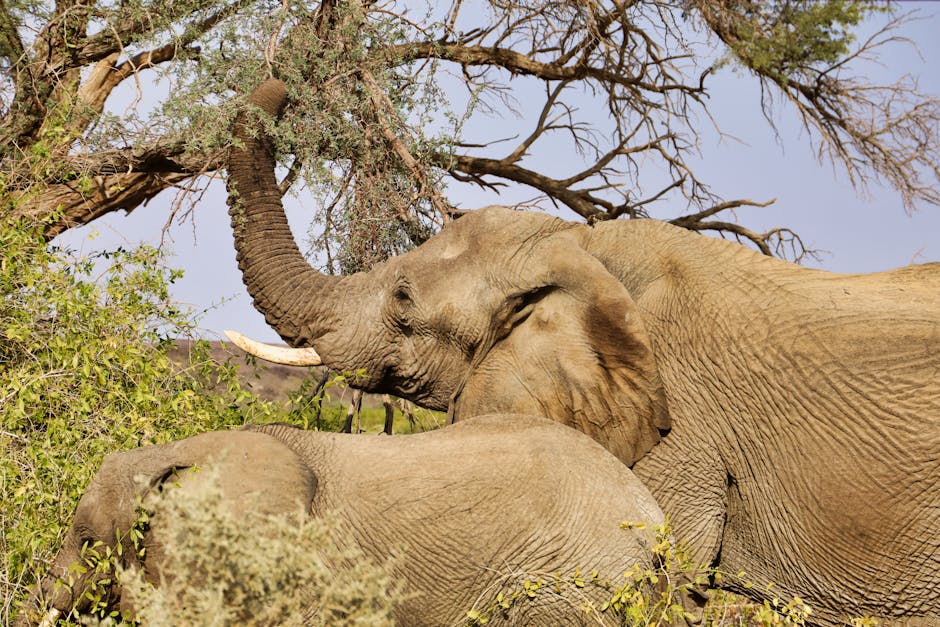
An elephant's trunk is an extraordinary fusion of the nose and upper lip containing over 40,000 muscles, compared to the entire human body's 600-plus muscles. This remarkable appendage can lift objects weighing up to 770 pounds yet possesses sensitivity refined enough to pick up a single blade of grass or a coin. Elephants use their trunks for breathing, smelling, drinking, grasping, dusting, sound production, and social touching. The trunk's tip features finger-like projections—African elephants have two, while Asian elephants have one—enabling precise manipulation. Elephants can detect water sources underground using their trunks and can hold up to two gallons of water to spray into their mouths or over their bodies.
7. Ecological Engineers Shaping Entire Ecosystems
Elephants serve as keystone species whose presence fundamentally shapes their environments. As they browse, elephants knock down trees, creating open grasslands that benefit grazing species and prevent certain areas from becoming impenetrable forests. Their dung disperses seeds across vast distances, with some plant species depending entirely on elephant digestion for seed germination. A single elephant can deposit seeds from over 30 plant species daily, making them crucial for forest regeneration. During dry seasons, elephants dig wells in dry riverbeds, creating water access for numerous other animals. Their footprints form small pools during rainy seasons, providing breeding grounds for frogs and aquatic insects. This ecological engineering makes elephants essential for biodiversity maintenance.
8. Pregnancy Duration and Calf Development
Elephants have the longest gestation period of any mammal, carrying their young for approximately 22 months. This extended pregnancy allows calves to develop highly complex brains and sophisticated sensory systems before birth. Newborn elephants weigh around 200-250 pounds and can stand within hours, though they remain dependent on their mothers and herd for years. Female elephants typically give birth to a single calf every four to five years, with the entire herd participating in protection and care. Young elephants suckle for three to four years, though some continue nursing for over six years. This extended childhood allows time for learning essential survival skills and social behaviors necessary for adult life.
9. Thermoregulation Through Specialized Skin and Ears
Despite their massive size, elephants have developed ingenious cooling mechanisms. Their large ears, particularly prominent in African elephants, act as radiators filled with blood vessels. By flapping these ears, elephants cool the blood flowing through them before it circulates back to the body. Elephant skin, despite appearing thick and tough, is remarkably sensitive and prone to sunburn, which is why elephants regularly coat themselves in mud and dust for sun protection. They lack sweat glands, so behavioral adaptations like bathing, mud wallowing, and seeking shade become essential. Elephants also possess a remarkable ability to sense approaching rainstorms from up to 150 miles away, possibly through detecting infrasound from thunder or changes in atmospheric pressure.
10. Declining Populations and Conservation Challenges
Elephant populations face critical threats from habitat loss, human-wildlife conflict, and poaching for ivory. African elephant numbers have declined by approximately 30% over the past decade, with forest elephants suffering even steeper losses. Asian elephants, already reduced to roughly 10% of their historical range, number only around 40,000-50,000 in the wild. Conservation efforts include anti-poaching patrols, ivory trade bans, habitat corridor creation, and community-based conservation programs that help humans and elephants coexist. Some populations show recovery signs where protection is strong, demonstrating that dedicated conservation can make a difference. Understanding elephant behavior, intelligence, and ecological importance strengthens arguments for their protection and the preservation of the landscapes they inhabit.
Understanding These Gentle Giants
These ten remarkable aspects of elephant biology and behavior reveal creatures of extraordinary complexity deserving of our admiration and protection. From their unparalleled memory and communication abilities to their critical ecosystem roles, elephants demonstrate intelligence and social sophistication that challenges traditional boundaries between human and animal cognition. Their extended childhoods, matriarchal wisdom-based societies, and empathetic behaviors mirror aspects of human culture, while their unique physical adaptations showcase millions of years of evolutionary refinement. As elephant populations face mounting pressures, understanding and appreciating these magnificent animals becomes increasingly urgent, reminding us that protecting elephants means preserving not only a species but entire ecosystems and the intricate web of life they support.