


















1 / 20 Questions
0 Points

Which city's NBA team is known as the 'Lakers'?

Miami

Chicago

Boston

Los Angeles

Points won
0
Correct score
0%

More Quizzes

More Articles

The Most Polarizing Artworks Ever Made

The Most Polarizing Artworks Ever Made

⏱️ 5 min read

Throughout art history, certain works have sparked intense debates, divided critics and audiences, and challenged the very definition of what art can be. These polarizing pieces often push boundaries, confront societal norms, or employ techniques that make viewers uncomfortable. While some hail them as revolutionary masterpieces, others dismiss them as offensive or meaningless. Understanding these controversial artworks provides insight into the evolving relationship between art, society, and culture.

Duchamp's Readymades and the Concept of Art Itself

When Marcel Duchamp submitted a standard porcelain urinal titled "Fountain" to the Society of Independent Artists exhibition in 1917, he fundamentally challenged centuries of artistic tradition. Signed with the pseudonym "R. Mutt," this readymade object sparked outrage and confusion. Critics questioned whether simply selecting an everyday object and placing it in a gallery context constituted art. The work was rejected from the exhibition, yet it became one of the most influential artworks of the 20th century.

Duchamp's gesture questioned the role of craftsmanship, originality, and aesthetic beauty in art. Supporters argued that he liberated art from technical constraints and elevated conceptual thinking. Detractors maintained that this approach degraded art into mere provocation without skill or meaning. The debate continues today, with "Fountain" representing a pivotal moment when art shifted from object-making to idea-generation.

Piero Manzoni's Artist's Excrement

Italian artist Piero Manzoni created one of art history's most notorious works in 1961 with "Merda d'artista" (Artist's Shit). The piece consists of 90 tin cans, each allegedly containing 30 grams of the artist's feces, labeled and sold by weight at the current price of gold. This provocative work satirized the art market's willingness to commodify anything bearing an artist's signature.

The piece generates extreme reactions ranging from disgust to admiration. Some view it as brilliant commentary on consumerism and the arbitrary nature of artistic value. Others see it as juvenile shock tactics devoid of genuine artistic merit. The ongoing mystery of the cans' actual contents—some claim they contain plaster rather than feces—only adds to the controversy surrounding authenticity and artistic intention.

Andres Serrano's Religious Provocation

"Piss Christ," photographed by Andres Serrano in 1987, depicts a small plastic crucifix submerged in a glass of the artist's urine. The glowing, amber-toned image sparked outrage among religious groups and conservative politicians, leading to vandalism, death threats, and debates about government funding for controversial art.

Religious communities condemned the work as blasphemous and deeply offensive to Christian faith. Art supporters defended it as a legitimate exploration of religious iconography in contemporary culture, with some interpreting it as commentary on the commercialization of religious symbols. The controversy raised fundamental questions about artistic freedom, respect for religious beliefs, and the role of public funding in supporting provocative art.

Chris Ofili's The Holy Virgin Mary

British artist Chris Ofili's 1996 painting featuring a Black Madonna adorned with elephant dung and cutouts from pornographic magazines became the center of a cultural firestorm when exhibited at the Brooklyn Museum in 1999. New York Mayor Rudy Giuliani threatened to cut city funding to the museum, calling the work "sick" and "disgusting."

Critics of the work focused primarily on the use of elephant dung and sexually explicit imagery in depicting the Virgin Mary. However, defenders noted that Ofili, who has Nigerian heritage, incorporated elephant dung as a reference to African artistic traditions where the material symbolizes fertility and spiritual power. The controversy highlighted tensions between cultural perspectives, religious sensibilities, and artistic expression.

Carl Andre's Minimalist Controversy

"Equivalent VIII," created by Carl Andre in 1966, consists of 120 unaltered firebricks arranged in a rectangular formation. When the Tate Gallery purchased this minimalist sculpture in 1972, British tabloids erupted with headlines mocking the acquisition, with one famously asking what came next: "Bricks on the rates?"

The public outcry reflected widespread skepticism about minimalist art's accessibility and value. Critics argued that anyone could arrange bricks in a pattern, questioning what justified its place in a major museum. Supporters emphasized the work's engagement with space, materials, and perception, arguing that its apparent simplicity masked profound conceptual complexity about sculpture's fundamental nature.

Tracey Emin's Intimate Installations

"My Bed," exhibited by Tracey Emin in 1998, presented the artist's unmade bed surrounded by debris including condoms, underwear with menstrual stains, and empty vodka bottles. The installation documented a depressive episode in raw, unfiltered detail, dividing audiences between those who found it courageously honest and others who dismissed it as self-indulgent exhibitionism.

The work challenged traditional boundaries between public and private, art and life. Supporters praised its vulnerability and feminist reclamation of domestic space. Critics questioned whether personal detritus qualified as art or simply exploited shocking imagery for attention. The controversy intensified when the work was shortlisted for the Turner Prize, Britain's prestigious contemporary art award.

The Lasting Impact of Controversial Art

Polarizing artworks serve crucial functions beyond mere provocation. They force societies to examine their values, assumptions, and boundaries. These works often gain historical significance precisely because they challenged prevailing norms and sparked difficult conversations. Whether celebrated or condemned, they demonstrate art's power to disturb, question, and transform cultural dialogue.

The debates surrounding controversial art reveal as much about viewers' perspectives as about the works themselves. What one generation finds shocking, another may find mundane. These shifting reactions demonstrate how art and society continually reshape one another, making controversy an essential element in art's evolution and cultural relevance.
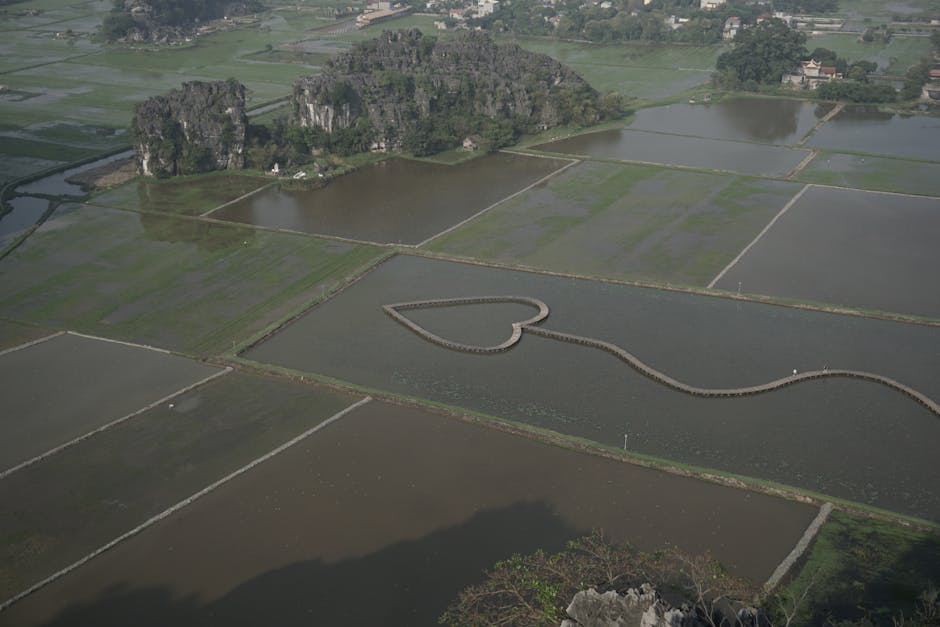
Places Shaped Entirely by Natural Forces

Places Shaped Entirely by Natural Forces

⏱️ 5 min read

Across the globe, nature has sculpted some of the most breathtaking and unusual landscapes through processes that have unfolded over millions of years. These geological masterpieces stand as testament to the raw power of wind, water, ice, and tectonic forces, creating formations that challenge our understanding of the natural world. From towering rock pillars to massive canyons, these locations reveal the Earth's dynamic history written in stone, sand, and ice.

The Power of Water Erosion

Water remains one of the most transformative forces in shaping Earth's surface. Over millennia, flowing water carves through rock, creating dramatic landscapes that continue to evolve. The Grand Canyon in Arizona exemplifies this process, where the Colorado River has cut through layers of rock for approximately six million years, exposing nearly two billion years of geological history. The canyon stretches 277 miles long, reaches depths of over a mile, and displays distinct color bands representing different geological epochs.

Similarly, China's Stone Forest in Yunnan Province showcases limestone karst formations created by water dissolution. These towering pillars of stone emerged as acidic rainwater slowly dissolved the surrounding limestone over 270 million years, leaving behind spectacular vertical formations that resemble a petrified forest. The site covers approximately 96,000 acres and represents one of the world's most impressive examples of karst topography.

Wind-Sculpted Wonders

Wind erosion, though often slower than water, creates equally remarkable landscapes, particularly in arid environments where vegetation cannot protect the surface. The Wave in Arizona presents undulating sandstone formations with smooth, wavelike patterns. These formations developed through millions of years of wind and water erosion, with iron oxide and other minerals creating the distinctive orange, red, and yellow bands that flow through the rock.

The White Desert in Egypt offers another stunning example of wind's artistic capabilities. Here, chalk rock formations have been sculpted into mushroom-shaped structures and abstract shapes through thousands of years of sandblasting winds. The stark white and cream-colored formations contrast dramatically against the golden desert floor, creating an otherworldly landscape that resembles an alien planet.

Volcanic Activity and Lava Formations

Volcanic forces have created some of Earth's most dramatic and unusual landscapes. The Giant's Causeway in Northern Ireland features approximately 40,000 interlocking basalt columns, most of which are hexagonal in shape. These columns formed about 60 million years ago when molten lava cooled rapidly, causing the rock to contract and crack in a uniform pattern. The columns vary in height, with some reaching up to 12 meters tall.

Iceland's volcanic landscape demonstrates ongoing geological processes, with features like the Vatnajökull ice cap sitting atop active volcanic systems. The interaction between ice and fire has created unique formations, including ice caves with walls that display vibrant blue hues due to light absorption properties in compressed ice. The country's position on the Mid-Atlantic Ridge means it continues to experience regular volcanic activity, constantly reshaping its terrain.

Glacial Sculpting and Ice Movement

Glaciers act as powerful bulldozers, carving valleys and reshaping mountains through their immense weight and slow but relentless movement. Yosemite Valley in California showcases classic U-shaped glacial valleys, carved during ice ages when glaciers thousands of feet thick flowed through the region. The valley's sheer granite walls, including formations like El Capitan and Half Dome, were shaped by both glacial activity and subsequent erosion.

The fjords of Norway represent perhaps the most dramatic glacial landscapes, where glaciers carved deep valleys that later filled with seawater. Sognefjord, Norway's longest fjord, extends over 120 miles inland and reaches depths of 4,291 feet. The steep valley walls rise dramatically from the water, creating landscapes of immense scale that demonstrate the tremendous erosive power of ice.

Tectonic Forces and Mountain Building

The movement of Earth's tectonic plates creates landscapes on a massive scale through mountain building, faulting, and uplift. The Himalayas continue to rise approximately 5 millimeters per year as the Indian and Eurasian plates collide. This ongoing process has created the world's highest peaks and transformed the region over millions of years.

The East African Rift Valley demonstrates continental rifting in action, where tectonic forces are literally pulling the African continent apart. This process has created a series of valleys, volcanic formations, and lakes over thousands of miles. The rift features distinctive escarpments, volcanic peaks, and deep valleys that showcase the dynamic nature of Earth's crust.

Cave Systems and Underground Formations

Beneath Earth's surface, water and chemical processes create intricate cave systems adorned with spectacular formations. Mammoth Cave in Kentucky represents the world's longest known cave system, with over 400 miles of surveyed passages. The cave formed through limestone dissolution, a process where slightly acidic groundwater slowly dissolved the rock over millions of years.

Stalactites, stalagmites, and other speleothems develop through mineral deposition as water drips through caves. New Mexico's Carlsbad Caverns contains the Big Room, one of the largest cave chambers in North America, featuring massive formations that have grown over hundreds of thousands of years through the gradual accumulation of calcium carbonate deposits.

Coastal Formations and Marine Erosion

Ocean waves, tides, and currents continuously reshape coastlines, creating distinctive features like sea stacks, arches, and blowholes. The Twelve Apostles along Australia's Great Ocean Road are limestone stacks that stand as remnants of a former cliff line. Wave action gradually eroded the softer rock, leaving these isolated pillars that continue to erode at approximately 2 centimeters per year.

These naturally sculpted places remind us of the dynamic nature of our planet and the profound timescales over which geological processes operate, offering invaluable insights into Earth's past and future transformations.