








1 / 10 Questions
0 Points

Which everyday kitchen appliance was accidentally invented?

Microwave oven

Dishwasher

Food processor

Toaster oven

Points won
0
Correct score
0%

More Quizzes

More Articles

The Real Life Pirates Who Inspired Jack Sparrow

The Real Life Pirates Who Inspired Jack Sparrow

⏱️ 5 min read

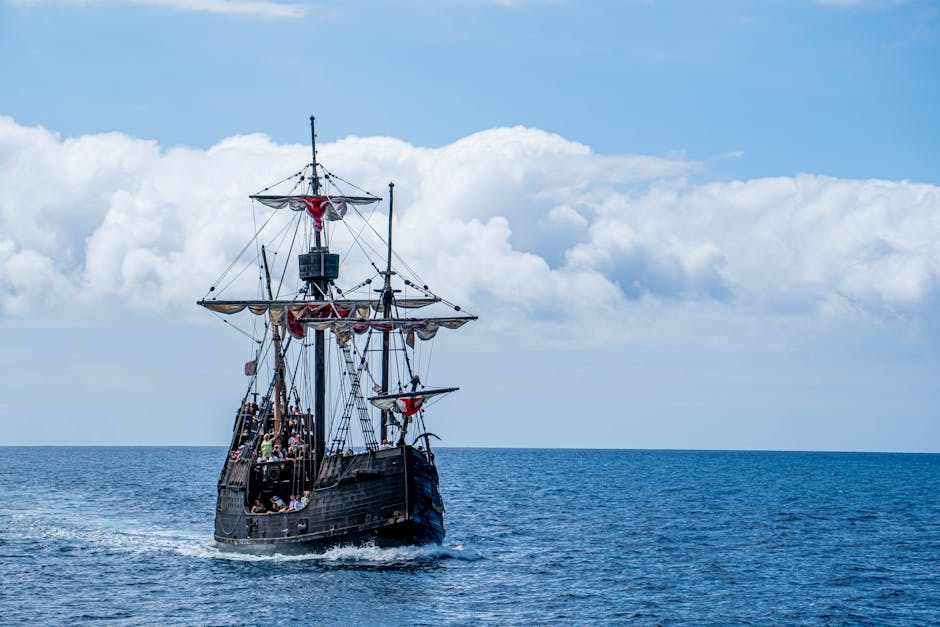
Captain Jack Sparrow, the charismatic and eccentric pirate from the "Pirates of the Caribbean" franchise, has become one of cinema's most beloved characters. While Johnny Depp's portrayal is largely fictional, the character draws inspiration from several real-life pirates who terrorized the seas during the Golden Age of Piracy. These historical figures were just as cunning, flamboyant, and unpredictable as their fictional counterpart, and their stories are often more remarkable than any Hollywood screenplay.

The Golden Age of Piracy: Setting the Stage

The period between 1650 and 1730 is commonly referred to as the Golden Age of Piracy, when thousands of pirates operated in the Caribbean, along the American coast, and across the Atlantic. This era produced some of history's most notorious seafaring criminals, whose exploits would inspire legends for centuries to come. Economic hardship, colonial expansion, and naval conflicts created the perfect conditions for piracy to flourish, attracting sailors, privateers, and adventurers seeking fortune on the high seas.

Captain Jack Ward: The Original Jack

One of the most direct inspirations for Jack Sparrow is Captain John Ward, known as "Jack" Ward or "Jack Birdy." This English pirate operated in the early 17th century and became one of the most successful pirates of his time. Ward began his career as a privateer for Queen Elizabeth I before turning to piracy after her death in 1603.

What makes Ward particularly relevant to the Jack Sparrow character is his remarkable ability to escape capture and his strategic cunning. He converted to Islam and operated from Tunis, where he lived in luxury and became a wealthy man. Ward's flamboyant lifestyle, quick wit, and talent for evasion mirror many of Sparrow's characteristics. He was known for his distinctive appearance and allegedly wore elaborate clothing that would have been considered outrageous for his time.

Bartholomew Roberts: The Gentleman Pirate

Bartholomew Roberts, also known as "Black Bart," was perhaps the most successful pirate of the Golden Age, capturing over 400 ships during his career. Roberts brought an unusual sense of style and principle to piracy that resonates with Jack Sparrow's characterization. He was known for his fine clothes, preferring to wear rich crimson damask waistcoats and breeches, along with a red feather in his hat.

Roberts implemented a democratic code among his crew, establishing rules that governed behavior, division of plunder, and conflict resolution. This sense of honor among thieves, combined with his theatrical appearance and strategic brilliance, reflects aspects of Sparrow's character. Despite his gentlemanly demeanor, Roberts was a formidable opponent who struck fear into merchant vessels and naval ships alike.

Calico Jack Rackham: Style and Swagger

John "Calico Jack" Rackham earned his nickname from the colorful calico clothing he favored, demonstrating the kind of sartorial flair associated with Jack Sparrow. While Rackham wasn't the most successful pirate in terms of plunder, his personality and style made him legendary. He designed the famous Jolly Roger flag featuring a skull with crossed swords, an image now synonymous with piracy.

Rackham's significance extends beyond his fashion sense. He was known for his associations with two of history's most famous female pirates, Anne Bonny and Mary Read, who served on his crew disguised as men. His relatively brief but colorful career, combined with his emphasis on appearance and reputation, contributed to the swashbuckling pirate archetype that Jack Sparrow embodies.

Edward Teach: The Fearsome Blackbeard

No discussion of pirate inspiration would be complete without Edward Teach, better known as Blackbeard. While Blackbeard's intimidating appearance contrasts with Sparrow's more comedic presentation, both characters share a talent for psychological warfare and theatrical display. Blackbeard was famous for weaving slow-burning fuses into his enormous black beard and lighting them during battle, creating a terrifying, smoke-wreathed visage.

Blackbeard's strategic mind and his ability to cultivate a fearsome reputation often allowed him to capture ships without firing a shot. This combination of showmanship and tactical thinking mirrors Sparrow's approach to piracy, where wit and reputation often prove more valuable than actual combat prowess. Blackbeard blockaded Charleston harbor in 1718, demonstrating the kind of audacious plan that Sparrow might conceive.

Captain Henry Morgan: The Privateer Turned Legend

Sir Henry Morgan represents another facet of the Jack Sparrow character: the blurred line between pirate and privateer. Morgan operated with commissions from the English government to attack Spanish interests in the Caribbean, though he frequently exceeded his authority and engaged in outright piracy. His political maneuvering and ability to avoid punishment for his crimes reflect Sparrow's talent for talking his way out of trouble.

Morgan's most impressive feat was the 1671 attack on Panama City, where he led 1,400 men across the isthmus and sacked one of Spain's wealthiest colonial cities. Despite accusations of piracy and torture, Morgan returned to England and was eventually knighted, becoming Lieutenant Governor of Jamaica. This transformation from outlaw to respectable society member echoes the complex relationship Jack Sparrow has with authority throughout the film series.

The Composite Character: Blending Fact and Fiction

Jack Sparrow ultimately represents a composite of these historical figures, cherry-picking the most entertaining and dramatic elements of their lives. The screenwriters and Johnny Depp combined the swagger of Calico Jack, the cunning of Jack Ward, the style of Bartholomew Roberts, the theatrical nature of Blackbeard, and the political savvy of Henry Morgan to create a character who embodies the romantic ideal of piracy.

The real pirates were often brutal, pragmatic criminals whose lives were harsh and frequently short. However, they possessed qualities that continue to fascinate us: independence, audacity, and a rejection of conventional society. Jack Sparrow captures these appealing aspects while filtering out the darker realities of historical piracy, creating a character that entertains while paying homage to the genuine rogues who sailed the Caribbean centuries ago.

Decisions That Accidentally Changed History

Decisions That Accidentally Changed History

⏱️ 5 min read

Throughout human history, countless pivotal moments have shaped the trajectory of civilizations, nations, and entire societies. While many significant events resulted from careful planning and deliberate action, some of the most consequential turning points occurred entirely by accident. These unintended decisions, made without full awareness of their potential impact, have altered the course of history in ways their architects could never have imagined.

The Pharmacist's Error That Sparked Coca-Cola

In 1886, Atlanta pharmacist John Pemberton was attempting to create a medicinal syrup to cure headaches and relieve anxiety. His original recipe called for mixing the syrup with still water. However, on one fateful day, his assistant accidentally mixed the concentrate with carbonated water instead. Rather than discarding the mistake, they tasted it and discovered a refreshing beverage that would eventually become the world's most recognizable soft drink. This accidental combination transformed a simple pharmaceutical error into a multi-billion dollar industry that would influence global consumer culture for over a century.

Alexander Fleming's Contaminated Petri Dish

In 1928, Scottish bacteriologist Alexander Fleming returned from vacation to find that he had accidentally left several petri dishes of Staphylococcus bacteria uncovered in his laboratory. One dish had become contaminated with mold, and Fleming noticed something extraordinary: the bacteria surrounding the mold had died. Rather than simply cleaning up his messy workspace, Fleming investigated further and discovered that the mold, later identified as Penicillium notatum, produced a substance that killed bacteria. This accidental discovery led to the development of penicillin, the world's first widely available antibiotic. The unintended contamination revolutionized medicine and has saved countless millions of lives since its mass production began in the 1940s.

Christopher Columbus's Mathematical Miscalculation

When Christopher Columbus set sail westward in 1492, he was operating under a fundamental geographical error. Columbus had grossly underestimated the circumference of the Earth, believing the distance from Europe to Asia by sailing west was far shorter than it actually was. This miscalculation was based on his misinterpretation of various sources and his selective use of the smallest Earth circumference estimates available. Had he known the true distance, his expedition likely would never have received funding, as the actual journey to Asia would have been impossible with 15th-century technology and supplies.

Instead, Columbus accidentally encountered the Americas, which he believed until his death were the eastern shores of Asia. This unintended discovery initiated European colonization of the Western Hemisphere, fundamentally altering world history, global demographics, and economic systems. The accidental nature of this encounter makes it one of history's most consequential mistakes.

The Wrong Turn That Started World War I

On June 28, 1914, Archduke Franz Ferdinand of Austria was visiting Sarajevo when his driver made a wrong turn onto a side street. Earlier that day, the Archduke had already survived one assassination attempt by Serbian nationalist group the Black Hand. The original plan called for the motorcade to take a different route to avoid further danger. However, due to miscommunication, the driver turned onto Franz Josef Street, realized his error, and stopped the car to reverse—directly in front of Gavrilo Princip, one of the conspirators who had given up after the failed morning attempt.

Princip, astounded by this second chance, drew his pistol and assassinated both the Archduke and his wife Sophie. This accidental encounter, resulting from a simple navigational error, triggered a chain of diplomatic crises and military alliances that plunged Europe into World War I. The war would claim millions of lives, redraw the map of Europe, and set the stage for World War II just two decades later.

Percy Spencer's Melted Chocolate Bar

In 1945, Raytheon engineer Percy Spencer was conducting radar-related research involving a magnetron when he noticed that a chocolate bar in his pocket had melted. Rather than attributing this to body heat or environmental factors, Spencer recognized this as unusual and decided to investigate. He placed popcorn kernels near the magnetron and watched them pop. Further experiments with an egg resulted in it exploding from rapid internal heating.

This accidental observation led Spencer to develop the microwave oven, a technology that would transform cooking practices worldwide. The first commercial microwave oven, the "Radarange," was released in 1947. What began as a curious accident during military research became a standard household appliance that revolutionized food preparation and consumption patterns across the globe.

The Unintended Consequences of Genetic Mutation

Approximately 10,000 years ago, a genetic mutation occurred in certain human populations in Northern Europe that allowed adults to digest lactose, the sugar found in milk. This accidental mutation, known as lactase persistence, was not a deliberate evolutionary adaptation but rather a random genetic change. However, it provided such significant nutritional advantages to early farming communities that it spread rapidly through populations that practiced dairy farming.

This accidental mutation influenced agricultural practices, dietary patterns, and even the geographic distribution of civilizations. Populations with lactase persistence could extract more calories and nutrients from domesticated animals, providing them with advantages in terms of nutrition and population growth. Today, this single accidental mutation affects billions of people and has shaped global food systems, agricultural economies, and cultural practices surrounding dairy consumption.

Lessons from Historical Accidents

These examples demonstrate that history's trajectory is not solely determined by grand strategies and intentional actions. Accidents, mistakes, and unintended consequences have repeatedly altered the course of human civilization in profound ways. From medical breakthroughs to world wars, from beloved beverages to kitchen appliances, chance moments combined with human curiosity, quick thinking, or simple misfortune have created turning points that reshaped society. Understanding these accidental historical pivots reminds us that the future remains unpredictable, and that seemingly minor decisions or random events can cascade into world-changing consequences.