









7 Surprising Facts About Pineapple Growth and Harvest
By Trivia Daily, Staff Writer — Published October 3, 2026
Table of Contents
- Key Takeaways
- Understanding Pineapple Growth and Harvest Basics
- Pineapple Cultivation Around the World
- The History and Spread of Pineapple Cultivation
- Frequently Asked Questions
Most people enjoy pineapple without giving much thought to how this spiky tropical fruit actually makes its way to the grocery store. The reality of pineapple growth and harvest is far stranger than you might imagine. These remarkable plants defy expectations at nearly every stage of their lifecycle, from the bizarre way they reproduce to the surprisingly long time they take to produce a single fruit. Discover the fascinating truths behind one of the world's most recognizable fruits.
The journey from planting to harvest reveals a plant that breaks the usual rules of botany. What appears simple on your plate represents years of careful cultivation and some truly unexpected biological quirks.
Key Takeaways
- Pineapples are not trees or bushes but grow from a low plant that produces only one fruit per stalk
- A single pineapple takes approximately 18 to 24 months to reach harvest maturity from planting
- The pineapple fruit is actually a fusion of many individual berries that have merged together
- Pineapples can be regrown from their crown, making them one of the easiest tropical fruits to propagate at home
- Commercial pineapples are harvested entirely by hand, as machines cannot reliably judge ripeness
- The plant continues producing smaller fruits after the first harvest through side shoots called ratoons
Understanding Pineapple Growth and Harvest Basics
Pineapples belong to the bromeliad family, making them botanical cousins to those ornamental air plants people display in glass terrariums. Unlike most fruit-bearing plants, the pineapple grows close to the ground on a stocky stem surrounded by sword-like leaves. The entire plant typically stands only three to five feet tall. Each plant produces a single flowering stalk that eventually develops into the familiar golden fruit.
The fruit itself forms from dozens of individual flowers that fuse together. What we think of as a single pineapple is technically a sorosis—a multiple fruit composed of many berries grown together around a central core. Each hexagonal section on the pineapple's surface represents one of these original flowers. This unusual structure explains why pineapples have such a distinctive geometric appearance.
Commercial cultivation requires patience. From the moment a grower plants a pineapple slip or crown, nearly two years pass before harvest. The plant spends most of this time developing its root system and growing leaves before it finally sends up a flowering stalk. Temperature, rainfall, and soil conditions all influence the exact timeline, but quick harvests simply don't exist in the pineapple world.
1. Pineapples Grow From the Ground, Not From Trees
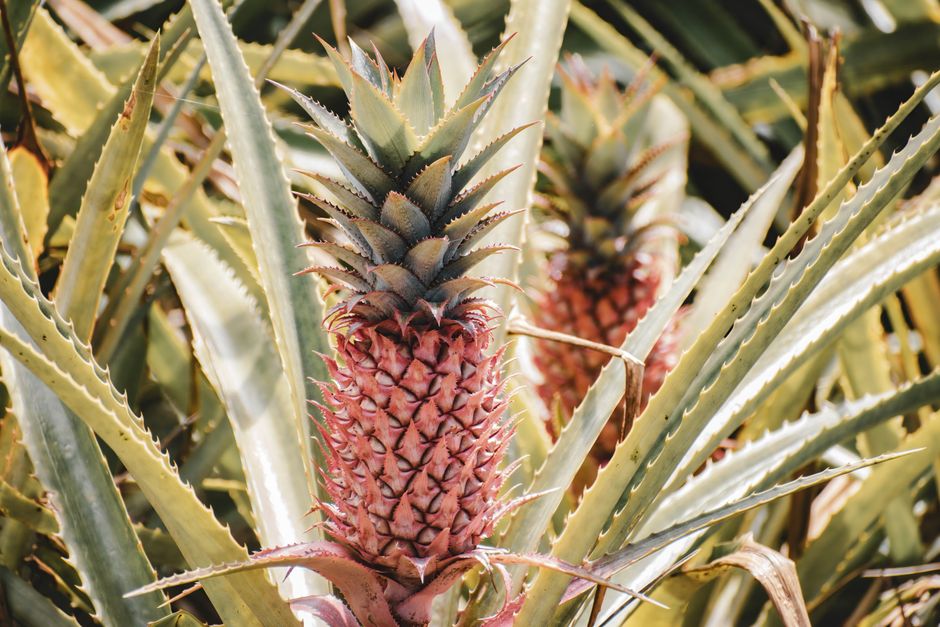
One of the most common misconceptions about pineapples involves imagining them dangling from tree branches like coconuts or growing on vines. In reality, pineapples emerge from the center of a ground-hugging plant that resembles a large, spiky bush. The fruit develops on a central stalk that pushes up through the middle of the leafy rosette. As the pineapple matures, it sits proudly atop this stalk, usually about two to four feet above the soil. Walking through a pineapple plantation reveals rows of these peculiar plants, each cradling a single golden fruit among sharp, arching leaves. The visual is nothing like an orchard—it resembles a field of oversized succulents, each crowned with the unmistakable spiky fruit.
2. Each Plant Produces Only One Fruit Per Cycle
Unlike apple trees that bear dozens of fruits or tomato plants that keep producing all season, a pineapple plant invests all its reproductive energy into a single fruit. Once that pineapple is harvested, the main stalk dies back. This might seem inefficient, but the plant has a backup plan. After the primary fruit is removed, the plant produces side shoots called ratoons or suckers that grow from the base. Growers can allow these ratoons to mature and produce additional pineapples, though these subsequent fruits tend to be smaller than the first. Most commercial operations harvest the main fruit and then one or two ratoon crops before replanting entirely. The strategy balances productivity with fruit quality and size.
3. The Fruit Takes Up to Two Years to Mature
Patience defines pineapple farming. From planting to harvest, the timeline stretches between 18 and 24 months under optimal conditions. The plant spends the first year establishing roots and building up its leaf structure, photosynthesizing energy for the eventual fruiting. Only after this lengthy vegetative phase does the plant initiate flowering, typically triggered by specific environmental cues or artificial hormones applied by growers. Once flowering begins, the fruit takes an additional five to six months to develop and ripen fully. This extended growing period makes pineapple cultivation a long-term investment. Farmers must wait nearly two years to see any return, making crop planning and land management critical skills in tropical fruit agriculture.
4. Pineapples Are Actually Hundreds of Berries Fused Together
The pineapple's structure reveals one of botany's more fascinating tricks. What appears to be a single fruit is actually a compound structure formed from approximately 100 to 200 individual flowers that bloom on the central stalk. Each flower develops into a small fruitlet, and as these fruitlets mature, they fuse together around the fibrous core. The hexagonal pattern visible on the pineapple's surface marks where each original flower contributed to the whole. Even the "eyes" that must be removed when preparing fresh pineapple correspond to these individual fruitlets. This multiple-fruit structure explains why pineapples have such a complex, geometric appearance and why their flesh contains those characteristic spiral patterns when you examine a cross-section closely.
5. Commercial Harvesting Remains Entirely Manual
Despite advances in agricultural technology, pineapple harvesting resists automation. Workers must hand-pick each fruit at precisely the right moment of ripeness. Unlike some fruits that continue ripening after harvest, pineapples stop developing sweetness the moment they're cut from the plant. This means timing is everything. Experienced harvesters assess ripeness through color, smell, and subtle changes in the fruit's appearance. They use machetes or specialized knives to slice through the tough stalk, then twist off the crown if it won't be needed for replanting. The work is physically demanding and requires skill developed over years of practice. Machines cannot reliably judge the nuanced signs of perfect ripeness, so human hands remain essential to quality pineapple production worldwide.
6. You Can Regrow a Pineapple From Its Crown
The leafy crown atop every pineapple isn't just decorative—it's a ready-made starter plant. Home gardeners can twist off this crown, remove the lower leaves to expose the stem, let it dry for a day or two, and then plant it in soil. With proper care, this crown will develop roots and eventually grow into a full pineapple plant. The process takes patience—expect three to five years for a homegrown plant to produce fruit—but it works reliably in warm climates or indoors with sufficient light. This vegetative reproduction method is exactly how commercial growers propagate new plants, though they also use slips and suckers from mature plants. The ease of propagation makes pineapples one of the most accessible tropical fruits for amateur cultivation.
7. The Plant Uses a Special Form of Photosynthesis
Pineapples employ CAM photosynthesis, a water-conserving adaptation found in cacti and other drought-tolerant plants. Unlike most plants that open their stomata during the day to absorb carbon dioxide, pineapples open theirs at night when temperatures are cooler and humidity is higher. They store the carbon dioxide in organic acids until daylight, when they use it for photosynthesis with their stomata closed. This strategy dramatically reduces water loss through evaporation. The adaptation allows pineapples to thrive in tropical regions with intense sun and periodic dry spells. It also explains why pineapple plants have such thick, waxy leaves—they're built to conserve every drop of moisture while still producing sweet, juicy fruit.
Pineapple Cultivation Around the World
Today, pineapples grow commercially in tropical and subtropical regions across the globe. Costa Rica leads world production, followed by the Philippines, Brazil, and Thailand. Hawaii, once synonymous with pineapple production, now grows relatively small quantities compared to these major producers. The shift reflects economic realities—land and labor costs in Hawaii make it difficult to compete with tropical nations where production expenses are lower.
Different varieties suit different markets. The Smooth Cayenne dominates commercial production because it ships well and has minimal eyes. The smaller, sweeter Queen variety thrives in South Africa and Australia. Red Spanish pineapples, with their characteristic square shape and aromatic flesh, grow throughout the Caribbean. Each variety has evolved for specific growing conditions and consumer preferences.
| Variety | Primary Growing Regions | Key Characteristics |
|---|---|---|
| Smooth Cayenne | Costa Rica, Philippines, Hawaii | Large, cylindrical, few eyes, excellent for shipping |
| Queen | South Africa, Australia | Smaller, sweeter, more aromatic, shorter shelf life |
| Red Spanish | Caribbean, Venezuela | Square shape, aromatic, pale yellow flesh |
| Abacaxi | Brazil | Tall, conical, extremely sweet, poor shipper |
The History and Spread of Pineapple Cultivation
Pineapples originated in South America, likely in the region between southern Brazil and Paraguay. Indigenous peoples cultivated and spread the fruit throughout South and Central America long before European contact. Christopher Columbus and his crew encountered pineapples in the Caribbean in 1493, marking the fruit's introduction to European awareness. Spanish and Portuguese explorers then carried pineapples to Africa, Asia, and the Pacific islands during the 16th and 17th centuries.
The fruit became a symbol of hospitality and luxury in Europe, where wealthy collectors grew them in heated greenhouses at enormous expense. A single pineapple could cost the equivalent of thousands of dollars in today's money. Hosts would even rent pineapples as table centerpieces for special occasions, displaying them without cutting them, then returning them to the vendor. The association between pineapples and welcome persists in architectural motifs and decorative arts, particularly in colonial-era buildings across the Americas.
Frequently Asked Questions
How long does it take for a pineapple to grow?
A pineapple requires approximately 18 to 24 months from planting to harvest under commercial growing conditions. Home-grown plants from crowns may take even longer, sometimes three to five years, depending on climate and care.
Do pineapples continue to ripen after being picked?
No, pineapples do not ripen further after harvest. They may soften slightly and become less acidic, but they will not develop additional sweetness. This is why picking at peak ripeness is essential for quality fruit.
Why are there no seeds in store-bought pineapples?
Commercial pineapple varieties have been selectively bred to produce fruit without fertilization, resulting in seedless pineapples. Wild pineapples and some heirloom varieties do produce small, hard black seeds, but these are rare in modern cultivation.
Can pineapples grow in cold climates?
Pineapples require warm temperatures and cannot tolerate frost. They grow best in tropical and subtropical regions but can be cultivated as container plants in greenhouses or indoors in colder climates, though fruit production becomes much more challenging.
The next time you slice into a fresh pineapple, consider the remarkable journey that brought it to your kitchen. From a single crown planted in tropical soil to a fruit composed of hundreds of fused berries, every pineapple represents years of growth and the persistence of a plant that defies expectations. That spiky exterior hides not just sweet flesh, but a botanical wonder worth appreciating.