









1 / 10 Questions
0 Points

Which Fruit Divides Pizza Lovers Everywhere?

Grapes

Apples

Strawberries

Pineapple

Points won
0
Correct score
0%

More Quizzes

More Articles

The Most Unexpected Celebrity Collaborations

The Most Unexpected Celebrity Collaborations

⏱️ 5 min read

In the entertainment industry, collaboration often leads to magic. But some partnerships transcend the expected boundaries of genre, style, and artistic vision to create truly memorable moments in pop culture history. These unlikely pairings have not only surprised fans but have also produced some of the most innovative and commercially successful projects in music, film, fashion, and beyond. When celebrities from vastly different worlds come together, the results can be unexpectedly brilliant.

Musical Mashups That Defied All Expectations

The music industry has witnessed some of the most surprising celebrity collaborations, with artists from completely different genres finding common ground to create chart-topping hits. One of the most talked-about partnerships was between rock legend Aerosmith and hip-hop pioneers Run-DMC. Their 1986 collaboration on "Walk This Way" seemed impossible at the time, bridging the gap between rock and rap when such crossovers were virtually unheard of. The track not only revitalized Aerosmith's career but also helped bring hip-hop into the mainstream, proving that genre boundaries were meant to be broken.

Another unexpected musical alliance came from country superstar Willie Nelson and rapper Snoop Dogg. Despite coming from opposite ends of the musical spectrum, the two cannabis-loving artists found common ground and friendship, leading to collaborations that blended country twang with hip-hop beats. Their track "My Medicine" showcased how authenticity and mutual respect can overcome any perceived artistic differences.

Perhaps even more surprising was the collaboration between heavy metal band Metallica and pop icon Lou Reed for their 2011 album "Lulu." While the project received mixed reviews, it demonstrated the willingness of established artists to take creative risks and venture far outside their comfort zones.

Fashion Industry Power Pairings

The fashion world has also seen its share of unexpected celebrity collaborations that transformed the industry landscape. When hip-hop mogul Kanye West partnered with luxury fashion house Louis Vuitton in 2009, it marked a significant shift in how high fashion perceived and embraced street culture. This collaboration paved the way for other musicians and entertainers to enter the exclusive world of luxury fashion design.

Similarly, pop star Rihanna's partnership with luxury conglomerate LVMH to create Fenty fashion house was groundbreaking. As the first Black woman to head an LVMH fashion house, Rihanna brought inclusive sizing and diverse representation to the luxury market, challenging industry norms and setting new standards for accessibility in high fashion.

The collaboration between skateboarding culture icon Supreme and luxury brand Louis Vuitton in 2017 shocked both streetwear enthusiasts and fashion purists. This partnership legitimized street fashion on luxury runways and demonstrated how two seemingly incompatible brands could create cultural phenomena through unexpected union.

Hollywood's Unlikely On-Screen Partnerships

Film collaborations have also produced some memorable surprises. The pairing of action star Sylvester Stallone with comedian Bob Odenkirk might have seemed odd, but their work together showcased new dimensions of both performers. Similarly, the casting of rapper Ice Cube alongside comedian Kevin Hart in the "Ride Along" franchise created an unexpected chemistry that translated into box office success.

Director Sofia Coppola's collaboration with actor Bill Murray in "Lost in Translation" seemed unusual given their different career trajectories and age demographics, yet their partnership resulted in one of the most critically acclaimed films of the 2000s. Murray's understated performance under Coppola's distinctive direction proved that unconventional casting choices can yield extraordinary results.

Technology Meets Entertainment

The intersection of technology and entertainment has produced fascinating collaborations in recent years. When musician will.i.am became director of creative innovation at Intel, it signaled a new era where tech companies sought creative voices from entertainment to humanize their brands. This partnership went beyond typical celebrity endorsements, involving actual product development and technological innovation.

Similarly, actress and tech investor Ashton Kutcher's venture capital firm has backed numerous technology startups, demonstrating that entertainment figures can contribute meaningfully to Silicon Valley innovation. His investments in companies like Uber, Airbnb, and Spotify showed business acumen that surprised many who knew him primarily as an actor.

Culinary Collaborations Breaking Boundaries

The food industry has witnessed celebrity partnerships that seemed improbable on paper but proved successful in execution. When rapper Action Bronson, known for his culinary knowledge and cooking show, collaborated with traditional chefs and food critics, it legitimized hip-hop's influence on food culture. His transition from music to hosting cooking shows demonstrated how passion can transcend primary career paths.

Celebrity chef Gordon Ramsay's partnerships with various celebrities for cooking challenges and shows have often paired him with people who have zero culinary experience, creating entertaining content while educating viewers about cooking fundamentals.

The Impact and Legacy of Unexpected Partnerships

These unlikely celebrity collaborations have fundamentally changed how the entertainment industry operates. They've broken down barriers between high and low culture, proven that genre mixing can create innovative art, and demonstrated that taking creative risks often leads to the most memorable results. These partnerships have also opened doors for future collaborations that might have seemed impossible in earlier eras.

The success of these unexpected pairings teaches valuable lessons about creativity, open-mindedness, and the power of combining different perspectives. They remind audiences and industry professionals alike that innovation often comes from the most surprising places, and that the best collaborations emerge when artists are willing to step outside their established comfort zones and embrace the unfamiliar.

As the entertainment landscape continues to evolve, audiences can expect more boundary-pushing collaborations that challenge conventions and create new cultural touchstones. The most exciting partnerships are often those that nobody saw coming, proving that in entertainment, the unexpected can become legendary.
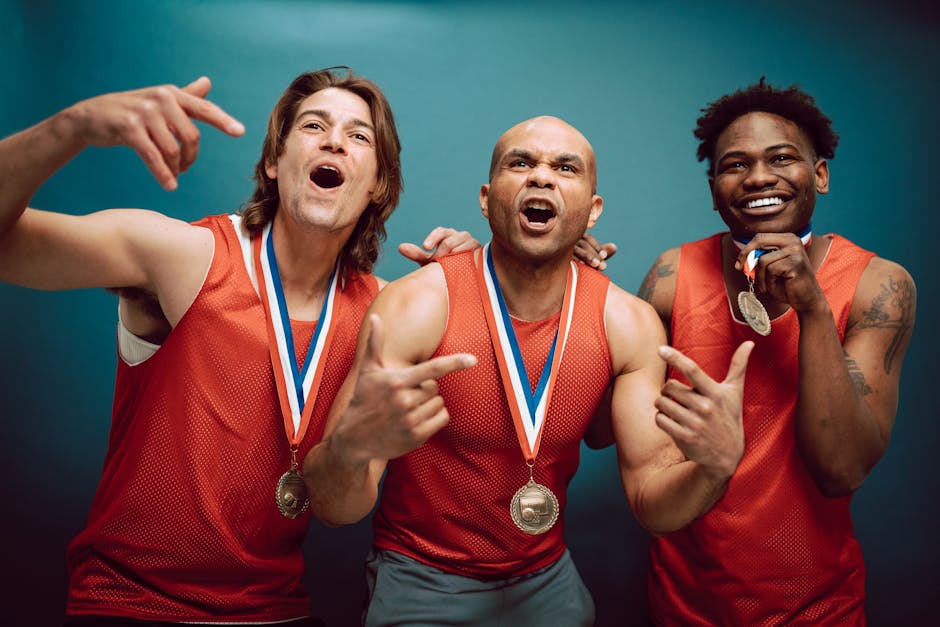
The Role of Psychology in Winning

The Role of Psychology in Winning

⏱️ 5 min read

The difference between victory and defeat in competitive sports often comes down to fractions of seconds, millimeters, or single points. While physical training, tactical preparation, and technical skills form the foundation of athletic performance, the psychological dimension has emerged as a critical factor that separates champions from competitors. Modern sports science increasingly recognizes that mental fortitude, emotional regulation, and cognitive strategies play decisive roles in determining outcomes at the highest levels of competition.

The Mental Game: Understanding Sports Psychology Fundamentals

Sports psychology encompasses the scientific study of how psychological factors influence athletic performance and how participation in sports affects mental and emotional development. Elite athletes and their coaches have long understood that physical superiority alone does not guarantee success. The mind's capacity to maintain focus under pressure, recover from setbacks, and sustain motivation through grueling training regimens often determines who stands atop the podium.

Research demonstrates that psychological skills can be developed and refined just like physical abilities. Athletes who invest time in mental training report improved performance consistency, enhanced confidence, and better stress management during crucial moments. This recognition has led professional teams and individual competitors across all sports to incorporate sports psychologists into their regular training programs.

Concentration and Focus Under Pressure

The ability to maintain unwavering concentration during high-stakes competition represents one of psychology's most significant contributions to winning. Athletes face countless distractions during performance—crowd noise, opponent tactics, previous mistakes, and the weight of expectations. Those who master the psychological skill of sustained focus can block out irrelevant stimuli and direct attention exclusively toward task-relevant cues.

Championship-caliber performers develop what psychologists call "selective attention," allowing them to narrow their focus when precision matters most. A basketball player shooting free throws with seconds remaining, a golfer lining up a tournament-winning putt, or a tennis player serving at match point all depend on this refined psychological capacity. Training techniques such as mindfulness meditation, visualization exercises, and pre-performance routines help athletes cultivate this essential mental skill.

Confidence and Self-Belief as Performance Enhancers

Self-confidence stands as a cornerstone of athletic excellence. Psychologists distinguish between genuine confidence—rooted in realistic self-assessment and preparation—and false bravado. Athletes with well-calibrated confidence believe in their abilities without underestimating challenges or opponents. This balanced self-belief enables competitors to attempt difficult skills, take calculated risks, and persist when facing adversity.

Research indicates that confidence operates as a self-fulfilling prophecy in sports. Athletes who expect success approach competitions with assertive body language, decisive actions, and positive self-talk, all of which enhance actual performance. Conversely, self-doubt triggers tentative movements, hesitation, and negative thought patterns that undermine physical capabilities. Building robust confidence requires consistent success experiences, effective goal-setting, and constructive feedback from coaches.

Emotional Regulation and Stress Management

Competition inevitably generates intense emotions—excitement, anxiety, frustration, and elation often occurring within minutes of each other. Winners distinguish themselves through superior emotional regulation, maintaining optimal arousal levels that enhance rather than hinder performance. The relationship between arousal and performance follows an inverted-U pattern: too little arousal produces sluggishness, while excessive arousal causes tension and coordination breakdowns.

Elite athletes develop personalized strategies for managing competitive stress:

  • Controlled breathing techniques to lower physiological arousal during tense moments
  • Positive self-talk to counter negative thought spirals
  • Progressive muscle relaxation to release physical tension
  • Cognitive reframing to interpret pressure as challenge rather than threat
  • Established pre-performance routines that create psychological comfort

These psychological tools enable athletes to perform optimally regardless of external circumstances or internal emotional states, providing consistency that accumulates into winning results over seasons and careers.

Resilience and Mental Toughness

Athletic careers involve inevitable setbacks—injuries, losses, performance slumps, and selection disappointments. Mental toughness, defined as the capacity to consistently perform toward one's potential despite adversity, separates those who achieve sustained success from those whose careers stall. Psychologically resilient athletes interpret failures as temporary setbacks and learning opportunities rather than permanent reflections of their abilities.

Research on champion athletes reveals common psychological characteristics: they maintain effort during difficulties, recover quickly from disappointments, and view obstacles as challenges to overcome. This mindset develops through experience navigating adversity, supportive coaching relationships, and deliberate cultivation of optimistic explanatory styles. Teams and individuals who build collective resilience often achieve breakthrough victories after enduring difficult periods.

Visualization and Mental Rehearsal

One of sports psychology's most powerful techniques involves mental imagery—the systematic practice of imagining successful performance in vivid detail. Neuroscience research demonstrates that visualizing physical actions activates similar brain regions as actual movement, effectively providing additional practice without physical wear. Olympic athletes, professional golfers, and elite performers across disciplines incorporate daily visualization sessions into training regimens.

Effective mental rehearsal engages all senses, incorporating the feeling of movements, sounds of competition environments, and emotional experiences of success. Athletes mentally practice not only perfect executions but also recovery from mistakes, building psychological preparation for various scenarios. This technique enhances confidence, refines technique, and creates mental blueprints that guide actual performance.

Team Cohesion and Collective Psychology

In team sports, collective psychology often determines outcomes as significantly as individual mental skills. Groups with strong cohesion—characterized by shared goals, mutual trust, and effective communication—outperform collections of talented individuals lacking psychological unity. Championship teams develop positive cultures where members support each other, embrace defined roles, and subordinate individual egos to collective success.

Sports psychologists work with teams to establish productive communication patterns, resolve interpersonal conflicts, and build shared mental models of tactics and expectations. This psychological infrastructure enables teams to maintain composure during adversity and execute complex strategies under pressure, providing competitive advantages that manifest in winning performances when competitions are most intense.

The integration of psychological principles into athletic preparation represents not a luxury but a necessity for those pursuing excellence. As physical capabilities and technical training methods converge at elite levels, the mental dimension increasingly determines who emerges victorious. Understanding and developing psychological skills provides athletes and teams with powerful tools for achieving their competitive potential and securing the wins that define successful careers.