













1 / 20 Questions
0 Points

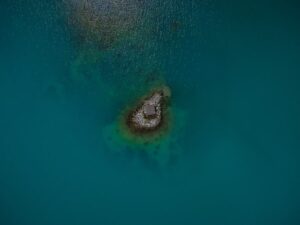
Which is the largest island in the world?

Madagascar

Greenland

New Guinea

Borneo

Points won
0
Correct score
0%

More Quizzes

More Articles

The Science of Luck: Is It Real?

The Science of Luck: Is It Real?

⏱️ 5 min read

Throughout human history, luck has been invoked to explain everything from lottery wins to near-miss accidents. Some people seem perpetually fortunate, while others appear cursed by misfortune. But is luck merely superstition, or does science offer insights into this mysterious force that seems to govern our lives? Recent research suggests that what we call "luck" may be less about cosmic forces and more about psychology, probability, and human behavior.

The Psychology Behind Feeling Lucky

Psychologist Richard Wiseman conducted groundbreaking research on luck over a decade-long period, studying hundreds of people who identified themselves as either particularly lucky or unlucky. His findings revealed surprising patterns: lucky people weren't actually experiencing more positive random events, but they were perceiving and responding to their circumstances differently. Wiseman discovered that self-described lucky individuals shared specific psychological traits that influenced their outcomes.

Lucky people demonstrated heightened awareness of opportunities around them. In one experiment, Wiseman asked participants to count photographs in a newspaper. Hidden within the pages was a large message stating "Stop counting - there are 43 photographs in this newspaper." Lucky people were more likely to notice this shortcut, while unlucky participants remained focused on their counting task, missing the obvious solution. This suggests that what appears to be luck often stems from being more open and attentive to unexpected possibilities.

Cognitive Biases and the Illusion of Fortune

The human brain is wired to find patterns and meaning, even where none exists. Several cognitive biases contribute to our perception of luck as a real force. Confirmation bias leads us to remember instances that confirm our beliefs about being lucky or unlucky while forgetting contradictory evidence. Someone who considers themselves unlucky will vividly recall every parking mishap but forget the dozens of times they found convenient spots.

The availability heuristic also shapes our understanding of luck. We overestimate the likelihood of events we can easily recall, particularly dramatic or emotional experiences. A friend's lottery win feels more significant than the millions of people who lost, creating an inflated sense that such fortunate events are more common than statistics indicate.

Selection Bias and Survivorship Bias

Survivorship bias particularly distorts our perception of luck in success stories. We hear about the entrepreneur who took a wild risk and succeeded, attributing their fortune to luck, while ignoring the countless others who took similar risks and failed spectacularly. The successful survivors become visible, reinforcing narratives about luck, while failures disappear from view. This creates a skewed understanding of probability and chance.

Behavioral Patterns That Create Good Fortune

Research indicates that certain behaviors consistently lead to outcomes we label as lucky. These patterns suggest that luck may be partially manufactured through deliberate actions and attitudes:

  • Networking extensively increases the probability of encountering beneficial opportunities
  • Maintaining optimism helps people persevere through challenges and remain open to solutions
  • Taking calculated risks exposes individuals to more potential positive outcomes
  • Developing diverse skills creates more opportunities for success across different situations
  • Practicing resilience allows quick recovery from setbacks, creating more attempts at success

When someone maintains a large social network, they're statistically more likely to hear about job opportunities, meet potential partners, or receive helpful information. This isn't mystical luck—it's probability increasing through intentional behavior. The more lottery tickets you metaphorically hold through your actions, the better your odds of winning.

The Role of Randomness and Probability

True randomness does exist in the universe, and genuinely chance events occur constantly. Quantum mechanics demonstrates fundamental uncertainty at the smallest scales of reality. Weather patterns, genetic mutations, and countless other phenomena involve authentic randomness that affects human lives in unpredictable ways.

However, humans consistently misjudge probability. We see meaningful patterns in random sequences, expect past events to influence independent future events (the gambler's fallacy), and struggle to grasp the mathematics of truly rare events. A coincidental meeting with an old friend in a foreign country feels impossibly lucky, but given the number of people we know and the places we visit over a lifetime, such intersections become statistically inevitable.

Mindset as a Self-Fulfilling Prophecy

Perhaps the most compelling evidence about luck concerns how beliefs about fortune become self-fulfilling prophecies. People who believe they're lucky approach life with confidence and optimism, which influences both their behavior and how others respond to them. This positive feedback loop creates more favorable outcomes, reinforcing the luck belief.

Conversely, those convinced they're unlucky may become anxious and risk-averse, missing opportunities and creating negative social dynamics that lead to poorer outcomes. Their belief in bad luck literally manifests unlucky results through behavioral mechanisms. Studies on learned helplessness demonstrate how belief in one's powerlessness leads to passivity and failure, even when circumstances change and success becomes possible.

Practical Applications: Manufacturing Your Own Luck

Understanding the science behind luck offers practical strategies for improving outcomes. Rather than waiting for fortune to smile, individuals can cultivate lucky patterns through specific practices. Maintaining curiosity and openness to new experiences increases encounter rates with opportunities. Developing intuition through experience helps with rapid decision-making when chances arise. Building resilience through mindfulness and cognitive reframing helps maintain optimism through inevitable setbacks.

The evidence suggests that while pure chance exists, what most people experience as luck largely results from psychology, behavior, and probability working together. Lucky people aren't blessed by cosmic forces—they've developed perspectives and habits that maximize positive outcomes and minimize the impact of negative ones. By understanding these mechanisms, anyone can cultivate better fortune through deliberate practice rather than hoping for magical intervention.

Luck, then, exists at the intersection of preparation, perception, and probability—less supernatural force than emergent property of how we navigate an uncertain world.
The Longest Cave System in the World

The Longest Cave System in the World

⏱️ 5 min read

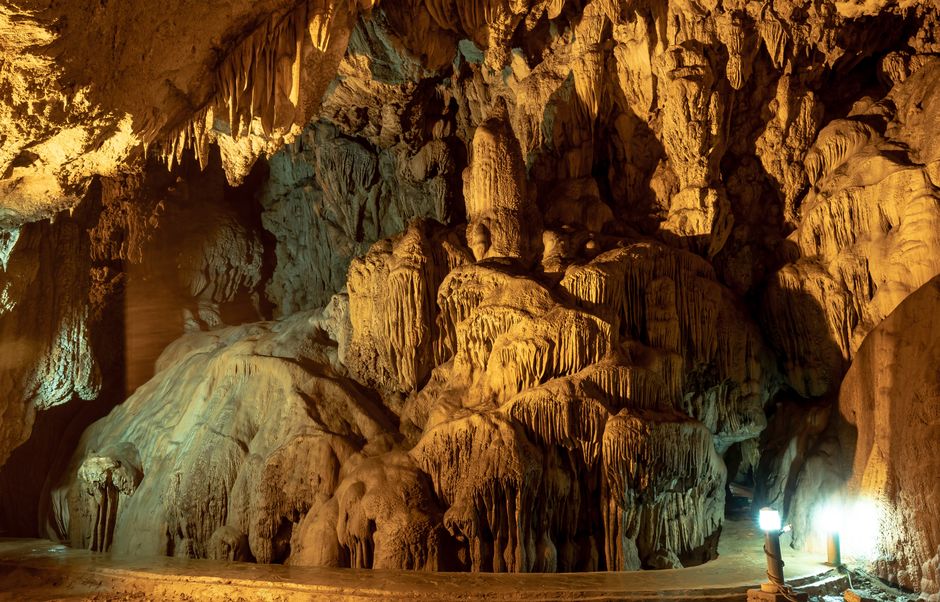
Beneath the rolling hills of Kentucky lies an extraordinary natural wonder that dwarfs all other known cave systems on Earth. Mammoth Cave, located in south-central Kentucky within Mammoth Cave National Park, holds the undisputed title as the world's longest known cave system. With over 420 miles of surveyed passageways and new discoveries made regularly, this subterranean labyrinth represents one of the most remarkable geological formations on the planet. The cave system's immense scale, rich history, and ongoing exploration continue to captivate scientists, spelunkers, and visitors from around the world.

A Geological Marvel Millions of Years in the Making

The formation of Mammoth Cave began approximately 10 million years ago, though the limestone layers that compose it date back more than 300 million years to the Mississippian period. The cave system developed through a geological process called karstification, where slightly acidic groundwater dissolves soluble bedrock, primarily limestone, to create underground voids and passages. The Green River and its tributaries played a crucial role in this formation, with water seeping through cracks and bedding planes in the limestone, gradually carving out the extensive network of chambers and corridors.

What makes Mammoth Cave particularly unique is the presence of a sandstone and shale caprock layer sitting above the limestone. This protective layer prevents water from percolating through from above in many areas, allowing the cave to develop horizontally rather than vertically. This geological configuration contributed to the creation of the remarkably long, horizontal passages that characterize much of the system and distinguish it from other major cave systems worldwide.

The Staggering Scale of the System

To truly appreciate Mammoth Cave's extraordinary dimensions, comparison with other notable cave systems proves illuminating. The second-longest known cave system, Sistema Sac Actun in Mexico, measures approximately 215 miles—barely half the length of Mammoth Cave. The gap between first and second place underscores just how exceptional this Kentucky cave system truly is.

The surveyed length of Mammoth Cave continues to grow as exploration teams discover and map new passages. In recent decades, connections have been established between what were previously thought to be separate cave systems, adding significant mileage to the total. The cave system features multiple levels of passages, with some sections lying more than 300 feet below the surface. The diversity of passage types includes everything from vast chambers capable of holding thousands of people to narrow crawlways that challenge even experienced cavers.

Historical Significance and Human Interaction

Human interaction with Mammoth Cave extends back thousands of years. Archaeological evidence indicates that Native Americans explored portions of the cave as far back as 4,000 years ago, venturing deep into the darkness to mine minerals such as gypsum and mirabilite. Artifacts including torch remnants, mining tools, and even preserved footprints provide tangible connections to these ancient explorers.

European American discovery and commercial exploitation of the cave began in the late 18th century. During the War of 1812, Mammoth Cave gained strategic importance as a source of calcium nitrate, a key ingredient in gunpowder production. Enslaved African Americans performed much of the dangerous mining work during this period. Following the war, the cave transitioned to a tourist attraction, with guided tours beginning in the early 19th century.

One of the most notable figures in the cave's history was Stephen Bishop, an enslaved guide who worked in Mammoth Cave from 1838 until his death in 1857. Bishop's exceptional knowledge, courage, and mapping skills led to the discovery of numerous passages and features. His contributions to cave exploration and cartography remain recognized and celebrated today.

Biodiversity in Perpetual Darkness

The Mammoth Cave system supports a fascinating ecosystem adapted to the challenging conditions of perpetual darkness. Scientists have identified more than 130 species within the cave, with several dozen being troglobites—organisms that live exclusively in cave environments. These specialized creatures have evolved remarkable adaptations to survive without sunlight, including:

  • Loss of pigmentation, resulting in pale or translucent appearances
  • Reduced or absent eyes, as vision provides no advantage in complete darkness
  • Enhanced non-visual senses, including highly developed tactile and chemical sensors
  • Slow metabolisms adapted to scarce food resources

Notable cave-adapted species include the eyeless cavefish, the Kentucky cave shrimp, and various species of blind beetles and spiders. The cave ecosystem depends heavily on organic material washed in from the surface, creating a delicate food web that begins with bacteria and fungi and extends through various invertebrate species.

Modern Exploration and Conservation

Despite centuries of exploration, Mammoth Cave continues to reveal new secrets. The Cave Research Foundation, established in 1957, has played a pivotal role in systematic exploration and surveying efforts. Volunteer explorers regularly discover new passages, sometimes adding miles to the known system in a single expedition. Advanced surveying technology, including laser measurement devices and three-dimensional mapping software, has greatly enhanced the accuracy and detail of cave documentation.

Conservation efforts focus on protecting both the cave environment and the surface lands that influence it. Mammoth Cave National Park, established in 1941, encompasses over 52,000 acres and was designated a UNESCO World Heritage Site in 1981. Park management addresses numerous challenges including controlling invasive species, managing visitor impact, and protecting water quality in the cave and surrounding watershed.

Scientific Research and Educational Value

Mammoth Cave serves as an invaluable natural laboratory for scientific research across multiple disciplines. Geologists study cave formation processes and karst topography development. Biologists investigate evolutionary adaptations and ecosystem dynamics in extreme environments. Hydrologists track underground water movement and study aquifer systems. Archaeologists continue uncovering evidence of prehistoric human activity.

The cave system also provides important educational opportunities, hosting thousands of students and researchers annually. Various tour options allow visitors to experience different aspects of the cave, from easy walking tours suitable for families to strenuous wild cave expeditions requiring crawling through tight passages and navigating underground rivers.

As exploration continues and new discoveries emerge, Mammoth Cave remains a testament to the hidden wonders existing beneath Earth's surface and the enduring human drive to explore and understand the natural world.