








1 / 10 Questions
0 Points

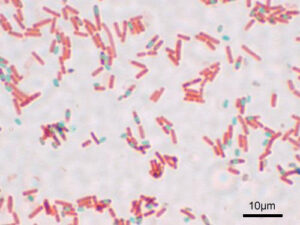
Which microorganism is responsible for converting milk into yogurt?

Lactobacillus bulgaricus

Staphylococcus aureus

Salmonella typhi

Escherichia coli

Points won
0
Correct score
0%

More Quizzes

More Articles

Scientific Discoveries That Redefined Reality

Scientific Discoveries That Redefined Reality

⏱️ 5 min read

Throughout history, certain scientific breakthroughs have fundamentally altered humanity's understanding of the universe and our place within it. These pivotal discoveries didn't merely add to existing knowledge—they shattered prevailing assumptions and forced complete reconceptualizations of reality itself. From the infinitesimally small quantum realm to the vast cosmic expanse, these revelations continue to shape modern science and philosophy.

The Revolutionary Understanding of Earth's Place in the Cosmos

The Copernican Revolution marked one of the most profound shifts in human perspective. For centuries, the geocentric model placed Earth at the center of the universe, with celestial bodies revolving around it. Nicolaus Copernicus challenged this fundamental assumption in the 16th century by proposing a heliocentric model where Earth and other planets orbited the Sun. This wasn't simply an astronomical correction—it represented a complete dismantling of humanity's self-perceived cosmic importance.

Building upon this foundation, Galileo Galilei's telescopic observations provided empirical evidence supporting the heliocentric model, while Johannes Kepler's laws of planetary motion described the mathematical precision governing celestial movements. These discoveries initiated a cascade of realizations that ultimately revealed Earth as one small planet orbiting an average star in an unremarkable region of a vast galaxy.

Einstein's Relativity and the Fabric of Spacetime

Albert Einstein's theories of special and general relativity fundamentally redefined concepts that seemed absolute and unchangeable: time, space, mass, and gravity. Published in 1905 and 1915 respectively, these theories demonstrated that time and space weren't fixed, independent entities but rather interconnected dimensions forming a flexible spacetime fabric.

The implications proved staggering. Time could dilate depending on velocity and gravitational fields. Mass could warp spacetime, creating what we experience as gravity. The famous equation E=mc² revealed the equivalence of mass and energy, showing that matter itself was condensed energy. These weren't abstract mathematical curiosities—GPS satellites must account for relativistic time dilation to function accurately, providing daily proof of these reality-bending principles.

Quantum Mechanics and the Probabilistic Universe

The development of quantum mechanics in the early 20th century revealed that reality at its most fundamental level operates according to principles that defy classical intuition. Pioneering physicists including Max Planck, Niels Bohr, Werner Heisenberg, and Erwin Schrödinger discovered that subatomic particles don't behave like miniature billiard balls following deterministic paths.

Instead, quantum mechanics revealed several mind-bending characteristics of reality:

  • Wave-particle duality: particles exhibit both wave-like and particle-like properties depending on how they're observed
  • Superposition: quantum entities can exist in multiple states simultaneously until measured
  • Uncertainty principle: certain pairs of properties cannot be simultaneously known with perfect precision
  • Quantum entanglement: particles can remain mysteriously connected regardless of distance

These discoveries suggested that reality at the quantum level is fundamentally probabilistic rather than deterministic, and that the act of observation plays a crucial role in determining outcomes. This challenged centuries of assumptions about objective reality existing independently of observation.

The Discovery of DNA's Double Helix Structure

When James Watson and Francis Crick, building on Rosalind Franklin's crucial X-ray crystallography work, unveiled the double helix structure of DNA in 1953, they revealed the molecular foundation of heredity and life itself. This discovery demonstrated that biological information was encoded in a chemical structure following specific pairing rules, providing a mechanism for how genetic information could be accurately copied and transmitted across generations.

The implications extended far beyond academic biology. Understanding DNA's structure launched the biotechnology revolution, enabled genetic engineering, made personalized medicine possible, and provided definitive evidence for evolution through comparative genomics. It revealed that all life on Earth shares a common molecular language, fundamentally unifying biology under a single framework.

The Expanding Universe and Cosmic Evolution

Edwin Hubble's 1929 discovery that galaxies are receding from each other, with velocity proportional to distance, revealed that the universe itself is expanding. This observation implied that the universe had a beginning—a moment when all matter and energy occupied an infinitesimally small point. This led to the Big Bang theory, fundamentally changing cosmology from a static to a dynamic, evolving universe.

Subsequent discoveries reinforced this revolutionary picture. Cosmic microwave background radiation, detected in 1964, provided direct observational evidence of the Big Bang's aftermath. More recently, observations of distant supernovae revealed that the universe's expansion is accelerating, driven by mysterious dark energy comprising approximately 68% of the universe's total energy content. These discoveries revealed that the visible matter we interact with daily represents only about 5% of the universe's total mass-energy content.

The Continuing Transformation of Understanding

Each of these discoveries didn't merely answer existing questions—they revealed entirely new realms of inquiry and forced reconceptualizations of fundamental concepts. They demonstrated that reality operates according to principles that often contradict everyday intuition and common sense. The universe revealed itself to be stranger, more interconnected, and more dynamic than previous generations imagined.

Modern physics continues this tradition, pursuing unified theories, investigating dark matter and dark energy, and exploring the implications of quantum mechanics at cosmic scales. Each advance promises to further refine or revolutionize our understanding of reality's true nature, ensuring that the process of discovery and reconceptualization continues into the future.
Did You Know The First Movie Was Made in 1888?

Did You Know The First Movie Was Made in 1888?

⏱️ 5 min read

The history of cinema stretches back further than most people realize. While many associate the birth of movies with the early 20th century, the foundations of filmmaking were actually laid in the late 1880s. The first motion picture ever created dates back to 1888, marking a revolutionary moment in human history that would forever change entertainment, art, and communication.

The Groundbreaking Achievement of Roundhay Garden Scene

The distinction of being the world's first film belongs to "Roundhay Garden Scene," a brief sequence lasting merely 2.11 seconds. This pioneering work was created by French inventor Louis Le Prince on October 14, 1888, in the garden of the Oakwood Grange residence in Roundhay, Leeds, England. The film captured four people walking in a garden, including Le Prince's son Adolphe, his father-in-law Joseph Whitley, and family friends Harriet and Sarah Whitley.

What makes this achievement particularly remarkable is that it predated the famous Lumière brothers' first public film screening by seven years. Le Prince used a single-lens camera of his own design, which he had patented earlier that year, to capture this historic footage on sensitized paper film. The camera was capable of taking sequential photographs at approximately 12 frames per second, creating the illusion of motion when played back.

The Mysterious Disappearance of Louis Le Prince

Despite his groundbreaking achievement, Louis Le Prince never received the recognition he deserved during his lifetime. In September 1890, Le Prince boarded a train in Dijon, France, heading to Paris, where he planned to showcase his inventions publicly and travel to the United States to patent his work there. Mysteriously, he never arrived at his destination. Neither Le Prince nor his luggage were ever found, and no body was ever recovered. His disappearance remains one of history's most intriguing unsolved mysteries.

The timing of his disappearance was particularly tragic, as it occurred just before he was scheduled to present his work in New York. This prevented him from establishing his priority in the invention of motion pictures, allowing others to claim credit for innovations that he had pioneered. To this day, conspiracy theories abound regarding his fate, with some suggesting foul play by competitors in the emerging film industry.

The Technology Behind the First Motion Picture

Le Prince's single-lens camera represented a significant leap forward from earlier attempts at capturing motion. Prior to his invention, photographers had experimented with multiple cameras arranged in sequence to capture movement, but Le Prince's design was the first to use a single lens capable of taking rapid successive photographs. His camera used bands of sensitized paper film, which would later be replaced by more durable celluloid film stock.

The technical specifications of Le Prince's camera were impressive for the era. The device could capture images at speeds varying from 12 to 20 frames per second, depending on the mechanism used. This frame rate was sufficient to create the illusion of smooth motion when the images were projected in sequence. Le Prince also developed a projector to display these images, completing the essential components needed for cinema as we know it today.

Other Early Experiments in Motion Pictures

While Le Prince created the first actual film, his work was built upon decades of experimentation with moving images. Several other inventors and photographers contributed to the development of motion picture technology:

  • Eadweard Muybridge's photographic studies of animal locomotion in the 1870s demonstrated that sequential photography could analyze movement
  • Étienne-Jules Marey developed the chronophotographic gun in 1882, which could capture multiple images on a single photographic plate
  • Thomas Edison and William Kennedy Dickson developed the Kinetoscope in the early 1890s, a peephole viewing device for motion pictures
  • The Lumière brothers created the Cinématographe in 1895, which served as both camera and projector

The Evolution of Film After 1888

Following Le Prince's pioneering work, motion picture technology rapidly evolved. By the 1890s, multiple inventors were working on improving both camera and projection systems. Thomas Edison's Kinetoscope, introduced commercially in 1894, allowed individual viewers to watch short films through a peephole viewer. However, it was the Lumière brothers' public screening on December 28, 1895, in Paris that is often credited as the birth of commercial cinema, as it was the first time a paying audience watched projected motion pictures on a screen.

The early films of this era were simple, documentary-style recordings of everyday life, lasting only a few seconds or minutes. Georges Méliès, a French filmmaker, soon began creating narrative films and special effects, demonstrating that cinema could be used for storytelling and fantasy, not just documentation. By the early 1900s, films were becoming longer and more sophisticated, incorporating editing techniques, title cards, and eventually synchronized sound.

Legacy and Recognition

Although Louis Le Prince died without receiving proper recognition for his invention, modern historians and film scholars have worked to restore his place in cinema history. The surviving footage of "Roundhay Garden Scene" is preserved by the National Science and Media Museum in Bradford, England, and has been digitized to ensure its preservation for future generations.

In 2018, the 130th anniversary of the film's creation was celebrated with various events and exhibitions. The location where the film was shot, now marked with a commemorative plaque, has become a pilgrimage site for film historians and enthusiasts. Le Prince's contributions are now widely acknowledged as the foundation upon which the entire motion picture industry was built, representing a crucial moment when humanity first successfully captured and reproduced movement through technology.