









1 / 10 Questions
0 Points

Which Olympic Sport Once Used Live Pigeons As Targets?

Shooting

Archery

Discus

Javelin

Points won
0
Correct score
0%

More Quizzes

More Articles

Why We Feel Nostalgia

Why We Feel Nostalgia

⏱️ 5 min read

The bittersweet feeling of remembering a childhood summer, the scent of a grandparent's home, or the sound of a song from years past can trigger powerful emotional responses. This phenomenon, known as nostalgia, is a universal human experience that transcends cultures, ages, and backgrounds. Far from being a simple longing for the past, nostalgia represents a complex psychological mechanism that serves important functions in our mental and emotional well-being.

The Psychological Foundations of Nostalgic Feelings

Nostalgia operates as a self-regulatory emotion that emerges from the interaction between memory and emotion. When individuals experience nostalgia, their brains activate multiple regions simultaneously, including those responsible for memory retrieval, emotional processing, and reward anticipation. This neurological symphony creates the distinctive feeling of warmth tinged with sadness that characterizes nostalgic experiences.

Research has demonstrated that nostalgia typically surfaces during moments of transition, uncertainty, or emotional discomfort. The human mind unconsciously reaches backward to find stability and meaning when confronted with present challenges. This psychological mechanism acts as an emotional anchor, providing continuity between past and present selves and reinforcing personal identity during turbulent times.

The Evolutionary Purpose Behind Nostalgic Emotions

From an evolutionary perspective, nostalgia may have developed as an adaptive response to help humans maintain social connections and group cohesion. By remembering positive shared experiences, individuals strengthen their bonds with others and reinforce their sense of belonging to a community. This social function of nostalgia proves particularly valuable during periods of isolation or displacement, when recalling connections with others can provide comfort and motivation to seek out social interaction.

Additionally, nostalgia serves as a repository of learned experiences. By revisiting past successes, challenges, and solutions, individuals can draw upon previous knowledge to navigate current situations. This retrospective problem-solving capability may have provided survival advantages to our ancestors and continues to offer practical benefits in modern life.

Common Triggers That Spark Nostalgic Memories

Certain stimuli prove particularly effective at evoking nostalgic responses. Understanding these triggers reveals the multisensory nature of memory and emotion:

  • Sensory experiences, particularly scents and music, which connect directly to the brain's emotional centers
  • Seasonal changes and holiday periods that carry accumulated associations from years of repeated experiences
  • Significant life transitions such as graduations, relocations, or relationship changes
  • Encounters with objects, places, or media from earlier periods of life
  • Feelings of loneliness, disconnection, or existential uncertainty
  • Conversations with old friends or family members about shared past experiences

The Psychological Benefits of Experiencing Nostalgia

Contemporary psychological research has overturned outdated notions that nostalgia represents an unhealthy dwelling on the past. Instead, studies reveal numerous psychological benefits associated with nostalgic experiences. When people engage with nostalgic memories, they report increased feelings of social connectedness, enhanced meaning in life, and greater optimism about the future.

Nostalgia also functions as an effective mood regulation tool. When individuals feel down or uncertain, nostalgic recollections can provide an emotional boost by reminding them of times when they felt loved, capable, or content. This psychological resource proves particularly valuable during difficult periods, offering perspective and emotional resilience.

Furthermore, nostalgia contributes to the maintenance of a coherent self-narrative. By connecting past experiences with present identity, nostalgic reflection helps individuals understand their personal development and growth over time. This continuity of self provides psychological stability and reinforces core values and beliefs.

The Role of Memory Reconstruction in Nostalgic Experience

An important characteristic of nostalgia involves the selective nature of memory. The human brain does not recall past events with perfect accuracy; instead, it reconstructs memories each time they are accessed. During nostalgic recollections, individuals tend to emphasize positive aspects while minimizing negative elements, creating an idealized version of the past.

This reconstruction process serves a protective function, allowing people to derive comfort and meaning from memories without becoming overwhelmed by past difficulties. However, it also means that nostalgic memories may not accurately represent historical reality. The "good old days" often appear better in retrospect than they actually were, as the mind filters experiences through the lens of current knowledge and emotional needs.

Cultural Variations in Nostalgic Expression

While nostalgia appears to be a universal human emotion, its expression and interpretation vary across cultures. Some societies emphasize collective nostalgia centered on shared historical events and cultural traditions, while others focus more on personal nostalgic experiences. The objects, periods, and experiences that trigger nostalgia also differ based on cultural context and individual life history.

These cultural variations highlight the learned components of nostalgia alongside its biological foundations. The specific content of nostalgic memories reflects individual experiences and cultural influences, while the underlying emotional mechanisms remain consistent across human populations.

Harnessing Nostalgia for Present Well-being

Understanding the functions and mechanisms of nostalgia enables individuals to utilize this emotion constructively. Deliberately engaging with positive memories during challenging times can provide emotional support and perspective. Creating new experiences with awareness of their future nostalgic value can enhance present enjoyment while building a reservoir of positive memories for later reflection.

The experience of nostalgia reminds us that our past, present, and future selves exist in continuous dialogue. By understanding why we feel nostalgia and recognizing its psychological functions, we can appreciate this complex emotion as a valuable tool for maintaining well-being, fostering connections, and making sense of our life stories.
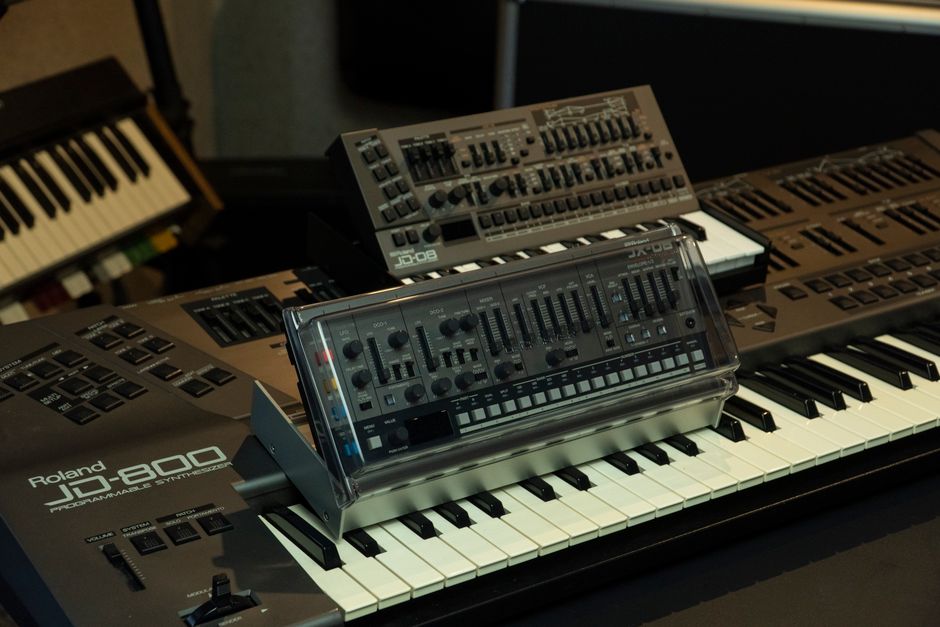
Did You Know? The Synthesizer Was Invented in the 1960s?

Did You Know? The Synthesizer Was Invented in the 1960s?

⏱️ 5 min read

The synthesizer stands as one of the most revolutionary inventions in music history, fundamentally transforming how sounds are created, manipulated, and performed. While many associate synthesizers with the electronic music explosion of the 1970s and 1980s, the origins of this groundbreaking instrument trace back to the innovative developments of the 1960s, when pioneering engineers and musicians collaborated to create entirely new sonic possibilities.

The Birth of Modern Synthesis in the 1960s

The 1960s witnessed the emergence of the first commercially available synthesizers, marking a pivotal moment in musical instrument development. American engineer Robert Moog introduced his modular synthesizer in 1964, creating a system that could generate and shape sounds electronically through voltage-controlled oscillators, filters, and amplifiers. Around the same time, engineer Don Buchla developed his own modular synthesizer on the West Coast, approaching electronic sound generation from a different philosophical perspective.

These early synthesizers were massive, complex machines filled with patch cables, knobs, and switches. They required technical knowledge to operate and were primarily found in university studios and experimental music facilities. Despite their complexity, these instruments opened unprecedented creative possibilities, allowing musicians to craft sounds that had never been heard before in human history.

Pre-1960s Electronic Instruments: Setting the Stage

While the modern synthesizer emerged in the 1960s, the concept of electronic sound generation existed earlier. The Theremin, invented in 1920 by Russian physicist Léon Theremin, produced eerie, otherworldly tones controlled by hand movements. The Hammond organ, introduced in 1935, used tonewheels to generate sound electronically. The Ondes Martenot, created in 1928, offered expressive electronic capabilities used in classical compositions.

However, these earlier instruments differed fundamentally from synthesizers. They either imitated existing instruments or offered limited sound modification capabilities. The synthesizers of the 1960s represented a quantum leap forward, providing comprehensive control over every aspect of sound creation, from waveform generation to envelope shaping and filtering.

Key Innovations That Defined 1960s Synthesizers

Voltage Control Technology

The most significant breakthrough came through voltage-controlled circuits. Robert Moog's application of transistors and voltage control allowed musicians to manipulate sound parameters electrically. This meant that oscillators, filters, and amplifiers could be controlled by varying electrical voltages rather than mechanical means, enabling precise, repeatable, and programmable sound modifications.

Modular Design Philosophy

Early synthesizers featured modular construction, with separate components for different sound-generating and sound-shaping functions. Musicians connected these modules using patch cables, creating signal paths that determined the final sound. This flexibility allowed for infinite sonic possibilities, as each module could be combined with others in countless configurations.

Subtractive Synthesis

The Moog synthesizer popularized subtractive synthesis, a method where harmonically rich waveforms are generated by oscillators and then sculpted by removing frequencies using filters. This approach became the foundation for analog synthesis and remains fundamental to electronic music production today.

Pioneers Who Embraced the Technology

Several visionary musicians recognized the synthesizer's potential during the 1960s. Wendy Carlos, a composer and electronic musician, became one of the first to demonstrate the synthesizer's musical capabilities with the landmark 1968 album "Switched-On Bach," which featured Bach compositions performed entirely on a Moog synthesizer. The album's commercial success proved that synthesizers could produce serious music, not just experimental sounds.

The Beatles incorporated Moog synthesizer sounds on their 1969 album "Abbey Road," introducing millions of listeners to electronic textures. Progressive rock bands like Emerson, Lake & Palmer and Yes would soon make synthesizers central to their sound, while electronic pioneers like Kraftwerk would build entire musical philosophies around the technology.

From Laboratory to Performance Stage

Initially, synthesizers were studio-bound instruments. Their size, fragility, and need for careful tuning made them impractical for live performance. However, the late 1960s saw efforts to make synthesizers more portable and performance-friendly. The introduction of keyboard interfaces made synthesizers more accessible to traditionally trained musicians, though early models were monophonic, capable of producing only one note at a time.

Temperature fluctuations affected the analog circuitry, causing tuning instability that required constant adjustment. Musicians had to develop new performance techniques and accept certain limitations as part of the instrument's character. These challenges fostered a unique relationship between performer and instrument, contributing to the distinct sonic personality of early synthesizer music.

The Cultural and Musical Impact

The synthesizer's arrival coincided with a period of tremendous social and artistic experimentation. The 1960s counterculture embraced technology as a tool for exploring consciousness and expanding creative boundaries. Electronic sounds aligned perfectly with psychedelic aesthetics and space-age fascinations that dominated the era.

Film composers quickly adopted synthesizers for science fiction soundtracks, where their futuristic timbres enhanced otherworldly atmospheres. Experimental composers in academic settings used synthesizers to realize complex compositional ideas impossible with traditional instruments. Jazz musicians began incorporating synthesizers, adding new colors to their improvisational palettes.

Legacy and Continued Evolution

The synthesizers invented in the 1960s established principles that continue to influence music technology. Modern digital synthesizers, software instruments, and music production tools all trace their conceptual lineage to those pioneering machines. The voltage-control standards established by Moog became industry conventions, and the modular synthesis approach has experienced a significant resurgence in recent years.

Today's musicians benefit from decades of refinement, with polyphonic capabilities, digital stability, and preset memory that early synthesizer pioneers could only imagine. Yet many contemporary artists deliberately seek out vintage 1960s synthesizers or modern recreations, valuing the organic imperfections and distinctive character of those original instruments. The synthesizer's invention in the 1960s didn't just create a new instrument—it sparked a sonic revolution that continues to shape music across all genres.