


















1 / 20 Questions
0 Points

Which popular snack is naturally gluten-free?

Wheat Thins

Pretzels

Popcorn

Graham Crackers

Points won
0
Correct score
0%

More Quizzes

More Articles

The Evolution of Music Production

The Evolution of Music Production

⏱️ 5 min read

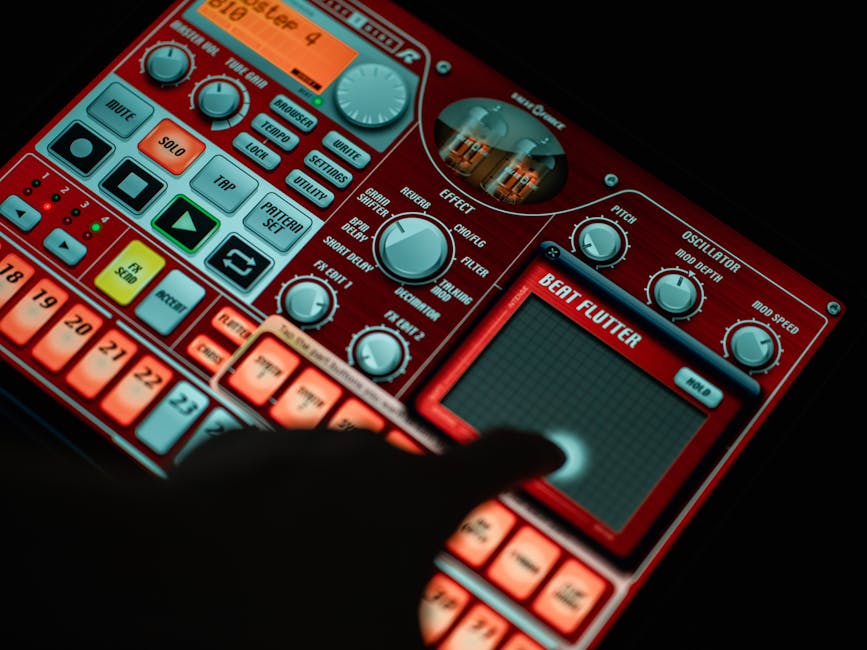
The journey of music production spans over a century of innovation, technological breakthroughs, and artistic experimentation. From the earliest acoustic recordings to today's sophisticated digital workstations, the methods by which music is captured, manipulated, and distributed have undergone dramatic transformations that have fundamentally changed how artists create and audiences consume music.

The Acoustic Era and Early Recording Technology

Music production began in earnest with Thomas Edison's invention of the phonograph in 1877, which used a mechanical stylus to etch sound waves onto a rotating cylinder. This revolutionary device marked humanity's first successful attempt to capture and reproduce sound. By the early 1900s, recording artists would gather around large acoustic horns that channeled sound vibrations directly onto wax cylinders or discs, with no electronic amplification whatsoever.

These early recording sessions were remarkably challenging. Musicians had to position themselves strategically around the recording horn, with louder instruments placed farther away and quieter ones closer. There were no opportunities for overdubbing or editing—performances had to be captured perfectly in a single take. The frequency response was severely limited, with bass and treble frequencies poorly reproduced, leading to a characteristically tinny sound that defined this era.

The Electrical Recording Revolution

The introduction of electrical recording in the mid-1920s transformed music production by employing microphones and amplifiers. This advancement dramatically improved sound quality, expanding the frequency range and capturing previously inaudible details. Western Electric's development of the condenser microphone allowed for more sensitive and accurate sound capture, while vacuum tube amplifiers could boost signals without the physical limitations of acoustic methods.

This period also saw the emergence of the first professional recording studios, purpose-built spaces designed with acoustic considerations in mind. Engineers began experimenting with microphone placement techniques that would become foundational to recording practices for decades to come.

Magnetic Tape and the Dawn of Editing

The adoption of magnetic tape recording in the late 1940s represented perhaps the most significant leap in production capabilities. German engineers had developed tape technology during World War II, and when it reached America, it revolutionized the industry. Unlike previous direct-to-disc methods, tape was reusable, editable, and could be spliced together to create composite performances.

Les Paul pioneered multitrack recording techniques using tape, stacking multiple performances on top of each other to create complex arrangements impossible to perform live. By the 1950s and 1960s, studios were investing in 4-track, 8-track, and eventually 16 and 24-track tape machines, giving producers and engineers unprecedented control over individual elements of a recording.

The Studio as an Instrument

During this golden age of analog recording, innovative producers like George Martin, Phil Spector, and Brian Wilson began treating the studio itself as a creative instrument. Techniques such as:

  • Echo chambers and spring reverbs for spatial effects
  • Tape speed manipulation for pitch and timing alterations
  • Close-miking techniques for intimate vocal sounds
  • Compression and equalization for tonal shaping
  • Tape saturation for warmth and harmonic richness

These innovations transformed music production from simple documentation into an art form unto itself.

The Digital Revolution

The introduction of digital recording technology in the late 1970s and early 1980s marked another watershed moment. Digital audio offered several advantages over analog tape: no generation loss when copying, elimination of tape hiss, and theoretically perfect reproduction of the original signal. The Sony PCM-1600 and subsequent digital recorders allowed studios to capture audio as numerical data rather than magnetic patterns.

However, the most transformative digital innovation was MIDI (Musical Instrument Digital Interface), standardized in 1983. MIDI enabled electronic instruments from different manufacturers to communicate with each other, allowing producers to sequence, edit, and synchronize performances with unprecedented precision. This technology democratized music production, as composers could now create complex arrangements using affordable synthesizers and sequencers.

The Computer Age and Digital Audio Workstations

The emergence of Digital Audio Workstations (DAWs) in the 1990s fundamentally restructured music production. Software platforms like Pro Tools, Logic, Cubase, and later Ableton Live transformed personal computers into fully-featured recording studios. Producers could now record, edit, process, and mix entire albums without ever touching analog tape.

DAWs introduced capabilities that would have been unimaginable in earlier eras, including non-destructive editing, unlimited undo functions, instant recall of complex mixes, and virtually unlimited track counts. The barrier to entry for music production plummeted as bedroom producers gained access to tools that rivaled professional studios.

Modern Production and the Plugin Ecosystem

Contemporary music production is characterized by an extensive ecosystem of software plugins that emulate vintage hardware, create entirely new sounds, and provide analytical tools for precise audio manipulation. Virtual instruments can recreate orchestras, synthesizers, and acoustic instruments with remarkable accuracy. Processing plugins offer everything from vintage compressor emulations to cutting-edge spectral editing tools.

Cloud collaboration has become increasingly prevalent, with producers, artists, and engineers working together across continents in real-time. Services allow for seamless file sharing and remote recording sessions, fundamentally changing the geographic constraints of music creation.

The Resurgence of Analog Aesthetics

Interestingly, as digital tools have become ubiquitous, there has been a renewed appreciation for analog recording techniques and equipment. Many contemporary producers deliberately incorporate analog hardware, tape saturation, and vintage recording methods to achieve warmth and character they perceive as missing from purely digital workflows. This hybrid approach combines the convenience and flexibility of digital with the sonic qualities of analog, representing perhaps the most versatile production environment in history.

The evolution of music production continues with developments in artificial intelligence, spatial audio, and immersive formats, ensuring that this journey of innovation remains far from complete.

The Most Isolated Places People Live

The Most Isolated Places People Live

⏱️ 5 min read

Human civilization has spread to nearly every corner of the Earth, yet some communities remain extraordinarily remote from the rest of the world. These isolated settlements exist in environments ranging from frozen polar regions to distant islands, where inhabitants face unique challenges in maintaining connections with modern society. Understanding these remote locations provides insight into human adaptability and the diverse ways people create homes in the most unlikely places.

The World's Most Remote Inhabited Island: Tristan da Cunha

Located in the South Atlantic Ocean, Tristan da Cunha holds the distinction of being the most remote inhabited archipelago on Earth. The main island sits approximately 1,750 miles from South Africa and 2,088 miles from South America, making it nearly impossible to reach without significant planning and effort. Only about 250 people call this volcanic island home, residing in the settlement of Edinburgh of the Seven Seas.

The isolation of Tristan da Cunha means that residents receive supply ships only a few times per year, and there is no airport on the island. Medical emergencies requiring specialized care necessitate a six-day boat journey to the nearest hospital in Cape Town, South Africa. Despite these challenges, the community maintains a fishing industry and has developed a self-sufficient lifestyle that has persisted for generations.

Arctic Isolation: Life in Alert, Nunavut

Alert, located on Ellesmere Island in Canada's Nunavut territory, represents one of the northernmost permanently inhabited places on Earth. Sitting just 508 miles from the North Pole, this remote outpost experiences extreme polar conditions, including complete darkness for several months during winter and continuous daylight during summer months.

The settlement functions primarily as a military and research station rather than a traditional town, with a population fluctuating between 50 and 150 people. The extreme climate brings temperatures that regularly drop below -40 degrees Fahrenheit, and the nearest town of any size, Iqaluit, lies over 1,300 miles away. Supplies arrive primarily by air during limited weather windows, making logistics incredibly complex.

Desert Remoteness: Supai Village in the Grand Canyon

Deep within the Grand Canyon lies Supai, the capital of the Havasupai Tribe and one of the most isolated communities in the contiguous United States. This village is accessible only by helicopter, on foot, or by mule train, as no roads lead to the settlement. Approximately 200 tribal members live in this remote location year-round, maintaining their ancestral homeland despite its challenging accessibility.

The isolation means that Supai is the only place in the United States where mail is still delivered by mule train. Residents must hike eight miles to reach the nearest road, and all supplies must be transported in by the same methods available for access. The community has adapted to these limitations while preserving their cultural heritage and connection to the land.

Island Extremes: Pitcairn Islands

The Pitcairn Islands in the South Pacific Ocean represent another example of extreme geographic isolation. With a population of fewer than 50 people, Pitcairn Island is one of the least populated jurisdictions in the world. The island gained fame as the settlement location for the mutineers from HMS Bounty in 1790, and their descendants still make up much of the current population.

Located roughly halfway between Peru and New Zealand, Pitcairn lies approximately 3,300 miles from both locations. Supply ships arrive only a few times per year, bringing essential goods and mail. The island has no airport, and the journey from the nearest inhabited land requires days of ocean travel. Despite modern satellite internet access, the physical isolation remains profound.

Mountain Isolation: The Himalayan Villages

Several villages in the Himalayan mountain range exemplify isolation created by extreme terrain and altitude. Communities in regions like Zanskar and Dolpo in the Himalayas remain cut off from the outside world for months each year when winter snow closes mountain passes. These villages, some situated above 13,000 feet in elevation, maintain traditional ways of life largely unchanged for centuries.

Residents of these high-altitude settlements face challenges including:

  • Limited access to medical care and emergency services
  • Dependence on seasonal food supplies and preservation methods
  • Restricted educational opportunities requiring children to leave for schooling
  • Extended periods without external communication or supply deliveries
  • Harsh weather conditions that make even local travel dangerous

The Australian Outback: Settlements in Remote Territory

Australia's vast interior contains some of the most isolated communities on the continent. Places like Kiwirrkurra Community in Western Australia claim the title of one of the most remote permanent settlements in the world, located approximately 430 miles from the nearest town. Aboriginal communities in the Outback often live hundreds of miles from urban centers, maintaining connection to traditional lands despite the challenges of remoteness.

The extreme distances involved in Australian isolation create unique problems. Emergency services may require hours or days to reach remote locations, essential supplies demand careful planning and significant transportation costs, and communication infrastructure remains limited in many areas. The Royal Flying Doctor Service provides crucial medical care by air, demonstrating the innovative solutions required to support isolated populations.

Why People Choose Isolation

Despite the obvious challenges, people continue to inhabit these remote locations for various reasons. Indigenous communities maintain connections to ancestral lands and traditional ways of life. Others work in remote locations for economic opportunities, scientific research, or military service. Some individuals deliberately seek isolation for personal, philosophical, or spiritual reasons, valuing the solitude and self-sufficiency that remote living demands.

These isolated communities demonstrate remarkable human resilience and adaptability. While modern technology has made communication easier even in remote locations, the fundamental challenges of geographic isolation persist, requiring inhabitants to develop unique solutions and maintain strong community bonds to thrive in Earth's most distant corners.