



















⏱️ 9 min read
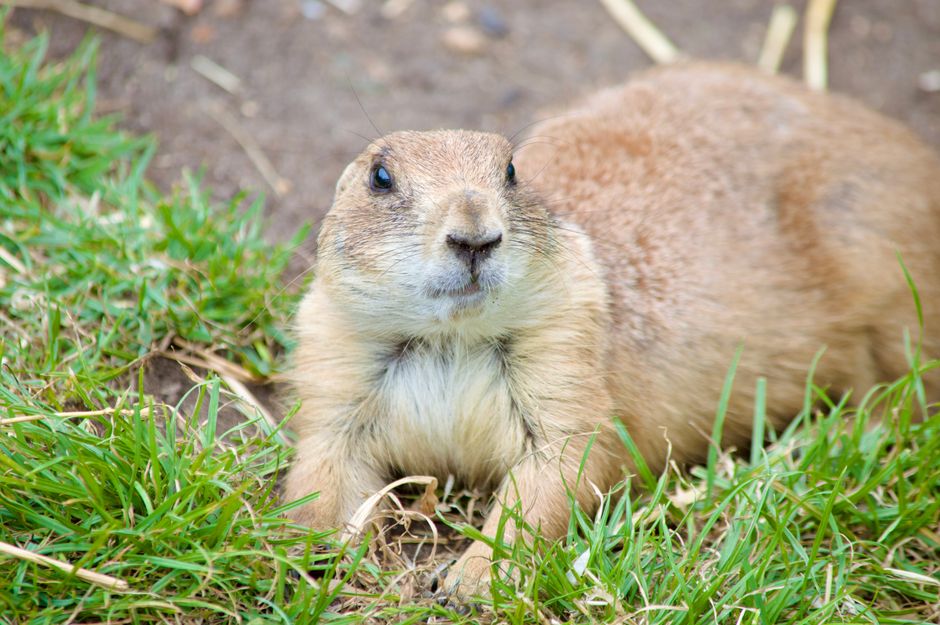
When a black-tailed prairie dog stands on its hind legs and lets out what sounds like a simple chirp, it's actually delivering a detailed description that includes the species, size, shape, and color of an approaching threat—along with whether that threat is carrying a gun. Scientists have discovered that these burrowing rodents possess one of the most sophisticated vocal communication systems in the natural world, rivaling even primates in complexity and specificity.
Quick Facts
- Prairie dogs use distinct alarm calls containing adjectives and nouns to describe predators with remarkable accuracy, including details like color and size.
- Researchers have identified different "words" in prairie dog vocalizations for coyotes, hawks, dogs, and humans, each with consistent acoustic patterns.
- Black-tailed prairie dogs can distinguish between individual humans and will use different calls for people wearing different colored shirts.
- Their vocal system includes at least 10 distinct call types, with alarm calls analyzed to contain specific information about threat speed and direction.
- Prairie dog colonies use a "jump-yip" display that spreads through groups like a wave, serving as an all-clear signal after danger passes.
The Groundbreaking Research Behind Prairie Dog Communication
Dr. Con Slobodchikoff, a behavioral ecologist at Northern Arizona University, spent over 30 years decoding the vocalizations of Gunnison's prairie dogs in the wild. His team recorded thousands of alarm calls and subjected them to sophisticated computer analysis, breaking down the acoustic properties of each chirp into frequency, duration, and harmonics. What emerged was astonishing: prairie dogs weren't just making noise to signal danger—they were crafting detailed sentences.
The research methodology involved presenting prairie dogs with different stimuli while recording their responses. When researchers walked through colonies wearing different colored shirts—blue, yellow, green, and red—the prairie dogs produced distinctly different alarm calls for each color. Computer analysis revealed that specific acoustic elements corresponded to specific colors. More remarkably, when the same person returned wearing a different colored shirt on a different day, the prairie dogs updated their calls to match the new color.
Slobodchikoff's experiments extended to shapes as well. When researchers introduced plywood cutouts of different geometric shapes moving through the colony, prairie dogs produced calls that varied based on whether the shape was a circle, square, or triangle. The rodents also adjusted their calls based on the size of the approaching object, using different vocal patterns for large versus small threats.
Decoding the Linguistic Structure of Alarm Calls
Through spectrographic analysis, scientists identified that prairie dog alarm calls contain distinct "phonemes"—the building blocks of language. A typical alarm call lasts less than a second but packs in multiple units of information. For instance, when warning about a coyote, the call structure differs fundamentally from warnings about a hawk, involving different frequency modulations and harmonic structures.
The calls describing humans are particularly complex. Researchers found that prairie dogs incorporate information about human height, body shape, and clothing color into a single vocalization. When a tall human in a blue shirt walks through a colony, the resulting alarm call contains acoustic signatures that differ measurably from those produced for a short human in a yellow shirt. These aren't learned individually for each person—prairie dogs appear to have a generative system that can create new "descriptions" for novel combinations of features they've never encountered before.
Speed information is encoded through the repetition rate of calls. A rapidly approaching predator triggers faster call rates, while a slow-moving threat generates more leisurely spaced vocalizations. Directional information appears encoded in which prairie dogs call first and how the calls propagate through the colony, creating a spatial map of danger.
Different Dialects Across Prairie Dog Colonies
Just as human populations develop regional accents and dialects, prairie dog colonies separated by geographic distance show variations in their vocal patterns. Studies comparing black-tailed prairie dog populations in South Dakota with those in Arizona revealed systematic differences in the acoustic structure of alarm calls, even when describing the same predators. These dialects remain stable within colonies but diverge between populations that don't interact.
The existence of dialects suggests that prairie dog communication is partially learned rather than entirely instinctive. Young prairie dogs must acquire the specific vocal patterns used by their colony, much like human children learning their native language. Researchers have observed juvenile prairie dogs producing imperfect calls that gradually improve with age and social exposure, indicating a developmental learning process.
Interestingly, prairie dogs from different colonies can still understand each other's basic warnings, suggesting a shared underlying "grammar" despite surface variations. This parallels human language, where different dialects remain mutually intelligible because they share fundamental structural rules.
The Jump-Yip Display and Social Coordination
Beyond alarm calls, prairie dogs employ a distinctive behavior called the jump-yip or jump-bark display. An individual stands on its hind legs, throws its front legs into the air, and produces a loud two-syllable call before landing. This behavior is contagious—when one prairie dog jump-yips, neighbors typically respond with their own displays, creating a wave effect that can sweep across an entire colony of hundreds of individuals within seconds.
Research published in the journal Animal Behaviour in 2017 demonstrated that jump-yip displays serve as an all-clear signal, indicating that danger has passed and normal activities can resume. The study found that prairie dogs were significantly more likely to perform jump-yips after a predator left the area than at random times. The contagious nature of the display ensures that all colony members receive the safety message quickly, even those who didn't witness the original threat.
The jump-yip also functions in territorial maintenance and social bonding. Prairie dogs perform these displays more frequently at territorial boundaries and after encounters with members of neighboring colonies. The synchronized nature of group jump-yipping may reinforce social cohesion, similar to how group activities strengthen bonds in social primates.
Cognitive Abilities Required for Complex Communication
The sophistication of prairie dog language raises questions about the cognitive abilities required to support such communication. To encode detailed information about predators, prairie dogs must possess several advanced mental capabilities: they need categorical perception to classify objects into types (coyote versus hawk), memory to retain associations between vocalizations and their referents, and the ability to combine descriptive elements into novel utterances.
Studies of prairie dog brain structure reveal a relatively large neocortex compared to other rodents of similar size, particularly in areas associated with auditory processing and vocalization control. The hippocampus, crucial for spatial memory, is also well-developed, which makes sense for animals that must remember the locations of multiple burrow entrances and the territorial boundaries of neighboring colonies.
Experimental evidence suggests prairie dogs understand that their calls communicate information to others—they possess what researchers call "audience effects." Prairie dogs are more likely to give alarm calls when other colony members are present and less likely when alone. They also modulate their calling behavior based on whether other individuals have already called, indicating they monitor what information has been shared and avoid redundancy.
Evolutionary Advantages and Predator-Prey Dynamics
The evolution of such sophisticated communication in prairie dogs makes sense when considering their ecological niche. As small, nutritious prey animals living in open grassland habitats with limited cover, prairie dogs face predation pressure from numerous species: coyotes, foxes, badgers, ferrets, hawks, eagles, and snakes all hunt them regularly. The ability to communicate detailed, accurate information about threats provides substantial survival advantages.
A prairie dog colony functions as a distributed surveillance system. With hundreds of eyes watching for danger, and an efficient communication network to spread information, the group as a whole maintains much better predator awareness than any individual could achieve alone. Specific information about predator type allows appropriate defensive responses—diving into a burrow when a badger approaches (since badgers dig), but merely moving closer to burrow entrances when a hawk circles overhead (since hawks strike from above and quick access to safety is sufficient).
Predators have adapted to prairie dog communication, adding another layer to the evolutionary arms race. Coyotes sometimes hunt prairie dogs cooperatively, with one coyote visible to draw attention while another approaches from a different direction. This suggests predators recognize that prairie dogs can communicate directional information about threats and have developed tactics to exploit the system's limitations.
Frequently Asked Questions
Can prairie dogs really tell the difference between individual humans?
Yes, research has demonstrated that prairie dogs can distinguish between different individual humans and will produce different alarm calls based on characteristics like height, body shape, and clothing color. They can even recognize the same person on different occasions and update their calls if that person wears different colored clothing.
How many different "words" do prairie dogs have in their vocabulary?
Scientists have identified at least 10 distinct call types in prairie dog communication, with alarm calls showing the most complexity. Within alarm calls alone, researchers have documented separate "words" for different predator species, plus modifiers for size, color, shape, and speed, which can be combined to create detailed descriptions.
Do other animals besides prairie dogs have complex language systems?
While many animals communicate with sophisticated signals, prairie dogs stand out for the referential specificity of their calls—the ability to describe specific features of external objects. Other animals with notably complex communication include vervet monkeys (which have different alarm calls for eagles, leopards, and snakes), dolphins, and certain bird species like chickadees and parrots.
Why don't predators just ignore prairie dog warning calls if they're so predictable?
Prairie dog alarm calls benefit the caller's colony even if predators hear them, because the calls alert all colony members to danger simultaneously, eliminating the element of surprise that predators rely on. Once detected and announced, a stalking predator's success rate drops dramatically, so many predators simply move on to hunt elsewhere rather than pursue alerted prey.
Key Takeaways
- Prairie dogs use a sophisticated vocal communication system that includes specific "words" for different predators and "adjectives" describing features like color, size, and shape—making their language one of the most complex in the animal kingdom outside of primates.
- Their communication is partially learned rather than purely instinctive, with different colonies developing distinct dialects while maintaining mutual intelligibility through shared grammatical structure.
- The jump-yip display functions as an all-clear signal that spreads contagiously through colonies, coordinating group behavior and reinforcing social bonds beyond simple alarm calling.
- This sophisticated language system evolved as an adaptation to intense predation pressure in open habitats, turning colonies into distributed surveillance networks that dramatically improve survival rates through rapid, detailed information sharing.