










1 / 10 Questions
0 Points

Which Superstar's Real Name Is Reginald Kenneth Dwight?

Freddie Mercury

Elton John

David Bowie

Sting

Points won
0
Correct score
0%

More Quizzes

More Articles

Why Cyclists Shave Their Legs

Why Cyclists Shave Their Legs

⏱️ 5 min read

For decades, smooth, hairless legs have been a distinguishing characteristic of competitive cyclists. This practice, which has become deeply ingrained in cycling culture, often puzzles outsiders who wonder why athletes would dedicate time to such meticulous grooming. However, leg shaving in cycling is far from mere vanity—it serves multiple practical purposes that can genuinely impact performance, safety, and recovery. Understanding the reasons behind this tradition reveals much about the sport's demands and the lengths to which cyclists go to optimize their performance.

Aerodynamic Advantages and Performance Gains

One of the most frequently cited reasons for shaving legs involves aerodynamics. In a sport where races can be decided by fractions of a second, even marginal gains become significant. Wind tunnel testing and research studies have demonstrated that hair-free legs can reduce air resistance, though the exact magnitude of this benefit remains debated within the cycling community.

A study conducted by Specialized's Win Tunnel found that removing leg hair could save approximately 50-80 seconds over a 40-kilometer time trial at racing speeds. While this might seem minimal, in professional cycling where stage victories and championship titles are often determined by mere seconds, such advantages cannot be ignored. The smoother surface created by shaved legs allows air to flow more efficiently around the limbs, reducing turbulent drag that would otherwise slow a rider down.

For time trialists and track cyclists, where aerodynamics play an even more critical role than in road racing, shaved legs are considered an essential part of equipment optimization, just like aerodynamic helmets and skinsuits. While recreational cyclists may not experience the same dramatic benefits, the practice has become so universal that it transcends competitive necessity and enters the realm of cultural tradition.

Wound Care and Hygiene Benefits

Cycling, particularly at high speeds in large groups, carries inherent risks. Road rash—the painful skin abrasion that occurs when a cyclist falls and slides along pavement—is an unfortunate but common occurrence in the sport. Shaved legs provide significant advantages when dealing with such injuries.

Medical professionals and team soigneurs can clean and dress wounds much more effectively on hairless skin. Hair can trap dirt, bacteria, and debris in scrapes and cuts, increasing the risk of infection and complicating the healing process. When treating road rash, bandages and medical tape adhere better to smooth skin and cause considerably less pain during removal and dressing changes.

The cleaning process itself becomes less agonizing without hair. Anyone who has experienced having antiseptic scrubbed into a hairy, abraded wound understands this benefit immediately. For professional cyclists who may need to continue training or racing shortly after a crash, the improved wound management that shaved legs provide can make a meaningful difference in recovery time and comfort.

Massage Therapy and Muscle Recovery

Professional cyclists receive regular massage therapy as part of their training and recovery protocols. These massages help flush lactic acid from muscles, improve circulation, reduce inflammation, and maintain muscle suppleness throughout demanding race schedules. Shaved legs make these therapeutic sessions significantly more effective and comfortable for both the athlete and the massage therapist.

Massage oils and creams glide smoothly across hairless skin, allowing therapists to work more efficiently and apply consistent pressure without pulling hair or causing discomfort. This enables deeper, more effective muscle work that aids recovery. A typical massage session might last 30 to 60 minutes, and performing this on hairy legs would be considerably less pleasant and potentially less beneficial.

For cyclists who receive daily massages during multi-stage races, the cumulative advantage of smooth legs becomes substantial. The therapist can focus entirely on the muscle work rather than fighting against hair resistance, making each session more productive for the athlete's recovery.

Psychological and Cultural Significance

Beyond the practical benefits, leg shaving carries significant cultural weight within the cycling community. Smooth legs serve as a visual identifier, signaling that someone takes the sport seriously and belongs to the cycling tribe. This tradition creates a sense of unity and professionalism among cyclists worldwide.

The ritual of shaving legs can also serve as a psychological preparation tool. For many cyclists, this grooming routine marks the transition from off-season to racing season, creating a mental shift toward competition mode. The act becomes a commitment statement—a visible demonstration of dedication to the sport that reinforces an athlete's identity as a serious cyclist.

This cultural aspect should not be dismissed as superficial. In endurance sports where mental fortitude often determines success as much as physical capability, rituals that strengthen athletic identity and commitment provide genuine psychological benefits. When cyclists look down at their smooth legs during difficult training rides or races, they're reminded of their preparation and their connection to a larger cycling tradition.

Aesthetic Muscle Definition and Sponsorship Considerations

Shaved legs showcase muscle definition more clearly, which matters both personally and professionally for cyclists. The developed quadriceps, defined calves, and lean lower limbs that result from extensive training become more visible without hair coverage. For professional cyclists who represent sponsors and appear in media coverage, this enhanced muscle visibility contributes to the sport's visual appeal and the athletic image that brands want to project.

Photography and videography, which are integral to modern cycling media and promotion, benefit from the clean lines that shaved legs provide. Team photos, victory celebrations, and sponsor content all look more polished and professional when athletes' legs display clear muscle definition rather than being obscured by hair.

Debunking Common Misconceptions

Despite the legitimate reasons cyclists shave their legs, several myths persist. Some believe that shaved legs make cyclists faster simply by reducing weight, but the minimal mass of leg hair makes this negligible. Others claim that shaved legs help with temperature regulation or reduce chafing, though evidence for these benefits is limited at best.

The practice continues primarily because of the documented advantages in aerodynamics, wound care, massage therapy, and cultural tradition rather than these unsubstantiated claims. Understanding the actual reasons helps both cyclists and observers appreciate this distinctive aspect of cycling culture based on its genuine merits rather than misconceptions.
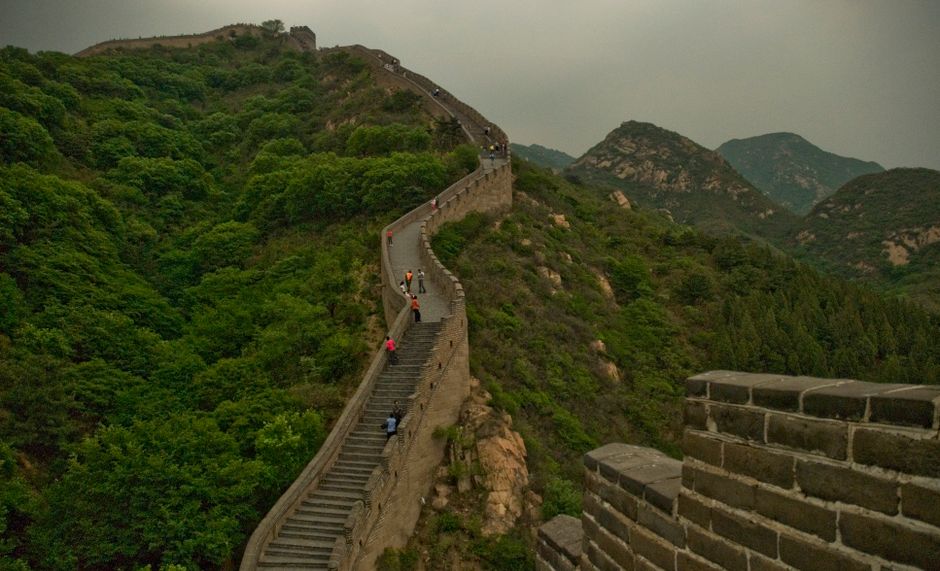
Did You Know the Great Wall of China Isn’t Actually One Continuous Wall?

Did You Know the Great Wall of China Isn’t Actually One Continuous Wall?

⏱️ 9 min read

When most people picture the Great Wall of China, they imagine a single, unbroken stone dragon snaking across mountain ridges from the Yellow Sea to the Gobi Desert. This mental image, reinforced by countless photographs and illustrations, couldn't be further from historical reality. What we call "the Great Wall" is actually a complex network of multiple walls, trenches, and natural barriers built by different dynasties over approximately 2,300 years.

Quick Facts

  • The Great Wall system includes walls built by at least six different dynasties, spanning from the 7th century BC to the 17th century AD.
  • Archaeological surveys revealed that all wall segments combined total more than 21,000 kilometers (13,000 miles) in length when measured cumulatively.
  • Many sections exist as parallel walls running side-by-side, with some areas featuring two or three distinct wall structures.
  • Approximately 30% of the Ming Dynasty wall has disappeared due to natural erosion and human activity.
  • Large gaps between wall segments were sometimes filled by natural defenses like rivers, mountains, and cliffs rather than constructed barriers.

Multiple Dynasties Built Different Walls for Different Purposes

The earliest wall segments date back to the 7th century BC, when various warring states constructed defensive barriers against each other. The Chu, Qi, Yan, and Zhao states all built their own fortification systems, many of which ran in completely different directions and served conflicting strategic purposes. These initial walls were constructed primarily from rammed earth—layers of soil compacted between wooden frames—rather than the iconic stone and brick associated with later construction.

Emperor Qin Shi Huang, who unified China in 221 BC, ordered the connection and extension of existing northern walls to defend against nomadic invasions. His project linked approximately 5,000 kilometers of pre-existing fortifications built by previous states, demolished walls that ran north-south (as they no longer served defensive purposes in the unified empire), and constructed roughly 2,000 kilometers of new segments. An estimated 400,000 workers died during this construction phase alone, and contrary to popular belief, Qin's wall was positioned significantly north of many Ming Dynasty sections that tourists visit today.

The Han Dynasty (206 BC – 220 AD) extended the wall system westward into the Gobi Desert, reaching as far as Lop Nur in present-day Xinjiang province. These extensions added approximately 10,000 kilometers to the defensive network, though much of this construction consisted of watchtowers connected by beacon stations rather than continuous wall structures. Archaeological evidence shows the Han used creative materials including reed bundles and tamarisk branches in desert regions where stone and timber were scarce.

The Ming Dynasty Wall: What Tourists Actually See

When contemporary visitors photograph "the Great Wall," they're almost exclusively viewing Ming Dynasty construction (1368–1644 AD). The Ming emperors, facing persistent threats from Mongol forces to the north, invested enormous resources into rebuilding and fortifying approximately 8,850 kilometers of defensive walls. This project consumed roughly one-fifth of the Ming government's annual revenue at its peak construction periods during the late 15th and early 16th centuries.

Ming engineers replaced earlier rammed earth with kiln-fired bricks and cut stone blocks, creating the imposing structures recognizable in modern imagery. Popular sections like Badaling, Mutianyu, and Jinshanling all represent Ming construction, heavily restored in the 20th and 21st centuries. The average Ming wall stood 7.8 meters tall and 6.5 meters wide at its base—dimensions large enough to allow five horses to ride abreast or ten soldiers to march side-by-side along the top.

However, even the Ming wall network was never a single continuous barrier. Significant gaps existed in mountainous terrain considered impassable to invading armies, and generals deliberately incorporated rivers, gorges, and cliff faces as "natural walls" that required no construction. The Juyongguan Pass area alone features three parallel wall lines built in different decades, as military strategists continuously refined defensive positions based on combat experience.

Geographic Discontinuity and Strategic Design

A comprehensive archaeological survey conducted between 2007 and 2012 by China's State Administration of Cultural Heritage mapped all surviving wall segments using GPS technology and historical records. The survey identified wall remnants across 15 provinces and autonomous regions, revealing a fragmented system rather than a unified structure. In Gansu province, for example, researchers documented 12 distinct wall segments separated by gaps ranging from 5 to 50 kilometers.

These gaps were often intentional strategic decisions. Military commanders positioned walls to defend critical mountain passes, agricultural valleys, and trade routes while leaving vast stretches of barren desert or impenetrable mountains unfortified. The Hexi Corridor in Gansu province illustrates this approach: wall segments punctuate the landscape only where the corridor narrows and invading cavalry might concentrate, leaving wide stretches of the Gobi Desert's southern edge completely open.

In some regions, multiple parallel walls created defense-in-depth systems. Near Datong in Shanxi province, three distinct wall lines run parallel to each other, separated by 5 to 20 kilometers. The outer wall served as an early-warning line with watchtowers spaced every 500 meters, the middle wall featured garrison fortresses housing permanent troops, and the innermost wall protected key population centers and administrative facilities.

What Happened to the Missing Sections

The 2012 survey estimated that only about 8.2% of the Ming Dynasty wall remains in good condition, with 74.1% classified as poorly preserved and roughly 30% having disappeared entirely. In agricultural regions of Ningxia, Gansu, and Inner Mongolia, farmers systematically dismantled wall sections during the 1950s and 1960s, reusing bricks for home construction, animal pens, and irrigation channels. A single kilometer of wall contained approximately 100,000 bricks—enough to build 20 traditional farmhouses.

Natural erosion has claimed vast segments, particularly in western desert regions where rammed earth walls lacked the protective brick facing of eastern sections. Sandstorms and flash floods have reduced many stretches to low earthen mounds barely distinguishable from natural terrain. Near Yumenguan (Jade Gate Pass) in Gansu, walls that once stood 10 meters tall now measure less than 3 meters, with the original rammed earth core exposed and crumbling.

Highway and railway construction during China's rapid modernization period breached numerous wall segments. The Beijing-Zhangjiakou Railway, completed in 1909 as China's first independently designed railway, cut through the wall at Badaling and Juyongguan. More recently, expressway projects in Inner Mongolia created gaps at 15 different locations between 2000 and 2010, though authorities now require road planners to tunnel beneath wall sites rather than demolish them.

Modern Preservation Challenges and Tourist Reality

The sections open to tourists represent heavily restored examples rather than authentic ancient structures. Badaling, receiving approximately 10 million visitors annually, underwent major reconstruction in 1957 and again in 1984. Workers replaced missing bricks, rebuilt collapsed watchtowers, and installed modern amenities including cable cars and concrete staircases. Some historians estimate that less than 20% of visible materials at popular tourist sites date to the original Ming construction.

Meanwhile, "wild wall" sections—unrestored segments scattered across remote provinces—face accelerating deterioration. In Hebei province alone, researchers documented 1,200 kilometers of Ming wall in 2002; by 2015, only 800 kilometers remained structurally intact. Treasure hunters using metal detectors have damaged sections searching for buried artifacts, while local residents continue small-scale brick harvesting for construction projects despite legal prohibitions enacted in 2006.

The Chinese government designated the entire wall system a protected cultural heritage site in 1961 and secured UNESCO World Heritage status in 1987. However, the sheer scale of the network—spanning 15 provinces with cumulative length exceeding 21,000 kilometers—makes comprehensive protection logistically impossible. Conservation efforts focus on preserving approximately 600 kilometers of priority sections, mainly near Beijing and other major population centers where tourist revenue can fund ongoing maintenance.

Frequently Asked Questions

Can you walk the entire length of the Great Wall of China?

No, you cannot walk a continuous path along the Great Wall because significant gaps exist between segments, many sections have completely eroded, and some remote areas are legally closed to public access. Several adventurers have attempted to traverse all surviving segments, but these journeys require detours on regular roads between disconnected wall sections.

How many separate walls make up the Great Wall system?

Archaeological surveys have identified wall segments built by at least six major dynasties and numerous regional kingdoms, totaling more than 43,000 individual structural components including main walls, secondary walls, trenches, and natural barriers. These components were never unified into a single structure but rather form an overlapping network spanning different historical periods.

Is the Great Wall of China visible from space?

No, the Great Wall is not visible to the naked eye from space, despite this persistent myth. NASA astronauts have confirmed that while you can see the wall from low Earth orbit with photographic assistance, it's no more visible than highways or other human-made structures, and certainly cannot be seen from the Moon.

Why did different dynasties build walls in different locations?

Each dynasty faced different enemies and controlled different territories, leading them to construct walls along varying northern boundaries. The Han Dynasty extended walls far west to protect Silk Road trade routes, while the Ming Dynasty built primarily in the east to defend against Mongol cavalry, resulting in walls that rarely overlap geographically.

Key Takeaways

  • The "Great Wall" encompasses multiple defensive systems built by at least six dynasties over 2,300 years, with cumulative length exceeding 21,000 kilometers when all segments are measured together.
  • Tourist sites like Badaling show heavily restored Ming Dynasty construction, representing less than 10% of total wall remnants and often containing mostly modern materials.
  • Strategic gaps, parallel wall systems, and natural defensive features like mountains and rivers were integral to the design, making the wall network intentionally discontinuous rather than a single barrier.
  • Approximately 30% of the Ming Dynasty wall has vanished due to agricultural reuse, natural erosion, and modern development, with only 8.2% remaining in good condition according to 2012 surveys.