








1 / 10 Questions
0 Points

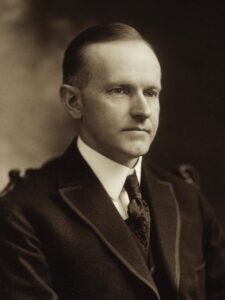
Which US president was born on July 4th?

Thomas Jefferson

John Adams

Calvin Coolidge

George Washington

Points won
0
Correct score
0%

More Quizzes

More Articles

Actors Who Almost Played Iconic Roles

Actors Who Almost Played Iconic Roles

⏱️ 5 min read

The history of cinema is filled with fascinating "what if" moments where famous roles nearly went to entirely different actors. These casting near-misses have shaped Hollywood in unexpected ways, and learning about the actors who almost landed iconic parts offers a unique glimpse into the complex decision-making process behind our favorite films. From scheduling conflicts to creative differences, the reasons these roles slipped away are often as compelling as the performances themselves.

The Man of Steel That Almost Was

Nicolas Cage came remarkably close to donning the Superman cape in Tim Burton's planned "Superman Lives" project in the late 1990s. The Academy Award-winning actor was fully committed to the role, even completing costume fittings with the famous suit designed by Colleen Atwood. Burton's vision for Superman was decidedly darker and more unconventional than previous interpretations, which aligned with Cage's intense acting style. However, the project was ultimately cancelled before filming began due to budget concerns and creative disagreements with the studio. The role eventually went to Brandon Routh years later in "Superman Returns," though many fans still wonder what Cage's interpretation would have brought to the character.

Middle-earth's Different Wizard

Sean Connery was originally offered the role of Gandalf in Peter Jackson's "The Lord of the Rings" trilogy, along with a significant percentage of the worldwide box office receipts. The legendary actor turned down the part, later admitting he didn't understand the script or the project's scope. This decision reportedly cost him hundreds of millions of dollars, as the trilogy became one of the highest-grossing film series of all time. Ian McKellen ultimately brought Gandalf to life with such perfection that it's now difficult to imagine anyone else in the role, but Connery's gravitas and commanding presence would certainly have created a vastly different interpretation of Tolkien's beloved wizard.

The Dark Knight's Original Nemesis

Before Heath Ledger's haunting and Oscar-winning portrayal of the Joker in "The Dark Knight," several other actors were considered for the role. Robin Williams had long expressed interest in playing the character, having been disappointed when he lost the part to Jack Nicholson in Tim Burton's 1989 "Batman." Additionally, Paul Bettany was reportedly in discussions for the role before Christopher Nolan ultimately chose Ledger. The decision was controversial at the time, with many fans skeptical that the actor known primarily for romantic roles could embody such darkness. Ledger's transformation and tragic death shortly after filming completed have made this casting decision one of the most poignant in cinema history.

The Princess Who Wasn't Leia

Jodie Foster was George Lucas's first choice for Princess Leia in the original "Star Wars" trilogy. However, Foster was under contract with Disney at the time and unavailable for the role. Carrie Fisher, who was relatively unknown at the time, won the part and became forever associated with the character. Foster went on to have an incredibly successful career, but she has mentioned in interviews that she wonders what her life would have been like had she been able to accept the role. The casting of Fisher proved to be serendipitous, as her chemistry with Harrison Ford and Mark Hamill became a cornerstone of the franchise's success.

The Iron Man Who Never Was

Before Robert Downey Jr. became synonymous with Tony Stark, Tom Cruise was heavily pursued for the role of Iron Man in the early 2000s. Cruise was interested but wanted significant creative control over the project, including input on the script and director selection. These negotiations eventually fell apart, and the project languished in development until Jon Favreau came aboard as director and championed Downey Jr. for the part. At the time, Downey was considered a risky choice due to his troubled past, but his casting proved to be the catalyst that launched the entire Marvel Cinematic Universe.

Forrest Gump's Different Run

John Travolta was originally offered the title role in "Forrest Gump" but turned it down to star in "Pulp Fiction" instead. While "Pulp Fiction" revitalized Travolta's career and became a cultural phenomenon, "Forrest Gump" won six Academy Awards, including Best Picture and Best Actor for Tom Hanks. Travolta has publicly stated that passing on "Forrest Gump" was a mistake, though his work in Quentin Tarantino's masterpiece was critically acclaimed. Bill Murray and Chevy Chase were also considered for the role before Hanks brought his unique blend of innocence and dignity to the character.

The Matrix's Different Reality

Will Smith famously turned down the role of Neo in "The Matrix" to star in "Wild Wild West," a decision he has acknowledged as potentially unwise given how the two films were received. The Wachowskis pursued Smith vigorously, but he couldn't connect with their vision for the project during the pitch meeting. Keanu Reeves stepped into the role and delivered a career-defining performance that perfectly captured Neo's journey from everyman to savior. Smith's star power and charisma would have created an entirely different energy for the character, though it's hard to imagine the film achieving the same cultural impact without Reeves's more understated approach.

The Lasting Impact of Near-Misses

These casting alternatives remind us that filmmaking involves countless decisions, each with the potential to dramatically alter the final product. While we can never know how these films would have turned out with different actors, the performances we ultimately received have become integral to cinema history. These near-misses also highlight how timing, instinct, and sometimes pure chance play crucial roles in shaping the entertainment that defines generations.

Did You Know Sloths Can Hold Their Breath Longer Than Dolphins?

Did You Know Sloths Can Hold Their Breath Longer Than Dolphins?

⏱️ 5 min read

In the fascinating world of animal adaptations, few facts surprise people more than learning that the notoriously slow-moving sloth can hold its breath underwater longer than the acrobatic, aquatic dolphin. While dolphins are renowned for their swimming prowess and marine lifestyle, sloths possess a remarkable respiratory adaptation that allows them to remain submerged for up to 40 minutes—nearly three times longer than most dolphin species. This unexpected capability reveals just how diverse and specialized evolutionary adaptations can be across the animal kingdom.

The Science Behind Sloth Breath-Holding

Sloths have developed an extraordinary physiological mechanism that enables their impressive breath-holding ability. Their exceptionally slow metabolic rate—approximately 40-45% slower than other mammals of similar size—plays a crucial role in this adaptation. This reduced metabolism means sloths consume oxygen at a remarkably slow pace, allowing them to stretch their oxygen reserves much further than animals with faster metabolic rates.

The three-toed sloth, in particular, has demonstrated the ability to hold its breath for up to 40 minutes when swimming. This capability stems from their unique ability to slow their heart rate dramatically while submerged. Research has shown that sloths can reduce their already slow heart rate of 40-50 beats per minute down to even lower levels when necessary, conserving precious oxygen for vital organs.

Dolphin Respiratory Capabilities in Comparison

Dolphins, despite being highly adapted marine mammals, typically hold their breath for 8-10 minutes during normal diving activities. Some species, such as the bottlenose dolphin, can extend this to approximately 15 minutes under optimal conditions. However, most dolphins surface much more frequently, often every 2-3 minutes during active swimming and hunting.

This difference isn't due to any deficiency in dolphin physiology. Rather, dolphins have evolved for an active, high-energy lifestyle that requires frequent oxygen intake. Their powerful swimming, echolocation abilities, and active hunting strategies demand substantial energy expenditure, which in turn requires regular breathing cycles. Dolphins have adapted to this need by developing highly efficient breathing mechanisms, capable of exchanging up to 80% of their lung air with each breath, compared to just 17% in humans.

Why Do Sloths Need This Ability?

The question naturally arises: why would a tree-dwelling mammal need to hold its breath for extended periods? Sloths are surprisingly competent swimmers, and this skill serves several important purposes in their natural habitat. In the rainforests of Central and South America, sloths often need to cross rivers and flooded areas, particularly during the rainy season when their forest home can become partially submerged.

Sloths actually swim faster than they move through trees, using a dog-paddle motion that propels them through water at a relatively efficient pace. Their ability to hold their breath for extended periods provides several advantages:

  • Protection from predators while crossing waterways
  • Ability to reach new feeding areas separated by water
  • Reduced energy expenditure by not needing to surface frequently
  • Enhanced safety when flooded conditions occur in their habitat

Metabolic Rate: The Key Difference

The stark contrast between sloth and dolphin breath-holding capabilities ultimately comes down to metabolic demands. A sloth's entire physiology is designed around energy conservation. They have the lowest metabolic rate of any mammal, which influences every aspect of their biology, from their slow movements to their unique digestive system that can take up to a month to process a single meal.

This extremely low metabolic rate means that a sloth's cells require very little oxygen to function. Even during swimming—which represents significant exertion for a sloth—their oxygen consumption remains remarkably low compared to other mammals. Their muscles have adapted to function efficiently in low-oxygen conditions, and their blood can store oxygen effectively for extended periods.

Additional Respiratory Adaptations in Sloths

Beyond their slow metabolism, sloths possess other fascinating respiratory adaptations. Their unusual ability to rotate their heads up to 270 degrees is partially related to their respiratory system, as they have extra neck vertebrae that also allow for more flexible positioning while breathing at the water's surface.

Sloths also have a unique adaptation in their internal organs. Unlike most mammals, a sloth's organs are not firmly attached in place. This allows their heavy stomach and liver to shift position when they're hanging upside down, preventing these organs from pressing against their diaphragm and compromising breathing efficiency.

Misconceptions About Marine Mammal Superiority

The revelation that sloths can hold their breath longer than dolphins challenges common assumptions about marine mammals. Many people naturally assume that animals living in aquatic environments would excel in all water-related capabilities, but evolution is far more nuanced. Dolphins have optimized for speed, agility, intelligence, and active hunting in marine environments, while breath-holding duration simply isn't their primary evolutionary advantage.

Marine mammals like sperm whales and elephant seals demonstrate that some aquatic species can indeed hold their breath for extended periods—up to 90 minutes or more. However, these animals have different ecological niches and hunting strategies that favor deep, prolonged dives. Dolphins, conversely, have evolved for a different lifestyle that doesn't require extreme breath-holding duration.

Broader Implications for Understanding Evolution

This comparison between sloths and dolphins provides valuable insights into how evolution shapes animals for their specific ecological niches. The sloth's remarkable breath-holding ability demonstrates that adaptations can arise from unexpected sources and that metabolic rate plays a crucial role in determining physiological capabilities. It reminds us that nature's solutions to survival challenges are diverse, creative, and often surprising, defying our intuitive expectations about which animals should excel at particular tasks.