

















1 / 20 Questions
0 Points

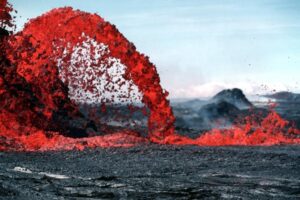
Which volcano is the highest peak in Japan?

Mount Aso

Mount Fuji

Mount Etna

Krakatoa

Points won
0
Correct score
0%

More Quizzes

More Articles

12 Surprising Facts About Pop Stars

12 Surprising Facts About Pop Stars

⏱️ 6 min read

The world of pop music is filled with glittering performances, chart-topping hits, and larger-than-life personalities. Behind the glamorous facades and carefully crafted public images, pop stars often harbor fascinating secrets, unexpected talents, and surprising backstories that even their most devoted fans might not know. From hidden academic achievements to unusual pre-fame jobs, these revelations offer a glimpse into the multifaceted lives of the artists who dominate our playlists and cultural conversations.

Unexpected Truths Behind the Music Industry's Biggest Names

1. Lady Gaga's Acceptance to a Prestigious University at Age 17

Before becoming one of pop music's most innovative performers, Stefani Germanotta (Lady Gaga) was accepted into New York University's prestigious Tisch School of the Arts at just 17 years old. She was one of only 20 students worldwide to receive early admission to the competitive music program. However, she dropped out after just one year to pursue her music career full-time, a decision that clearly paid off despite the academic sacrifice.

2. Katy Perry's Complete Album Flop Before Fame

Before "I Kissed a Girl" launched her into superstardom, Katy Perry released a complete gospel album under her birth name, Katy Hudson, in 2001. The album sold fewer than 200 copies before the label went bankrupt. She spent years struggling in the music industry, sometimes sleeping on friends' couches, before finally breaking through seven years later with a completely different musical style and image.

3. Bruno Mars' Childhood as an Elvis Impersonator

Long before winning multiple Grammy Awards, Bruno Mars performed as the world's youngest Elvis Presley impersonator in his hometown of Honolulu, Hawaii. Starting at age four, he appeared in the show "Legends in Concert" and was even featured in a 1992 documentary about his Elvis tribute act. This early performance experience helped shape his dynamic stage presence and showmanship that define his concerts today.

4. Sia's Decision to Hide Her Face Due to Crippling Fame Anxiety

Australian singer Sia spent years as a successful songwriter for other artists before her own performing career took off. When she did step into the spotlight, she made the unusual decision to conceal her face with oversized wigs and bows during performances and public appearances. She has openly discussed how this choice stemmed from a desire to maintain privacy and avoid the mental health struggles she witnessed other celebrities endure from constant public scrutiny.

5. Shakira's Rejection from Her School Choir

The international superstar known for her distinctive voice was actually rejected from her school choir as a child. The music teacher told her that she sounded "like a goat" because of her unique vibrato. This rejection didn't deter her; instead, Shakira continued developing her signature vocal style, which has since become one of the most recognizable sounds in pop music and helped her sell over 80 million records worldwide.

6. Ed Sheeran's Struggle with a Severe Childhood Stutter

One of today's most successful singer-songwriters battled a significant speech impediment as a child. Ed Sheeran has credited his recovery from stuttering to two unexpected therapies: listening to Eminem's rapid-fire rap lyrics and performing at small venues from a young age. By memorizing and performing songs, he trained himself to speak more fluently, ultimately turning his challenge into the foundation of his musical career.

7. Beyoncé's Mathematical Weakness Despite Straight-A Record

While Beyoncé excelled in most subjects during her school years, she has admitted in interviews that mathematics was her weakest subject and the only area where she struggled to maintain her otherwise perfect grades. She received tutoring throughout her teenage years to keep up with math while simultaneously building her music career with Destiny's Child, demonstrating that even multi-talented superstars have academic challenges.

8. Taylor Swift's Background in Musical Theater Before Country Music

Before becoming a country-turned-pop phenomenon, Taylor Swift was deeply involved in musical theater as a child. She performed in productions of "Grease," "Annie," and "The Sound of Music" at a local theater company in Pennsylvania. Her theatrical background influenced her storytelling approach to songwriting and her elaborate, narrative-driven music videos and stage performances that have become hallmarks of her career.

9. Post Malone's Audition for a Metal Band at Age 14

The artist known for hip-hop and pop hits actually started his musical journey in heavy metal. Post Malone auditioned for the metal band Crown the Empire when he was just 14 years old but was rejected for being too young. He has stated that his diverse musical taste, including metal, rock, country, and hip-hop, influences his eclectic production style and willingness to experiment with different genres in his chart-topping tracks.

10. Ariana Grande's Extensive Voice Training Started Before Age 10

While many know Ariana Grande for her impressive four-octave vocal range, few realize she began serious voice training before turning 10 years old. She studied with vocal coaches who specialized in techniques used by opera singers, which explains her ability to sustain long notes and perform complex vocal runs. This classical training foundation, combined with her pop sensibilities, creates her signature sound that bridges multiple musical traditions.

11. Justin Timberlake's Hidden Talent for Sports Commentary

Beyond his music and acting careers, Justin Timberlake has demonstrated surprising expertise and passion for sports analysis. He's a minority owner of the Memphis Grizzlies NBA team and has expressed interest in sports broadcasting as a potential post-music career. His detailed knowledge of basketball strategy and player statistics has impressed professional commentators during celebrity appearances in broadcast booths.

12. Rihanna's Charitable Foundation Operating Since 2006

While her music and beauty empire receive most media attention, Rihanna quietly established the Believe Foundation in 2006 to help terminally ill children. She later founded the Clara Lionel Foundation in 2012, named after her grandparents, which has funded education and emergency response programs globally, donating tens of millions of dollars. Her philanthropic work often receives less coverage than her entertainment ventures, despite its significant impact on communities worldwide.

The Human Side of Pop Stardom

These surprising revelations about pop music's biggest names remind us that behind every platinum record and sold-out stadium tour are real people with struggles, rejections, hidden talents, and unexpected backgrounds. From childhood challenges that were transformed into strengths to secret passions that extend far beyond music, these facts illuminate the complexity and humanity of artists who might otherwise seem untouchable. Understanding these lesser-known aspects of pop stars' lives not only makes them more relatable but also demonstrates that success rarely follows a straight path, and that the obstacles and quirks that define us can become the very things that make us extraordinary.
Top 10 Animals That Can See in the Dark

Top 10 Animals That Can See in the Dark

⏱️ 7 min read

When the sun sets and darkness envelops the landscape, most humans struggle to navigate their surroundings. However, numerous creatures have evolved remarkable adaptations that allow them to see clearly in conditions that would leave us completely blind. These nocturnal specialists possess unique anatomical features and physiological mechanisms that transform the night into their domain. From specialized eye structures to enhanced light-processing abilities, these animals demonstrate nature's ingenious solutions to one of the most challenging environmental conditions.

Masters of Night Vision in the Animal Kingdom

1. Owls: The Silent Hunters with Tubular Eyes

Owls possess perhaps the most sophisticated night vision among birds, thanks to their uniquely shaped eyes. Unlike the spherical eyes of most animals, owl eyes are tubular and fixed in their sockets, which maximizes the space available for light-gathering photoreceptors. Their retinas are packed with rod cells—up to one million per square millimeter—which are highly sensitive to low light conditions. Additionally, owls have a reflective layer behind their retinas called the tapetum lucidum, which bounces light back through the photoreceptors, effectively giving them a second chance to capture available photons. This adaptation allows owls to see in light levels up to 100 times dimmer than what humans require.

2. Cats: Domestic Predators with Superior Low-Light Adaptation

Both domestic cats and their wild relatives possess exceptional night vision capabilities that make them formidable nocturnal hunters. Cats have eyes that are proportionally much larger than human eyes relative to their head size, allowing more light to enter. Their pupils can dilate to an extraordinary degree, expanding to nearly the full width of their eye opening. Like owls, cats possess a tapetum lucidum, which is why their eyes appear to glow when caught in headlights or flashlight beams. This reflective layer gives cats the ability to see in light conditions six times dimmer than what humans need, making them perfectly adapted for hunting at dawn and dusk.

3. Tarsiers: The Bug-Eyed Primates of Southeast Asia

Tarsiers, small primates native to Southeast Asian islands, have evolved the largest eyes relative to body size of any mammal. Each eye weighs more than the animal's brain and is approximately the same size as its entire head would be if it were human-proportioned. These enormous eyes cannot move in their sockets, forcing tarsiers to rotate their heads up to 180 degrees in either direction. The size of their eyes allows them to gather maximum light, while their retinas contain an extremely high density of rod cells with virtually no cones, meaning they see almost exclusively in black and white but with exceptional clarity in near-total darkness.

4. Raccoons: Masked Bandits with Reflective Vision

Raccoons are well-known for their nighttime raids on garbage cans and their distinctive facial markings, but their visual capabilities are equally impressive. These adaptable mammals possess a highly developed tapetum lucidum that reflects light through their retinas, enhancing their ability to see in dim conditions. Raccoons also have a high concentration of rod cells in their retinas, which detect light and movement rather than color. This adaptation, combined with their excellent tactile sense through their sensitive paws, makes them expert nocturnal foragers capable of navigating and finding food in complete darkness.

5. Geckos: Lizards with 350 Times Human Night Sensitivity

Geckos possess what may be the most sensitive color vision in low light conditions of any vertebrate. While most animals sacrifice color vision in darkness, certain gecko species can see colors at night that would appear completely black to human eyes. Their secret lies in their unique cone cells, which are significantly larger than those of other animals and have been modified over evolutionary time from rod cells. These super-sized cones can detect light levels up to 350 times dimmer than human color vision thresholds, allowing geckos to distinguish between different colored fruits and flowers even on moonless nights.

6. Deep-Sea Fish: Adapted to the Ocean's Permanent Darkness

Many deep-sea fish species have developed extraordinary adaptations to see in the perpetual darkness of the ocean depths, where sunlight never penetrates. Some species, like the brownsnout spookfish, have evolved divided eyes that simultaneously look upward and downward. Others have developed exceptionally large eyes relative to their body size to capture bioluminescent light produced by other organisms. Certain deep-sea predators possess eyes with multiple visual pigments that can detect the specific wavelengths of bioluminescence produced by their prey, effectively giving them specialized "night vision goggles" for the abyssal environment.

7. Moths: Insects with Superposition Compound Eyes

Moths have evolved a completely different type of eye structure optimized for nocturnal vision. Their compound eyes use a mechanism called superposition, where light from multiple facets is focused onto single photoreceptor cells, greatly amplifying the signal. This is fundamentally different from the apposition compound eyes of day-flying insects, where each facet works independently. The moth's eye surface is also covered with microscopic anti-reflective structures that maximize light transmission and minimize reflections—an adaptation so effective that it has inspired anti-reflective coatings for solar panels and camera lenses.

8. Crocodiles and Alligators: Reptilian Ambush Predators with Vertical Pupils

Crocodilians possess remarkable night vision that makes them deadly nocturnal hunters. Their eyes contain a specialized tapetum lucidum composed of tiny crystals that reflects light back through the retina, creating the eerie red or green eye-shine visible when light hits their eyes at night. They have vertical slit pupils that can open extremely wide in darkness to admit maximum light, then contract to tiny slits in bright conditions to protect their sensitive retinas. The positioning of their eyes on top of their heads allows them to remain nearly submerged while maintaining visual surveillance of their surroundings, making them perfectly adapted for ambush hunting at any time of day or night.

9. Bush Babies: Nocturnal Primates with Specialized Retinal Structure

Bush babies, or galagos, are small nocturnal primates from Africa with disproportionately large eyes that give them a permanently startled appearance. Their eyes occupy a significant portion of their skull and cannot move, requiring them to turn their entire head to look in different directions—which they can do with remarkable flexibility. The retinas of bush babies are composed almost entirely of rod cells, sacrificing detailed color vision for extreme sensitivity to low light and movement. This adaptation allows them to detect the slightest movement of insects and navigate through forest canopies on the darkest nights.

10. Slow Lorises: Venomous Primates with Enhanced Night Navigation

Slow lorises are the only venomous primates, and they are also exquisitely adapted for nocturnal life. Their large, forward-facing eyes provide excellent depth perception and light-gathering ability, essential for their slow, deliberate movement through forest branches at night. Like other nocturnal primates, their retinas are dominated by rod cells and lack a fovea—the area of high-acuity vision present in day-active animals. However, they possess a reflective tapetum lucidum and a unique retinal structure that maximizes their ability to detect movement and navigate three-dimensional environments in near-total darkness, allowing them to hunt insects and move through their arboreal habitat with remarkable precision.

The Evolutionary Advantage of Night Vision

These ten remarkable animals demonstrate the diverse evolutionary paths that have led to superior night vision capabilities. From the tubular eyes of owls to the superposition compound eyes of moths, from the crystal-based reflectors in crocodilian eyes to the modified cone cells of geckos, nature has engineered multiple solutions to the challenge of seeing in darkness. These adaptations not only allow these creatures to survive but to thrive in nocturnal niches, avoiding daytime predators and competition while exploiting food sources that are unavailable to day-active animals. Understanding these mechanisms continues to inspire technological innovations in night vision equipment, camera design, and optical engineering, proving that nature remains the ultimate innovator in solving complex sensory challenges.