
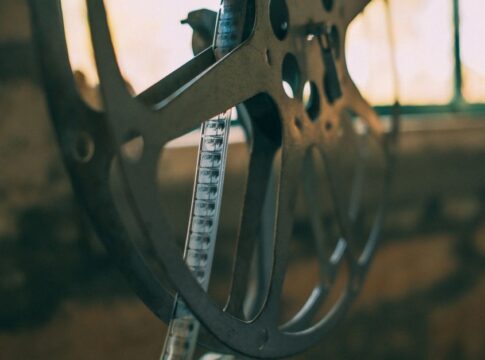
Why Film Reels Run at 24 Frames Per Second Explained
By Trivia Daily, Staff Writer — Published August 5, 2026
Table of Contents
- Key Takeaways
- The Early Days: When Film Reels Frames Varied Wildly
- The Sound Revolution Changed Everything
- The Science Behind the Frame Rate
- Why 24 FPS Persists in the Digital Age
- Technical and Artistic Implications
- Frequently Asked Questions
Every time you settle into a theater seat, you’re experiencing a technical standard that has defined cinema for nearly a century. Film reels frames flicker past your eyes at exactly 24 frames per second—a rate that seems oddly specific yet perfectly natural. This curious number isn’t arbitrary; it emerged from a fascinating intersection of human perception, economic necessity, and the physics of early sound recording. The story behind this standard reveals surprising truths about how technology shapes art and why certain conventions, once established, become nearly impossible to change.
Understanding why 24 frames per second became the gold standard takes us on a journey through early cinema experiments, the transition to sound, and the biological quirks of human vision. What you’re about to discover will change how you watch movies forever.
Key Takeaways
- 24 frames per second became the standard during the transition to synchronized sound in the late 1920s, balancing acceptable motion quality with film cost.
- Human eyes perceive smooth motion at rates as low as 16 frames per second, though 24 fps provides a more convincing illusion without excessive film waste.
- Silent films actually ran at varying speeds, typically between 16 and 22 frames per second, which is why they often appear sped up when played at modern rates.
- The 24 fps standard represents the minimum speed needed for optical sound tracks to reproduce acceptable audio quality on film.
- Despite digital technology removing physical film constraints, 24 fps remains the theatrical standard because audiences associate it with the “cinematic look.”
- Higher frame rates like 48 or 60 fps create smoother motion but often feel uncomfortably realistic to viewers accustomed to traditional cinema.
The Early Days: When Film Reels Frames Varied Wildly
1. Silent Films Had No Standard Speed
During the silent era, projectionists manually cranked films at whatever speed seemed appropriate for the scene. Comedies might run faster for comic effect, while dramas played slower for emotional impact. Frame rates ranged from about 16 to 22 frames per second, with individual theaters and projectionists making moment-to-moment decisions. This variability meant the same film could have dramatically different running times and pacing depending on where you watched it.
2. The Human Eye’s Persistence of Vision
Our brains retain images for roughly one-tenth of a second after we see them. This phenomenon, called persistence of vision, allows separate still images to blend into the perception of continuous motion. Around 16 frames per second represents the minimum threshold where most people perceive motion rather than individual flickering images. Early filmmakers discovered this through experimentation, finding the lowest acceptable rate to conserve expensive film stock.
3. The Flicker Problem
Even when motion appeared smooth, early films suffered from visible flicker that caused eye strain and headaches. Projectors solved this by using a shutter that blocked the light multiple times per frame, effectively doubling or tripling the flicker rate without requiring more frames. A film running at 24 fps might actually flicker at 48 or 72 times per second, well above the threshold where humans perceive flicker.
4. Film Stock Was Expensive
Before the digital age, every frame meant physical celluloid coated with light-sensitive chemicals. Studios and theaters had strong economic incentives to use the minimum acceptable frame rate. The difference between 16 and 32 frames per second meant doubling film costs, processing expenses, and storage requirements. This financial pressure kept frame rates as low as audiences would tolerate.
The Sound Revolution Changed Everything
5. Optical Sound Tracks Required Consistent Speed
When synchronized sound arrived in the late 1920s, variable projection speeds became impossible. Optical sound tracks—visual representations of audio encoded along the film’s edge—required precise, consistent playback speed to reproduce accurate pitch and timing. A film running too fast would make voices sound like chipmunks; too slow produced unnatural bass tones.
6. Why Exactly 24 Frames Per Second?
Engineers needed the slowest speed that provided both acceptable visual quality and sufficient audio fidelity. Testing revealed that 24 fps allowed optical sound tracks to reproduce frequencies up to about 8,000 Hz—adequate for intelligible dialogue and basic music. This rate also fell comfortably above the 16 fps flicker threshold while minimizing film consumption. The number represented a carefully calculated compromise.
7. The Society of Motion Picture Engineers Standardized It
In 1929, the film industry formally adopted 24 fps as the universal standard for sound films. This standardization meant theaters worldwide could project any film correctly, actors could be heard as intended, and production equipment could be designed to precise specifications. The decision locked in a technical standard that would persist for nearly a century.
8. Silent Films Look Wrong at Modern Speeds
When silent films are projected at the modern 24 fps standard, they appear unnaturally fast and jerky. That’s because they were shot at slower rates—often 18 to 20 fps. Proper restoration requires adjusting playback speed to match the original shooting rate, which modern digital technology makes possible. This explains why early comedy legends sometimes seem to move in fast-forward.
The Science Behind the Frame Rate
9. Motion Blur Hides the Gaps
At 24 fps, each frame captures roughly 1/48th of a second of motion (accounting for shutter angles). Fast-moving objects create natural motion blur within each frame, helping our brains interpolate the missing information between frames. This blur is actually essential to the cinematic look; overly sharp frames can make motion appear stuttery even at higher frame rates.
10. The Phi Phenomenon Makes It Work
Beyond simple persistence of vision, our brains employ the phi phenomenon—the tendency to perceive motion between similar shapes in different positions. This psychological effect means we don’t just see individual frames lingering; we actively construct the perception of smooth movement. Cinema exploits this neurological quirk to create convincing motion from still images.
11. Critical Flicker Fusion Frequency Varies
Different people perceive flicker at different thresholds, typically between 50 and 90 Hz depending on brightness and peripheral vision. This is why projectors use shutters to increase the effective flicker rate to 48 or 72 Hz, even while maintaining 24 unique frames per second. The technique separates the motion rate from the flicker rate for optimal perception.
12. Strobe Effects Reveal the Frame Rate
Fast-moving objects with regular patterns—like wheels or fans—can create wagon-wheel effects where motion appears reversed or frozen. This happens when the object’s rotation frequency aligns with the frame rate, revealing the discrete nature of film capture. These artifacts remind us we’re watching sampled moments, not continuous reality.
Why 24 FPS Persists in the Digital Age
13. Digital Cinema Removed Physical Constraints
Digital cameras and projectors eliminated the economic reasons for limiting frame rates. Storage and processing costs dropped dramatically, making higher frame rates technically feasible. Yet the industry largely retained 24 fps for theatrical releases, demonstrating that the standard had become aesthetic rather than merely practical.
14. The “Cinematic Look” Is Culturally Learned
Audiences have internalized 24 fps as what movies “should” look like. The slight judder during camera pans, the specific motion blur characteristics—these artifacts of the frame rate have become synonymous with cinema itself. Higher frame rates, while technically superior, often feel wrong to viewers expecting traditional motion cadence.
15. Television Uses Different Standards
Television developed separate frame rate standards: 30 fps in North America (technically 29.97) and 25 fps in Europe, matching their electrical grid frequencies of 60 Hz and 50 Hz respectively. This created the distinct “video look” that audiences learned to associate with news, sports, and soap operas rather than prestige cinema.
16. The Hobbit’s 48 FPS Experiment
Director Peter Jackson released The Hobbit trilogy at 48 frames per second in some theaters, doubling the traditional rate. Many viewers found the hyper-smooth motion unsettling, describing it as too realistic or video-like. The mixed reception demonstrated how deeply 24 fps is embedded in our expectations of cinematic storytelling.
17. Sports and Action Benefit from Higher Rates
Fast motion becomes clearer at higher frame rates, which is why sports broadcasts often use 60 fps or higher. Video games similarly target 60 fps or above for responsive gameplay. These applications prioritize clarity and immediacy over the dreamlike quality that lower frame rates provide.
18. Animation Often Uses Even Fewer Frames
Hand-drawn animation frequently employs “shooting on twos”—creating only 12 unique drawings per second and holding each for two frames. This technique, still common in anime and some theatrical animation, reduces the enormous labor of drawing while maintaining the 24 fps playback standard. The slight choppiness has become part of animation’s aesthetic charm.
Technical and Artistic Implications
19. Frame Rate Affects Shutter Speed Choices
Cinematographers typically use a shutter speed of 1/48th second when shooting at 24 fps, following the 180-degree shutter rule. This creates the “correct” amount of motion blur that audiences expect. Deviating from this rule—using faster or slower shutters—creates stylistic effects like the staccato action in Saving Private Ryan’s battle scenes.
20. Conversion Creates Judder Problems
Converting 24 fps film to 30 fps video requires a technique called 3:2 pulldown, where some frames are shown for three video fields and others for two. This creates subtle but noticeable judder during camera movements. Modern televisions often apply motion smoothing to compensate, though this creates the controversial “soap opera effect” that film purists despise.
21. IMAX Sometimes Uses Higher Rates
IMAX has experimented with frame rates above 24 fps for specific sequences, particularly in large-format 3D presentations where motion clarity becomes more critical. The massive screen size and immersive experience can benefit from smoother motion, though most IMAX films still default to 24 fps for consistency with standard theatrical presentations.
22. Virtual Reality Demands Much Higher Rates
VR headsets typically require 90 fps or higher to prevent motion sickness and maintain immersion. The 24 fps standard that works for passive film viewing becomes nauseating when the viewer controls the camera through head movements. This demonstrates how frame rate requirements depend on the viewing experience, not just technical capabilities.
23. Slow Motion Reveals Higher Capture Rates
Dramatic slow-motion sequences require shooting at much higher frame rates—120, 240, or even thousands of fps—then playing back at 24 fps. Each second of screen time might represent several seconds of real action. This technique has become a signature tool for action films and nature documentaries, revealing details invisible to the naked eye.
24. The Future May Finally Break the Standard
Streaming services and digital theaters offer unprecedented flexibility in frame rates. Some filmmakers now shoot different frame rates for different scenes, or offer multiple versions of the same film. As younger audiences grow up with diverse frame rate experiences from gaming and online video, the sacred status of 24 fps may finally fade, replaced by creative choices matched to each story’s needs.
Frequently Asked Questions
Why don’t movies use 60 fps like video games?
Movies prioritize the established “cinematic look” that audiences associate with 24 fps, including characteristic motion blur and judder. Higher frame rates feel too smooth and realistic, breaking the dreamlike quality that distinguishes cinema from reality or television. The choice is now aesthetic rather than technical.
Can the human eye see more than 24 frames per second?
Yes, human vision can perceive differences well above 24 fps, particularly in peripheral vision and for fast-moving objects. Most people can distinguish between 24, 60, and 120 fps when shown side-by-side comparisons. The 24 fps standard represents the minimum acceptable rate, not the limit of human perception.
Why do old movies sometimes look sped up?
Silent films were shot at slower frame rates (typically 16-22 fps) but are often projected at the modern 24 fps standard. This mismatch makes the action appear faster than originally intended. Proper film restoration adjusts playback speed to match the original shooting rate.
Will 24 fps eventually be replaced?
While digital technology makes any frame rate possible, 24 fps remains dominant in theatrical cinema due to audience expectations and aesthetic preferences. Higher frame rates may gradually gain acceptance for specific genres or viewing contexts, but the traditional standard shows remarkable persistence nearly a century after its adoption.
The next time you watch a film, notice the subtle motion characteristics that 24 frames per second creates—the slight blur during fast pans, the dreamlike quality of movement that separates cinema from everyday vision. This technical standard, born from economic necessity and the physics of sound recording, has shaped how billions of people experience stories. What began as a practical compromise became an art form’s defining characteristic, proving that sometimes limitations spark creativity that outlasts the constraints themselves.