
⏱️ 5 min read
Spanning across the northern coast of the Bay of Bengal, the Ganges-Brahmaputra Delta represents one of Earth’s most remarkable geographical features. Covering approximately 105,000 square kilometers, this massive river delta holds the distinction of being the largest in the world, stretching across Bangladesh and the Indian state of West Bengal. Fed by three major river systems—the Ganges, Brahmaputra, and Meghna—this delta continues to shape the landscape and lives of millions of people who call it home.
Formation and Geographical Extent
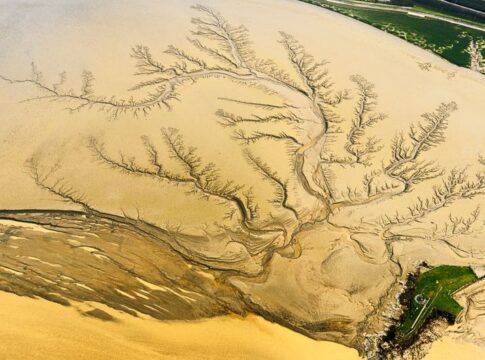
The Ganges-Brahmaputra Delta, also known as the Bengal Delta or Ganges Delta, began forming millions of years ago as sediment carried down from the Himalayan mountains accumulated at the mouths of these mighty rivers. The delta’s formation is an ongoing process, with approximately 1 billion tons of sediment deposited annually by the river systems. This continuous deposition has created a vast network of distributaries, tributaries, and channels that characterize the delta’s intricate geography.
The delta extends from the Hooghly River in the west to the Meghna River in the east, with its apex located approximately 320 kilometers inland from the Bay of Bengal. The region encompasses diverse landscapes, from fertile agricultural plains to the world’s largest mangrove forest. The delta’s width along the coast stretches for approximately 350 kilometers, creating a massive arc of land that juts into the Bay of Bengal.
The Sundarbans: A Unique Ecosystem
Within the Ganges-Brahmaputra Delta lies the Sundarbans, a UNESCO World Heritage Site that comprises the world’s largest single block of tidal halophytic mangrove forest. Covering about 10,000 square kilometers, the Sundarbans spans both Bangladesh and India, serving as a critical ecosystem that supports extraordinary biodiversity. The name “Sundarbans” derives from the Sundari trees that dominate the landscape, though it may also reference the forest’s beauty.
This unique region is home to the Royal Bengal Tiger, estimated to number between 400 and 500 individuals. The Sundarbans provides crucial habitat for numerous endangered species, including the Ganges river dolphin, saltwater crocodiles, and the Indian python. The forest’s complex network of tidal waterways, mudflats, and small islands creates an environment found nowhere else on Earth.
Agricultural Significance and Human Settlement
The Ganges-Brahmaputra Delta supports one of the world’s highest population densities, with over 140 million people residing within its boundaries. The region’s fertility stems from the rich alluvial soil deposited by annual flooding, making it exceptionally productive for agriculture. The delta serves as the breadbasket for Bangladesh and significant portions of eastern India, with rice cultivation being the predominant agricultural activity.
Multiple cropping seasons are possible due to the tropical climate and abundant water supply. Farmers cultivate rice, jute, tea, and various other crops across the delta’s extensive floodplains. The fishing industry also thrives here, with both freshwater and marine species providing crucial protein sources and economic opportunities for coastal communities. The delta’s waterways have historically facilitated trade and transportation, connecting inland areas to coastal ports and international markets.
Hydrological Characteristics
The delta’s hydrology is characterized by extreme variability between seasons. During the monsoon period, from June to October, the region receives enormous quantities of rainfall, and river discharge increases dramatically. The Ganges and Brahmaputra rivers together carry approximately 1,000 cubic kilometers of water annually, making this system second only to the Amazon in terms of water discharge.
The tidal influence extends far inland, with some areas experiencing tidal effects more than 100 kilometers from the coast. This creates a unique brackish water environment in many areas, where freshwater from the rivers mixes with saltwater from the Bay of Bengal. The complex network includes:
- Over 230 major distributaries and countless smaller channels
- Extensive areas of tidal flats that emerge during low tide
- Seasonal islands called chars that form and dissolve with changing river courses
- Interconnected wetlands and marshes supporting diverse ecosystems
Challenges and Environmental Threats
The Ganges-Brahmaputra Delta faces numerous environmental challenges that threaten both its ecosystems and human populations. Climate change poses perhaps the most significant threat, with rising sea levels potentially inundating large portions of low-lying areas. Scientists estimate that a one-meter rise in sea level could displace tens of millions of people and submerge significant agricultural land.
Riverbank erosion remains a constant concern, with entire villages sometimes disappearing within a single monsoon season. The dynamic nature of the delta means that land is simultaneously created and destroyed, but human settlement patterns often cannot adapt quickly enough to these changes. Deforestation, particularly in the Sundarbans, has reduced natural barriers against cyclones and storm surges, increasing vulnerability to natural disasters.
Anthropogenic Pressures
Human activities have significantly altered the delta’s natural functioning. Upstream water diversions, dam construction, and altered flow patterns affect sediment deposition and water availability. Industrial pollution and agricultural runoff contaminate waterways, threatening aquatic life and human health. Overfishing has depleted certain species populations, while shrimp farming has converted traditional agricultural lands and mangrove areas, changing the ecological balance.
Economic and Cultural Importance
Beyond its geographical significance, the Ganges-Brahmaputra Delta holds immense economic and cultural value. The region generates substantial economic activity through agriculture, fishing, shipping, and increasingly, tourism. The delta’s ports facilitate international trade for landlocked regions of Nepal and northeastern India, serving as crucial economic gateways.
Culturally, the delta has been home to ancient civilizations and continues to support rich traditions. The rivers are considered sacred in Hindu tradition, and the delta region has inspired countless works of literature, art, and music. The area’s distinct cultures, languages, and traditions reflect centuries of adaptation to this dynamic landscape.
As the largest delta in the world, the Ganges-Brahmaputra Delta remains a testament to the powerful forces of nature and human adaptation. Its future depends on balancing development needs with environmental conservation, ensuring this remarkable geographical feature continues to sustain both nature and humanity for generations to come.