
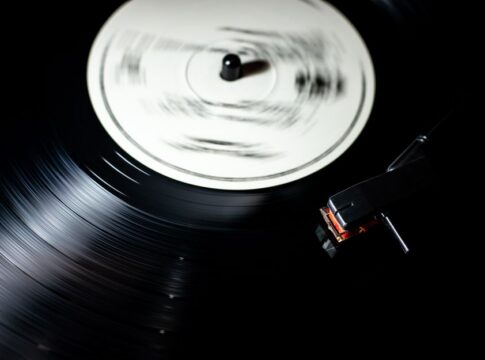
Why Vinyl Records Spin at 33, 45, and 78 RPM Explained
By Trivia Daily, Staff Writer — Published August 13, 2026
Table of Contents
Every vinyl record collector knows the ritual: check the label, set the turntable speed, drop the needle. But why do vinyl records spin at these specific speeds—33⅓, 45, and 78 revolutions per minute? The answer reveals a fascinating story of technological evolution, corporate competition, and the physics of sound reproduction. These aren’t arbitrary numbers pulled from thin air; each speed emerged from careful engineering decisions and market battles that shaped how we experience music.
The speeds at which vinyl records spin represent one of the most interesting chapters in audio history. From the shellac 78s of the early twentieth century to the long-playing 33⅓ albums that revolutionized the industry, these rotation rates balanced competing demands: sound quality, playing time, manufacturing costs, and physical limitations of the technology.
Key Takeaways
- The 78 RPM speed wasn’t standardized until the 1920s, despite existing since the 1890s—early phonographs varied wildly in speed.
- Columbia Records introduced the 33⅓ RPM long-playing record in 1948, allowing an entire symphony to fit on one disc for the first time.
- RCA Victor created 45 RPM records in 1949 as a direct competitor to Columbia’s format, sparking the “War of the Speeds.”
- The grooves on a 33⅓ RPM record are incredibly fine—about 200 to 300 grooves per inch compared to 78 RPM’s 85 to 100 grooves per inch.
- Faster spinning records can reproduce higher audio frequencies more accurately but sacrifice playing time.
- All three speeds coexisted in the marketplace for decades, each serving different musical and commercial purposes.
The Origins and Evolution of Vinyl Records Spin Speeds
1. Hand-Cranked Beginnings Set No Standard
Early phonographs from the 1890s relied on hand cranks, meaning playback speed varied based on whoever was turning the handle. This inconsistency meant recordings had no fixed tempo—music could sound wildly different depending on the operator’s enthusiasm or fatigue. The lack of standardization created chaos for both performers and listeners.
2. Electric Motors Demanded Consistency
When electric motors replaced hand cranks in the early 1900s, manufacturers needed to agree on a standard speed. The technology required a fixed rotation rate, forcing the industry to settle on something consistent. This transition from manual to electric power fundamentally changed how recorded music could be reproduced reliably.
3. The Mystery of 78 RPM’s Selection
No single inventor chose 78 RPM deliberately. The speed emerged as a practical compromise from various manufacturers’ equipment, particularly the gear ratios in early electric motors. Most historians believe 78 became standard simply because many early machines happened to run near that speed, and the industry eventually coalesced around it.
4. Shellac Records Were Brittle and Heavy
Early 78 RPM records used shellac, a natural resin secreted by lac bugs. These discs were thick, heavy, and prone to shattering when dropped. A single 12-inch 78 RPM record could weigh nearly half a pound and played for only about four to five minutes per side—barely enough for one song.
5. Wide Grooves Limited Playing Time
The 78 RPM format used relatively wide grooves spaced far apart, which limited how much music could fit on a disc. This physical constraint meant symphonies and operas required multiple records, forcing listeners to interrupt performances every few minutes to change discs—a frustrating experience for serious music lovers.
6. World War II Shellac Shortages Sparked Innovation
During World War II, shellac became scarce because it was needed for military applications and most supplies came from Asia. This shortage motivated engineers to experiment with vinyl, a synthetic material that was more durable, lighter, and could be pressed into finer grooves. The war inadvertently accelerated the technology that would transform the recording industry.
7. Peter Goldmark Led Columbia’s Revolution
Hungarian engineer Peter Goldmark headed Columbia Records’ research team that developed the 33⅓ RPM long-playing record. His team’s innovation wasn’t just the speed—it was the combination of vinyl material, microgroove technology, and a slower rotation that together enabled unprecedented playing time.
8. The Fraction Wasn’t Random
The precise speed of 33⅓ RPM exists because it’s exactly one-third of 100 RPM, a round number that made gear ratios simpler to manufacture. This mathematical relationship meant turntable motors could use straightforward mechanical reduction systems, making the technology more reliable and less expensive to produce.
9. June 1948 Launched the LP Era
Columbia Records publicly unveiled the 12-inch long-playing record in June 1948. These new discs could hold about 23 minutes per side—enough for an entire classical work or Broadway show without interruption. The announcement transformed the music industry almost overnight, making the 78 RPM format seem instantly obsolete.
10. RCA Victor Refused to Adopt Columbia’s Format
RCA Victor, Columbia’s main competitor, declined to license the 33⅓ technology. Instead, they developed their own format using 7-inch discs spinning at 45 RPM. This corporate rivalry created confusion for consumers but ultimately gave the market more choices for different types of music consumption.
11. The 45 RPM Single Targeted Pop Music
RCA designed the 45 RPM format specifically for popular music singles. With about five minutes per side, the 7-inch disc was perfect for radio-friendly songs. The compact size and durability made 45s ideal for jukeboxes, which became ubiquitous in diners and bars throughout the 1950s.
12. The Large Center Hole Served a Purpose
The distinctive large center hole in 45 RPM records wasn’t merely aesthetic—it allowed rapid automatic changing mechanisms in jukeboxes. The design enabled mechanical arms to grab and stack records quickly, making jukeboxes more reliable and faster at switching between songs.
13. Audiophiles Preferred 45 RPM for Quality
Despite shorter playing time, 45 RPM records offered superior sound quality compared to 33⅓ RPM discs. The faster speed allowed more accurate reproduction of high frequencies and greater dynamic range. Some audiophile labels still release albums at 45 RPM across multiple discs for this reason.
14. The War of the Speeds Confused Consumers
From 1948 to the early 1950s, record buyers faced a dilemma: invest in a 33⅓ player for albums or a 45 RPM player for singles? Many couldn’t afford both. This format war stalled the industry’s growth until manufacturers began producing multi-speed turntables that could play all formats.
15. Three-Speed Turntables Ended the Conflict
By 1950, most turntable manufacturers offered players that could handle 33⅓, 45, and 78 RPM records. These versatile machines allowed consumers to play their old shellac collection while buying new vinyl releases. The multi-speed solution effectively ended the format war by making it irrelevant.
16. Microgroove Technology Was the Real Breakthrough
The ability to cut grooves as fine as 1/1000th of an inch enabled both 33⅓ and 45 RPM formats to work. This precision engineering required new cutting lathes, specialized styluses, and quality control methods that didn’t exist in the 78 RPM era. The microgroove was as important as the speed itself.
17. Vinyl Allowed Better Frequency Response
Vinyl’s smooth surface could reproduce frequencies from about 20 Hz to 20,000 Hz—the full range of human hearing. Shellac’s rough composition limited high-frequency response, making 78s sound muddy by comparison. The material change was as revolutionary as the speed change.
18. Albums Became Artistic Statements
The 33⅓ LP’s extended playing time transformed how artists approached recording. Instead of single songs, musicians could create cohesive albums with thematic unity. This shift elevated popular music from disposable entertainment to an art form worthy of serious critical attention.
19. Classical Music Drove LP Adoption
Symphony orchestras and opera companies were among the earliest and most enthusiastic adopters of the LP format. Finally, listeners could hear complete works without interruption. Classical music sales surged in the 1950s as collectors replaced their bulky 78 RPM album sets with single LPs.
20. Twelve-Inch Singles Emerged Later
In the 1970s, disco DJs wanted longer versions of songs for dance floors. Record labels began releasing 12-inch singles at 45 RPM, offering extended mixes with superior bass response. This format became standard in electronic dance music and hip-hop cultures.
21. Speed Affects More Than Duration
The relationship between speed and sound quality involves physics: faster rotation means the stylus encounters more groove information per second. This translates to better high-frequency reproduction and lower distortion, particularly in the inner grooves where linear velocity decreases.
22. Inner Groove Distortion Plagued All Formats
As the stylus moves toward a record’s center, the grooves travel slower past the needle even though the disc spins at constant RPM. This reduced linear velocity causes distortion, particularly noticeable in the final tracks of album sides. Engineers learned to sequence quieter songs toward the end to minimize this effect.
23. Half-Speed Mastering Improved Quality
Some audiophile labels cut master discs at half the playback speed (16⅔ RPM for a 33⅓ record). This technique allowed more precise groove cutting and better high-frequency response. The resulting records commanded premium prices among serious collectors who could hear the difference.
24. Turntable Speed Accuracy Matters Enormously
Even slight speed variations affect pitch and tempo. A turntable running just one percent fast raises the pitch by about 17 cents—enough for trained musicians to notice. High-quality turntables use quartz-locked motors or heavy platters to maintain precise speed regardless of stylus drag.
25. The 16⅔ RPM Format Failed Commercially
Some manufacturers experimented with 16⅔ RPM for spoken word recordings and very long classical works. The slower speed sacrificed too much sound quality for most applications. The format never gained significant market acceptance and remains a footnote in audio history.
26. Different Regions Had Variations
While 33⅓, 45, and 78 became worldwide standards, some countries used slightly different speeds based on their electrical power grids. These variations were minor but could cause pitch problems when records crossed international borders, particularly before quartz-locked motors became standard.
27. Vinyl Never Truly Died
Despite predictions of vinyl’s demise with the compact disc’s arrival in the 1980s, the format survived. Enthusiasts appreciated the tactile experience, large artwork, and warm analog sound. By the 2010s, vinyl sales were growing again, with major labels pressing new releases on both 33⅓ and 45 RPM formats.
28. Modern Pressing Plants Use Original Speeds
Contemporary vinyl manufacturing maintains the same speeds established decades ago. This consistency means a turntable from 1955 can play a record pressed in 2024 perfectly. The standardization achieved in the mid-twentieth century created remarkable backward and forward compatibility.
29. DJs Pioneered Speed Manipulation
Hip-hop DJs discovered that varying turntable speed could create new artistic effects. Pitch control sliders became standard features, allowing manipulation of tempo and key. This creative use of speed variation transformed turntables from playback devices into musical instruments.
30. Strobe Dots Verify Accurate Speed
Many turntable platters feature dots or stripes around the edge. Under fluorescent light (which flickers at 60 Hz in North America), these markings appear stationary when the platter spins at exactly the correct speed. This simple visual feedback helps users verify their turntable’s accuracy.
31. Weight Affects Sound Reproduction
Heavier vinyl records, typically 180 or 200 grams, resist warping and provide more stable rotation. The extra mass reduces resonance and vibration, improving sound quality. Audiophile reissues often use heavyweight vinyl regardless of whether they’re pressed at 33⅓ or 45 RPM.
32. Each Speed Serves Different Markets Today
Modern vinyl releases strategically choose speeds based on content and audience. Full albums typically use 33⅓ for convenience, while audiophile editions may use 45 RPM across multiple discs. Singles and EPs often appear on 7-inch 45s, maintaining the format’s traditional role in popular music.
33. The Physics Hasn’t Changed in Decades
Despite advances in digital audio, the fundamental physics governing vinyl playback remain identical to the 1940s. A vibrating stylus tracing microscopic grooves still converts mechanical movement into electrical signals. This elegant simplicity explains both vinyl’s limitations and its enduring appeal to music lovers worldwide.
Frequently Asked Questions
Why don’t all vinyl records spin at the same speed?
Different speeds balance competing priorities: playing time, sound quality, and manufacturing costs. The 33⅓ RPM format maximizes duration for albums, while 45 RPM offers better audio fidelity for shorter recordings. Each speed serves distinct musical and commercial purposes that emerged from the industry’s competitive evolution.
Can playing a record at the wrong speed damage it?
Playing a record at the wrong speed won’t physically damage the disc or stylus, but it will sound incorrect—either too fast and high-pitched or too slow and low-pitched. The grooves themselves remain unchanged regardless of playback speed, so switching to the correct setting will restore normal sound.
Why did 78 RPM records eventually disappear?
The 78 RPM format became obsolete because vinyl microgroove technology offered dramatic advantages: longer playing time, better sound quality, lighter weight, and greater durability. By the late 1950s, most major labels had ceased 78 RPM production entirely as consumers and manufacturers embraced the superior 33⅓ and 45 RPM formats.
Do audiophiles really hear a difference between 33⅓ and 45 RPM?
Yes, the faster 45 RPM speed provides measurably better high-frequency response and lower distortion because the stylus encounters more groove information per second. The difference is most noticeable on high-quality playback systems, though casual listeners may not detect significant variations on typical consumer equipment.
The next time you set your turntable’s speed, you’re participating in a ritual shaped by decades of innovation, competition, and compromise. These three numbers—33⅓, 45, and 78—represent far more than rotation rates; they’re monuments to the creative problem-solving that turned fragile shellac discs into the enduring vinyl format that refuses to fade away.