
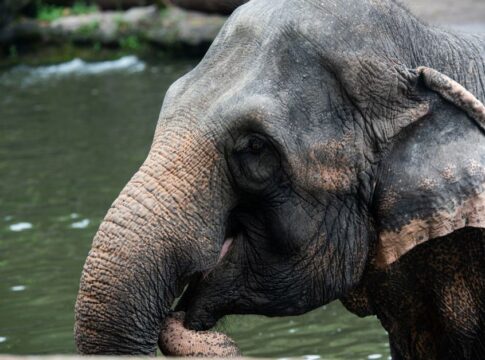
7 Surprising Facts About Elephant Memory and Intelligence
By Trivia Daily, Animals Desk — Published October 6, 2026
Table of Contents
- Key Takeaways
- Understanding Elephant Memory Intelligence in the Animal Kingdom
- Comparing Elephant Intelligence Across Species
- The Seven Most Remarkable Facts About Elephant Cognition
- Frequently Asked Questions
When people say someone has “the memory of an elephant,” they’re paying a compliment grounded in real science. Elephants possess extraordinary cognitive abilities that rival—and sometimes surpass—those of great apes and dolphins. These majestic creatures navigate complex social networks, solve problems with remarkable creativity, and remember critical information for decades. Their behavior reveals a level of intelligence that continues to fascinate researchers studying animal cognition in the wild and in controlled habitats across the globe.
Understanding elephant memory intelligence helps us appreciate not just these incredible animals, but also the broader spectrum of how different species process information and interact with their environments. From recognizing hundreds of individual companions to adapting survival strategies across changing landscapes, elephants demonstrate that nature has engineered multiple pathways to sophisticated thought.
Key Takeaways
- Elephants can recognize and remember up to 200 different individual elephants throughout their lifetime, maintaining complex social bonds across decades.
- The elephant brain weighs approximately 11 pounds, making it the largest brain of any land animal, with a highly developed hippocampus associated with memory processing.
- Elephants demonstrate self-awareness by recognizing themselves in mirrors, a cognitive milestone shared by only a handful of species including great apes and dolphins.
- Female elephants remember the locations of water sources and migration routes for over 25 years, guiding their herds during droughts using knowledge passed down through generations.
- These animals exhibit genuine mourning behavior, returning to the bones of deceased family members and gently touching them with their trunks.
- Elephants use tools in the wild, modifying branches to swat flies, scratch themselves, and even plug water holes to prevent evaporation.
Understanding Elephant Memory Intelligence in the Animal Kingdom
The elephant’s reputation for exceptional memory isn’t folklore—it’s neuroscience. Their temporal lobes, the brain regions responsible for processing memories, are proportionally larger and more convoluted than those of humans. The hippocampus, critical for converting short-term memories into long-term storage, shows exceptional development in elephants compared to other wildlife species. This neurological architecture supports their ability to retain spatial information, social relationships, and survival knowledge across their 60-to-70-year lifespan.
What makes elephant cognition particularly fascinating is how they apply this memory capacity. Matriarchs—the oldest females who lead elephant herds—store mental maps of their habitat spanning hundreds of square miles. During severe droughts, these leaders draw on memories formed decades earlier to guide their families to water sources they haven’t visited in years. Younger elephants lacking this accumulated knowledge show significantly lower survival rates during environmental crises, demonstrating that memory directly impacts fitness in the wild.
Comparing Elephant Intelligence Across Species
| Animal | Brain Weight | Mirror Self-Recognition | Tool Use | Mourning Behavior |
|---|---|---|---|---|
| African Elephant | ~11 lbs (5 kg) | Yes | Yes | Yes |
| Bottlenose Dolphin | ~3.5 lbs (1.6 kg) | Yes | Yes | Observed |
| Chimpanzee | ~0.9 lbs (420 g) | Yes | Yes | Observed |
| Dog | ~0.14 lbs (64 g) | No | Limited | Debated |
The Seven Most Remarkable Facts About Elephant Cognition
1. Elephants Distinguish Between Human Languages and Assess Threat Levels
Research conducted in Amboseli National Park in Kenya revealed that elephants can differentiate between the voices of different human ethnic groups based on language and age. When researchers played recordings of Maasai men—who sometimes come into conflict with elephants over resources—the herds bunched together defensively and moved away. Recordings of Kamba men, an agricultural group that poses little threat, produced minimal reaction. Even more impressive, elephants could distinguish between Maasai men (potential threat) and Maasai women and children (low threat) based solely on voice characteristics. This demonstrates not just memory, but sophisticated categorization and risk assessment abilities.
2. They Pass the Mirror Test With Flying Colors
The mirror self-recognition test is considered a benchmark for self-awareness in animal behavior studies. When researchers placed a large mirror in front of elephants, the animals didn’t treat their reflection as another elephant. Instead, they used the mirror to investigate parts of their own bodies they couldn’t normally see, such as the inside of their mouths. One elephant repeatedly used her trunk to touch a white mark that researchers had painted above her eye—a mark she could only see in the reflection. This level of self-awareness indicates a sophisticated sense of self that separates elephants from the vast majority of creatures on Earth.
3. Elephant Herds Remember Friends and Foes for Decades
An elephant’s social memory extends far beyond simple recognition. Studies tracking wild populations have documented elephants greeting specific individuals with intense excitement after separations lasting more than 20 years. They remember not just who other elephants are, but the quality of past relationships. Elephants who were friendly in youth resume positive interactions after decades apart, while those who had conflicts show continued wariness. This long-term social memory allows elephants to maintain networks of alliances across vast territories, with some individuals recognizing over 200 different elephants throughout their lives.
4. They Modify Tools for Specific Tasks
Tool use was once considered uniquely human, then uniquely primate. Elephants shattered that assumption. In the wild, elephants break branches to specific lengths to use as fly swatters, adjusting the size based on the task. They’ve been observed plugging water holes with chewed bark to prevent evaporation and return later to drink. Some elephants drop large rocks or logs onto electric fences to break them or cover them, allowing safe passage. Captive elephants have demonstrated even more creative problem-solving, stacking boxes to reach food and using sticks to draw in dirt—behavior suggesting an understanding of cause and effect.
5. Matriarchs Hold Irreplaceable Knowledge Libraries
The oldest female in an elephant family group serves as a living encyclopedia of survival information. Her memory contains detailed knowledge of seasonal migration routes, the locations of water sources across hundreds of miles, which plants are safe to eat, and how to respond to various threats. Research has shown that herds led by older matriarchs have higher survival rates and reproductive success than those led by younger females. When poaching removes these knowledge-keepers from populations, the entire social structure suffers, and remaining elephants show increased stress and reduced ability to navigate environmental challenges.
6. They Display Genuine Empathy and Mourning Rituals
Elephants exhibit mourning behavior that suggests deep emotional bonds and possibly an understanding of death. When encountering the remains of deceased elephants—particularly family members—they stop and investigate, gently touching the bones with their trunks and feet. They pay particular attention to skulls and tusks, sometimes carrying bones short distances. Elephants have been observed standing vigil over dying family members, attempting to lift them, and remaining with bodies for days. Some researchers have documented elephants returning to the same bones repeatedly over months, suggesting they remember specific individuals even after death.
7. Young Elephants Learn Through Decades of Observation
Unlike many animals that reach behavioral maturity quickly, elephants undergo an extended learning period lasting 15 years or more. Calves stay close to their mothers and other experienced females, observing and imitating complex behaviors. They learn which plants are nutritious, how to use their trunks effectively (a process taking years to master), appropriate social responses to different situations, and navigation skills. This prolonged education period, combined with their exceptional memory, allows elephants to accumulate and retain vast amounts of knowledge that would be impossible for species with shorter learning windows or less robust memory systems.
Frequently Asked Questions
How long can elephants actually remember things?
Elephants can retain memories for their entire lifespan, which typically ranges from 60 to 70 years in the wild. Matriarchs have demonstrated the ability to remember drought survival routes and water sources they last visited 25 to 30 years earlier, and they recognize individual elephants after decades of separation.
Are elephant brains similar to human brains?
While elephant brains are structured differently from human brains, they share some key features including a highly developed hippocampus for memory processing and a complex neocortex. Elephant brains contain approximately 257 billion neurons—three times more than human brains—though they’re distributed differently, with fewer in the cerebral cortex and more in the cerebellum.
Do elephants really never forget?
The saying “an elephant never forgets” is an exaggeration, but it’s rooted in truth. Elephants have exceptional long-term memory, particularly for social relationships, spatial information, and survival-critical knowledge. However, like all animals, they can forget things, especially information that isn’t reinforced or doesn’t have survival value.
Which elephant species is most intelligent?
Both African and Asian elephants demonstrate remarkable intelligence, and researchers haven’t established clear superiority between species. African elephants have slightly larger brains on average, but Asian elephants have shown exceptional problem-solving abilities in captive studies. Intelligence likely varies more between individuals than between species.
The cognitive abilities of elephants challenge our understanding of intelligence in nature and remind us that human-style reasoning isn’t the only path to sophisticated thought. As habitat loss and poaching continue to threaten elephant populations worldwide, we’re not just losing individual animals—we’re erasing irreplaceable libraries of ecological knowledge that took lifetimes to accumulate. Each elephant carries decades of learned wisdom, and every loss diminishes the collective intelligence of their species.